Wheat Abundance... Syria's Opportunity to Reduce Imports
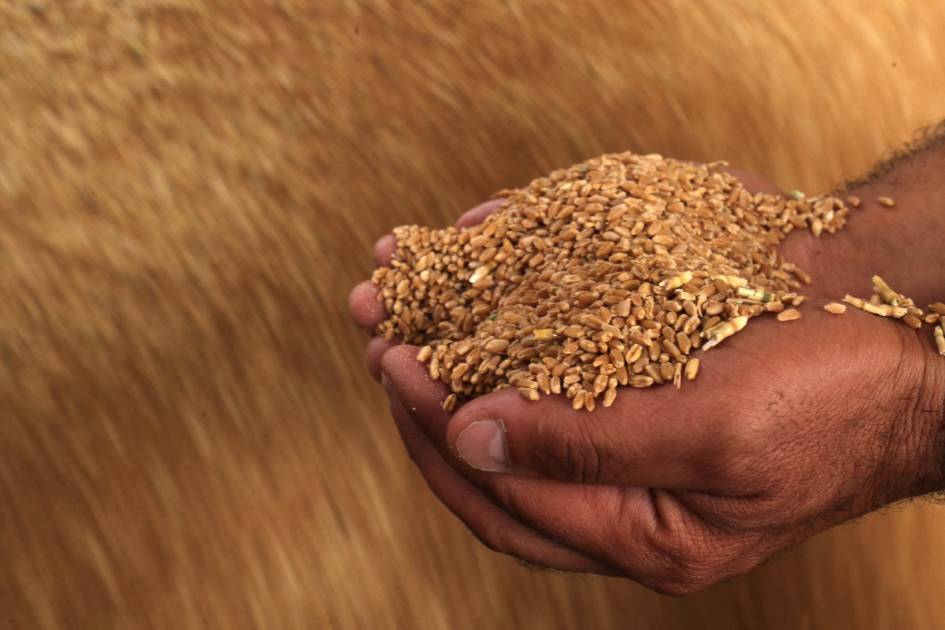
Syria achieved an exceptional wheat season with production exceeding 2.5 million tons and marketing more than two million tons, enhancing food security and reducing reliance on imports.
While expectations indicate that this year's wheat production is estimated at 2.5 million tons, the Syrian government announced it had marketed 2.08 million tons since the start of the harvest season, compared to 900,000 tons marketed in 2025, and the figure is expected to increase as farmers continue selling wheat to the state, which the Syrian Ministry of Economy and Industry considered a strong indicator of production abundance this year, amid expectations of strengthening strategic stocks and supporting food security in the country.
The area planted with wheat in Syria this season reached about 1 million and 268 thousand hectares (one hectare equals 10,000 square meters), and production was distributed across 11 Syrian governorates, most notably Hasaka, which alone delivered about 900,000 tons, with its production exceeding 1 million and 200 thousand tons, followed by Raqqa governorate with approximately 341,000 tons, and Aleppo in third place with 262,000 tons.
The marketed wheat was distributed as 54.4 percent, i.e., 1 million and 129 thousand tons, of soft wheat (used for bread making), and the rest hard wheat at 45.6 percent, equivalent to 947,000 tons.
The leap Syria achieved in wheat production this year came as a result of improved rainfall after a harsh season that affected production in previous years and contributed to a significant increase in the import bill, along with the re-inclusion of key governorates in the north and northeast of the country in production calculations, especially Hasaka and Raqqa.
This development in wheat production came after years of declining crops due to drought and lack of rainfall, as the United Nations Food and Agriculture Organization (FAO) estimated Syria's grain production in 2025 at about 1.2 million tons, of which 900,000 tons were marketed, i.e., more than 60 percent below average, due to rainfall falling more than 50 percent below normal levels.
The Syrian government had set the price of a ton of wheat at $333, which angered farmers, who considered that this price did not cover the high production costs, prompting Syrian President Ahmad al-Shara to intervene, issuing a decree granting an incentive bonus of 9,000 new Syrian pounds, equivalent to $80 according to the exchange rate at the time, and this bonus is added to the base purchase price set by the government.
Syria needs 4,500 tons of flour daily to secure bread for its population
Economic analysts confirmed in their statements to Independent Arabia that the wheat and grain season this year was generally good, and if rainfall continues to improve in the next season, it will enable Syria to achieve a large degree of self-sufficiency in wheat, especially since wheat is the main food for the population. Syria's daily flour consumption reaches 4,500 tons, producing 4 million and 380 thousand bread bundles daily, while the individual daily share of bread ranges between 250 and 500 grams. The city of Aleppo tops the list of governorates with the highest bread consumption due to its population density and increased reliance on it as a main food component.
The government had raised the price of a bread bundle from 400 pounds (3 cents) to 4,000 pounds (30 cents) after the fall of the former regime, and in mid-June last year it reduced the number of loaves per bundle from ten to just eight loaves, after it had previously dropped from 12 to 10 loaves in October 2025, to cope with rising production costs.
Bread production comes from bakeries operating under the supervision of the Syrian Public Bakeries Institution, which needs 2,220 tons of flour daily to produce about 2.16 million bread bundles daily, while private bakeries consume 2,280 tons of flour, equivalent to 2.22 million bundles.
Formulating support programs to stimulate farmers and linking pricing to the dollar
Agriculture specialist Rashed Zeitoun said that the quantities the government has managed to market so far constitute an important indicator for restoring self-sufficiency in wheat and other grains that Syria is famous for, such as lentils and chickpeas. Therefore, what has been achieved this year should be considered a motivator to carefully draw up plans for expanding wheat cultivation, within precise plans aimed at completely eliminating imports. But the most important thing is to formulate a mechanism for production costs that appears suitable for all farmers, without exception, ensuring profit and feasibility for both large and small farmers.
Zeitoun added that the government must, starting now, study production costs and work to support farmers, either through the prices of production inputs, especially fertilizers and pesticides affected by the closure of the Strait of Hormuz, or by providing seasonal financing that is not burdensome for them, and working to enhance and expand good loans to target farmers in all producing governorates.
Read more
Hunger threatens millions of Syrians until 2027
The volatile lira threatens economic recovery in Syria
"Syrian Central Bank" frees the north from the grip of the Turkish lira
Syria reduces fuel prices by up to 20% amid lira improvement and oil decline
Zeitoun warned that pricing wheat and paying farmers in Syrian pounds would affect their conditions, especially given the unstable exchange rate. He considered it better to link the price of wheat to the dollar to ensure farmers do not incur losses, especially since most agricultural production costs are dollar-denominated, such as seeds, fertilizers, and agricultural medicines. He noted that it was a correct decision for the government to price fuel in Syrian pounds; otherwise, transportation and harvesting costs would have been more burdensome for farmers.
The agriculture specialist stressed that the more farmers can secure good profits from their crops, the more they will expand production in the next season, and ultimately, this means that Syria has regained its position in wheat production after a sharp decline during the war years, which turned it into an importing country paying hundreds of millions of dollars annually, i.e., more than half a billion dollars, to secure its people's needs for wheat and bread.
Installment payment for wheat is not in the farmer's interest
The Syrian government this year organized the receipt of wheat from farmers through a digital platform with the aim of improving the management of wheat crop marketing. The farmer books an electronic appointment to deliver his wheat, then the Grain Institution transfers the payment for his wheat via applications such as "Sham Cash," which spread in the country after the fall of the former regime, or through branches of government banks.
Syrian economic analyst Maan al-Hussein said that the regulatory measures taken by the government to organize wheat purchases and create payment channels seem good, reflecting good management of the country's most important food crop. However, resorting to installment payments for wheat has created confusion among farmers who need to receive the full price for their production. He warned that the installment policy could undermine trust between the government and farmers, especially if payment of dues is delayed for months, potentially causing a liquidity crisis for farmers at a time when they need money to pay off this season's debts and prepare for the next season.
Support and rainfall could bring production to 4 million tons
Original source: Independent Arabia





Comments (0)
Be the first to comment.