Iraqi-Syrian Agreement to Rehabilitate Kirkuk-Baniyas Pipeline

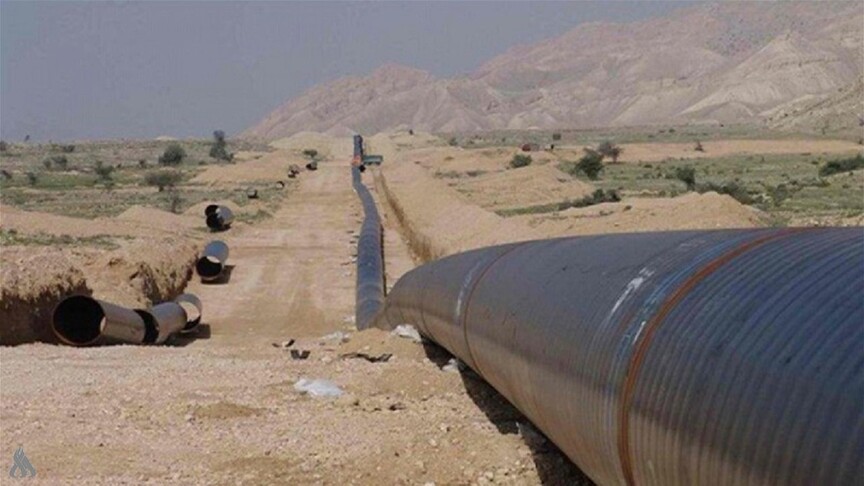
Iraq and Syria signed a memorandum of understanding to rehabilitate and operate the "Kirkuk-Baniyas" oil pipeline under the auspices of the United States.
The agreement aims to reopen one of the most important crude oil export routes in the region and provide Iraq with an additional outlet to the Mediterranean Sea away from the Strait of Hormuz.
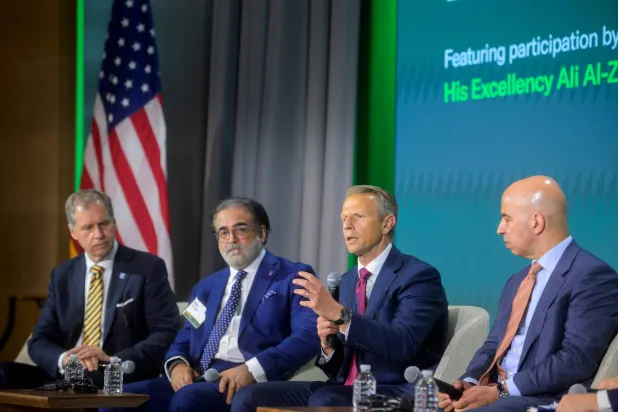
The agreement was signed in Washington between the Basra Oil Company and the Syrian Petroleum Company, in the presence of US Energy Secretary Chris Wright and Iraqi Prime Minister Ali al-Zeidi.
The American company Chevron, within an international alliance, will oversee the technical and financial aspects of the rehabilitation project.
The United States welcomed the agreement, considering it a strategic priority at both bilateral and regional levels.
Washington stated that the pipeline, when operational, will have an initial transport capacity of up to 2 million barrels per day.
The US State Department said the project will contribute to enhancing regional stability by expanding economic cooperation and providing an additional route for Iraqi oil exports to global markets.
Read also: America launches raids on Iran for the seventh night and redirects 4 ships
New outlet for Iraqi exports
The project represents the revival of the historic "Kirkuk-Baniyas" pipeline, which connects Iraqi oil fields to the Syrian coast, after it stopped operating since 2003 due to infrastructure damage during the invasion of Iraq.
Syrian Energy Minister Mohammed al-Bashir said the project will enhance Syria's position as a regional energy corridor linking the region's resources to the Mediterranean Sea and open the door for new investments in the energy sector.
The project is part of a broader package of economic understandings between Baghdad and Washington, after US companies signed agreements and partnerships with the Iraqi government on Friday worth nearly $60 billion.
The agreements include deals aimed at creating alternative routes for shipping oil from the Gulf, as well as other sectors including healthcare, telecommunications, and infrastructure.
It is not clear when these oil deals will be able to provide viable alternatives to the Strait of Hormuz, through which about 20% of global oil supplies pass.
Oil tanker in the Strait of Hormuz off Oman's Musandam: "Reuters"
__2026-07-17T143026Z_279673012_RC2NFMAF9YS3_RTRMADP_3_IRAN-CRISIS-OMAN-HORMUZ-1784298808
Read also: Oil jumps as tensions between America and Iran over the Strait of Hormuz return
When can the pipeline be operational?
Goldman Sachs estimates that building pipelines in a single country takes at least two and a half years, whereas these pipelines will pass through two or more countries.
However, analysts at the bank estimated that 7 different pipelines under development in the region could carry about 60% of the oil currently shipped through Hormuz by the end of 2028.
According to Goldman Sachs estimates, these pipelines could transport approximately 14 million barrels per day by that time.
Approximately 23 million barrels per day were shipped through the Strait of Hormuz before the war on Iran.
US Marines on a tanker in the Gulf of Oman performing inspection operations: "CENTCOM"
__AFP_C2G92T3-1784295618
Strait of Hormuz may become "secondary"
Iran has repeatedly sought to close the strait since the war with the United States began on February 28 last year, causing sharp fluctuations in oil and gas prices.
Crude prices rose more than 4% on Friday, but remain far from the $110 level recorded in early April, before retreating after a ceasefire was reached.
Brent crude futures for the global benchmark rose $3.87 (4.59%) to settle at $88.10 a barrel.
US West Texas Intermediate crude futures rose $3.54 (4.48%) to $82.49 a barrel.
Both benchmarks recorded their highest levels since mid-June and rose about 16% this week.
Thomas Barrack, the US ambassador to Turkey, said the oil pipeline agreements would lead to a program that "will make the Strait of Hormuz secondary."
Iraq seeks "long-term" partnerships with America
In a speech on Friday, al-Zeidi said the Iraqi economy seeks long-term investments and partnerships.
Al-Zeidi stressed his government's commitment to communication, dialogue, and cooperation with the US Chamber of Commerce, describing it as "the place where economic decisions are made."
Two of the agreements signed between Iraq and the US will focus on boosting oil production, while a third will include "investment in a pipeline that would create another export route from Iraq to global markets," according to al-Zeidi.
Iraqi officials said the pipeline will connect the city of Basra in southern Iraq to the city of Haditha in western Iraq, and from there extend to the port of Ceyhan in Turkey and the port of Baniyas on the Syrian coast.
Original source: Aleqtisadiah



Comments (0)
Be the first to comment.