ZATCA: 1 February 2027 Deadline for Implementation of Second Phase of E-Invoicing
Economy
ZATCA: 1 February 2027 Deadline for Implementation of Second Phase of E-Invoicing
Published: 24 July 2026 15:58 KSA
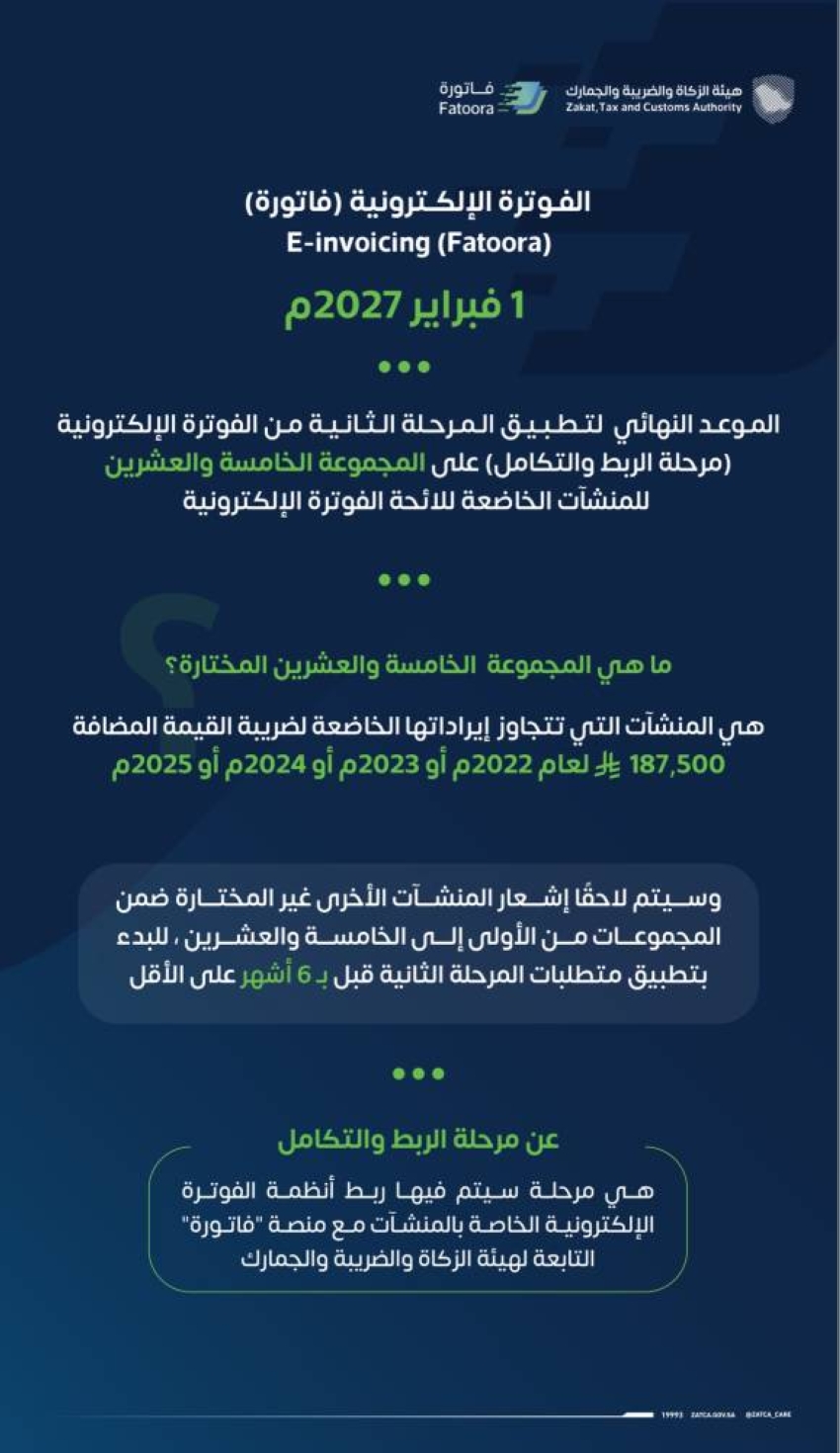
The Zakat, Tax and Customs Authority (ZATCA) has set the selection criteria for targeted establishments in the "25th" group to apply the "connection and integration" phase of e-invoicing. The authority explained that the 25th group includes all establishments whose VAT-taxable revenues exceed (187,500 riyals) during the years 2022, 2023, 2024, or 2025.
The authority stated that it will notify all targeted establishments in the "25th" group, in preparation for linking and integrating their e-invoicing systems with the "Fatoora" system starting from 1 February 2027. It added that the second phase - the linking and integration phase - requires additional requirements compared to the first phase - the issuance and storage phase. Most notably, linking taxpayers' e-invoicing systems with the Fatoora system, issuing electronic invoices based on a specific format, and including a number of additional elements in the invoice. It noted that compliance with the second phase - linking and integration - is being implemented gradually and in groups, and that the authority will notify the remaining groups directly at least six months before the specified linking date.
ZATCA noted that the second phase of e-invoicing is an extension of the economic renaissance and digital transformation witnessed by the Kingdom, and a continuation of a success story that began with the first phase of e-invoicing implementation, which achieved many positive results, most notably raising the level of consumer protection across the Kingdom. It praised the high awareness shown by taxpayers and their prompt response in implementing the first phase of the project. It is worth mentioning that the first phase of the e-invoicing project - issuance and storage phase - began implementation on 4 December 2021, and requires taxpayers subject to the e-invoicing regulations to completely stop using handwritten invoices or invoices written on computers using word processing or spreadsheet programs, and to ensure the availability of a technical solution for e-invoicing that complies with the authority's requirements, in addition to ensuring the issuance and storage of electronic invoices with all elements, including the QR code and other requirements.
Original source: Al-Madina



Comments (0)
Be the first to comment.