Daniel Day-Lewis: A Man with a Thousand Lives
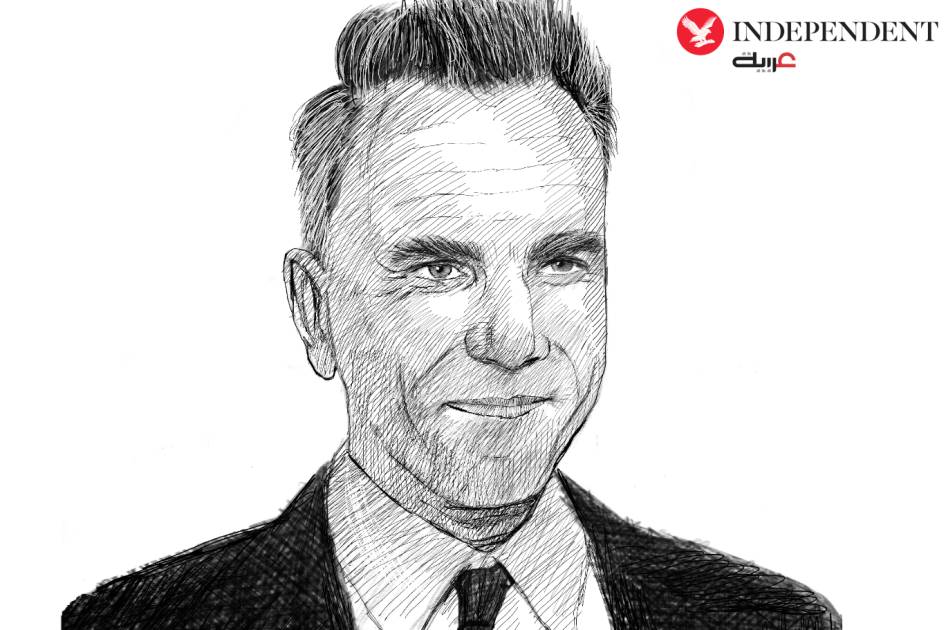
Summary: He chose acting not as a stable career, but as a temporary solution for his inability to be a 'normal person'. With every success, he would disappear, distance himself, and withdraw, as if public recognition was more of a threat than a reward.
Behind the majestic silence that envelops his name lies one indisputable fact: Daniel Day-Lewis was never an actor who wears masks, but a man who sheds his soul at the threshold of every role, leaving his body a vessel inhabited by the ghosts of characters. He is that 'radical' who turned cinema into a devotional ritual, and acting into an arduous process of invocation that transcends the boundaries of imagination and reality.
In the stillness of his gaze, we glimpse the anger of Daniel Plainview as he drills oil wells from the veins of his heart. The sun paints everything in the color of greed and madness, and the sound of rain on the oil tank resembles the first scream of industrial history.
The man stands there, grasping the reins of the world in his hands, his eyes burning and his voice cutting through the air, present and absent. Every movement of his body suggests that this man is not a creature of the moment but of all time—of ancient greed, buried love, and the pain that creates and destroys men. Every scene from him reminds you that cinema can become life in this very moment.
Al-Hadi (social media)
We hear the creaking of Christy Brown's bones as he defies paralysis to write a hymn of freedom with his left foot. He draws his dreams with it, and in his eyes a glimmer of faint light shines like fire under ash, as if he turns pain into living creativity.
We move to 19th-century New York, streets full of dust and blood, alleys narrow and dark, old wooden buildings swaying under the creak of carriages. Men, women, and children gather on the sidewalks. Everyone is confused, and life there is red with blood and fear.
Daniel appears amidst this chaos, wearing a dark coat, lifting his eyes to the cloudy sky as if reading fate in the clouds. His hand movement and his gaze. Everything is precise, and every detail tells of a struggle for power, a desire for revenge, and an individual's conflict with the city and destiny.
With his mother and father (Getty)
He does not walk among the crowds but moves like a thunderbolt shaking the earth; every movement resembles a knife aimed at the heart of the city, and every whisper from him sends a tremor through the viewer's conscience, as if history itself stops to look at him.
This actor retired from the noise to give us 'the essence', becoming like a star that rarely appears, but its light erases the trace of everything before it. This man who lived a thousand lives to convince us that one life is not enough.
He was never an ordinary actor but a project of perpetual anxiety, an open laboratory for existential questions about identity, loss, and meaning. Since his birth, he seemed placed at the heart of a conflict between poetry and life, between metaphor and reality. His father, the British poet Cecil Day-Lewis, greeted him with a poem containing a prophecy of disappointment, fear, and potential betrayal of love, paving the way for an exceptional human and artistic path.
1995 (social media)
He chose acting not as a stable career, but as a temporary solution for his inability to be a 'normal person'. With every success, he would disappear, distance himself, and withdraw, as if public recognition was more of a threat than a reward.
And even when he appears, he does so in a shocking way, affirming that he is an actor of radical transformations, not comfortable roles. The theater, his first dream, became his greatest breaking point. In 'Hamlet', the text intertwined with his personal memory and the image of his dead father, until he reached a moment of collapse where he left the stage and never returned, content to say that what the 'ghost of the father' told him was 'too heavy to bear'.
He was never an ordinary actor but a project of perpetual anxiety, an open laboratory for existential questions about identity, loss, and meaning. Since his birth, he seemed placed at the heart of a conflict between poetry and life, between metaphor and reality. His father, the British poet Cecil Day-Lewis, greeted him with a poem containing a prophecy of disappointment, fear, and potential betrayal of love, paving the way for an exceptional human and artistic path.
His perpetual alienation, his travel between countries, his registration in hotels under pseudonyms, his inability to build a stable life, and even his ambiguous romantic relationships marked by secrecy and absence—all are elements of a portrait of an artist living in a state of constant transit with no stability. Yet he re-tests himself through characters, as if searching for life in art and for the meaning of his existence in every role he plays.
It is said that he worked in shoemaking in Italy (social media)
He is an artist formed at the intersection of sorrow and commitment, isolation and moral search, memory and imagination. For this very reason, his performance was never just performance; it was always a test of the utmost limits of what a human can endure when he makes himself the material of art.
Embodiment
Day-Lewis is fully aware of how the audience sees him as 'truly crazy'—in his own words—living in a parallel world, consumed by the power of embodiment, so that the preparation for a role becomes as legendary as the performance itself.
Director Paul Thomas Anderson says of his method: 'He does not play the character; he completely transforms into it. He does not imitate or impersonate it, but lives it down to the last cell of his body, making my job as a director easier because the character is present before me in all its details.'
From the film 'My Left Foot' (social media)
In the film 'My Left Foot' (1989), he embodied the character of Irish writer Christy Brown, who has cerebral palsy. Day-Lewis spent the filming in a wheelchair, refusing to break character, and suffered rib fractures for a long time due to crouching in the wheelchair.
In the film 'The Last of the Mohicans' (1992), he slept on the ground for weeks, learned wilderness hunting, fishing, and building canoes with his hands, embodying his character and skills.
In the film 'Gangs of New York' (2002), he learned animal slaughter and trained in boxing to embody the butcher's brutality, and wore glass contact lenses to mimic the character's false eye.
From the film 'There Will Be Blood' (social media)
In the film 'There Will Be Blood' (2007), he played Daniel Plainview, a harsh, greedy oilman. Day-Lewis imposed isolation on himself and remained distant, then embodied the terrifying ambition of the character.
He spent an entire year reading about Abraham Lincoln in preparation for the film 'Lincoln' (2012), familiarizing himself with the president's letters, speeches, and era.
He chose acting not as a stable career, but as a temporary solution for his inability to be a 'normal person'. With every success, he would disappear, distance himself, and withdraw, as if public recognition was more of a threat than a reward.
In the film 'Phantom Thread' (2017), he studied the art of dressmaking for several months and learned precise sewing, even making a 1950s-style dress, and immersed himself in the obsessive nature of his character to the point that he decided to retire from acting after the film.
From the film 'Phantom Thread' (social media)
Day-Lewis dives into the core of his characters' emotions, often isolating himself from friends and family during filming to maintain his connection to the role. This intensity comes at a cost; he admits to feeling emotionally drained and needing significant time to recover after each project.
Nevertheless, he does not deny that this methodology made his company exhausting and a real burden on his family at home, and on the film crew who bear the consequences of this absolute dedication to the role. Imagine, for instance, working all day on the set of 'Gangs of New York' under Martin Scorsese, only to find yourself forced to have lunch next to 'Bill the Butcher', with his glass eye and murderous gaze.
Original source: Independent Arabia




Comments (0)
Be the first to comment.