Artist turns Syria into a woman in black-and-white paintings
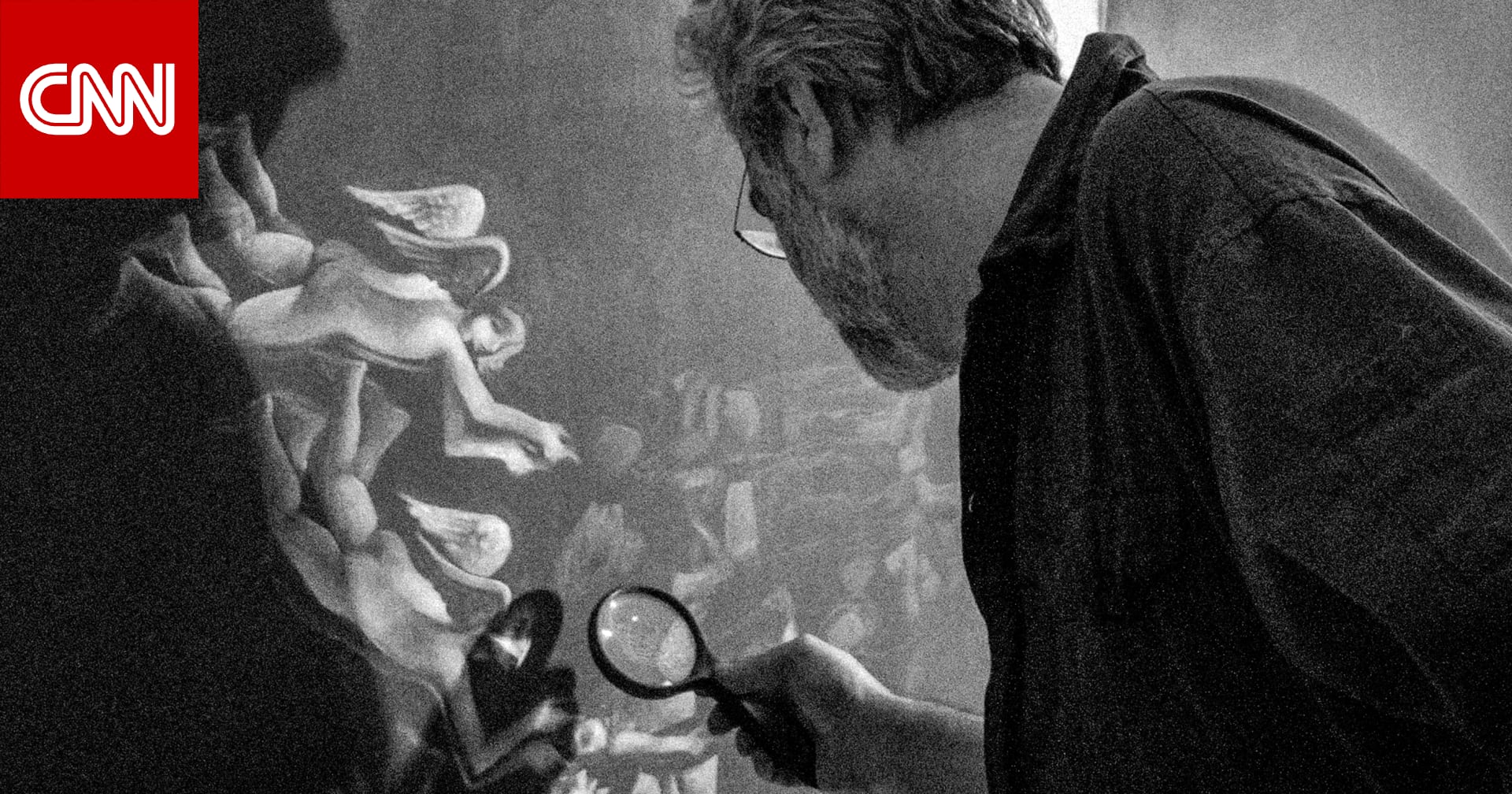
The works of Syrian painter Safwan Dahoul gain a visual dimension that goes beyond aesthetics, turning into a human record documenting the pain Syria has experienced in recent years.
Syrian painter Safwan Dahoul considers his works as an artistic archive of the stage he is going through. Credit: Sari Dahoul
(CNN)-- Amid the wars and events that Syria has witnessed in recent years, the artistic experience could not remain isolated from this heavy reality; rather, it turned into a highly sensitive space that also reflects memory.
Within this context, the works of Syrian painter Safwan Dahoul take on a visual dimension that goes beyond aesthetics, becoming akin to a human record documenting pain, transformation, and the constant search for meaning.
Dahoul did not expect the 'Dream' series to continue thirty years after its launch, which was first written as the title of an artwork he initially considered a temporary experiment, before it turned over time into a comprehensive visual and intellectual project that reshaped his concept of dream.
Dahoul's works reflected every stage that the time he lives through has gone through. Credit: Sari Dahoul
Dahoul pointed out that the recurring character in his works, centered on the presence of women, did not remain fixed in its connotations but evolved over time. He explained that in his early works, it was associated with romantic themes and their dichotomies of love, loss, joy, and sadness. However, after 2011 and the transformations that Syria witnessed, its role changed to become a 'witness' to what is happening. He began using it to express reality indirectly, away from direct statement, as if it tells what is happening around him, while at the same time bearing the features of Syria's ongoing transformations, until it became close to a symbolic embodiment of Syria itself.
After the Syrian events, the woman in his works turned into an eyewitness, and later became the main character. Credit: Sari Dahoul
The Syrian painter affirmed that his works often stand at the boundary between reality and the unconscious, pointing out that the painting is not separate from the reality we live in, but at the same time it does not limit itself to it. He noted that the artist starts from reality but expands his vision to include different dimensions of time, considering that this ability to expand is what gives the painting its value and continuity.
He also explained his long reliance on black and white and shades of gray, clarifying that although he is not biased toward any color, these gradations give him a deeper expressive ability than other colors. He pointed out that these choices do not stem from a lack of color, but from aesthetic and intellectual conviction, considering that reality itself, often, is closer to gray than to loud colors.
He is not an enemy of colors, but he finds in white, gray, and black what he needs in his works. Credit: Sari Dahoul
He added that themes of loss, loneliness, and waiting recur in his works as part of the shared human memory, especially since art in its essence is not an isolated individual experience but an extension of a long history of human expression through painting, music, and poetry. He stressed that the painting must reflect the era in which the artist lives, while having the ability to continue and transcend its time.
As for the impact of the transformations his country witnessed in recent years on his artistic path, Dahoul replied: 'The artist cannot be separate from his surroundings; rather, he is a witness to what is happening around him. The character that recurs in my works is no longer just a visual element, but has become closer to a symbol bearing the features of the Syrian reality itself.'
Themes of loss, loneliness, and waiting recur in his works as part of the shared human memory Credit: Sari Dahoul
Despite the specificity of his experience, Dahoul confirmed that he avoids imposing any direct interpretation on his works, indicating that he prefers to leave the viewer freedom of reading and interpretation, considering that the artwork is not complete except through the viewer's eye.
He also explained that memory constitutes a fundamental material in his works, noting that he deals with the painting as if he is taking pictures with an invisible camera, later turning them into a visual and emotional archive documenting time and humanity together, considering this archive as part of the memory of the stage he lives through, and perhaps extending to later times.
Original source: CNN Arabic


Comments (0)
Be the first to comment.