Nawaf Al-Hoshan and the Tragedy of Mourning... Short Cinema with a New Vision
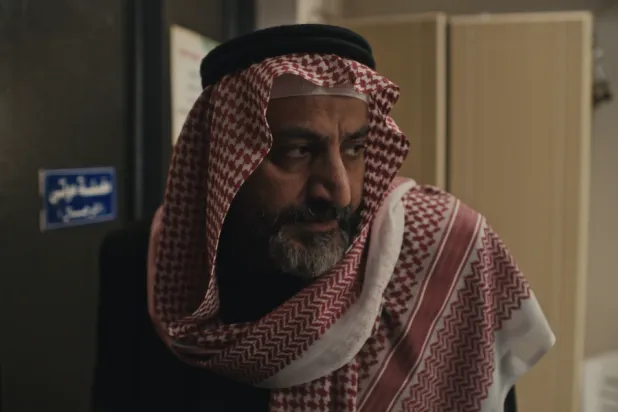
On the morning of the first day of mourning, a father returns to a home he left years ago, carrying a single question about the cause of his son's death. With this story, Saudi director Nawaf Al-Hoshan opens his short film «The First Day of Mourning», which builds its tension on human relationships rather than events, tracing a father's journey trying to understand what happened within his family after a painful accident. The film was recently screened at the Saudi Film Festival, where it drew attention to Al-Hoshan's talent.
In his conversation with Asharq Al-Awsat, Al-Hoshan sees that «The First Day of Mourning» represents an important milestone in his career, and the beginning of a phase in which he aspires to complete his first feature-length narrative film, explaining that the film came as a result of the team's belief in the project more than its connection to production capabilities. He adds: «For me, the film is a beginning for what comes after... I am currently working on a feature-length narrative film project, and that is my main goal.»
The film, shot in the Al-Suwaidi neighborhood of Riyadh, steers away from building a traditional mystery, focusing instead on human relationships within the family; where feelings of loss, guilt, and deferred questions intersect, in a journey during which the father (Osama Al-Qass) seeks to learn the circumstances of his son's death, while simultaneously discovering other truths about his family.
The film was produced independently, after numerous attempts to secure production support, before the team decided to proceed with the project. He adds: «Every person working in cinema has a project waiting to see the light; so we preferred to make the film and continue working, rather than waiting for the right conditions.»
Director Nawaf Al-Hoshan (Asharq Al-Awsat)
A Father's Journey... and Discovering a Family
Although the film's events begin with the son's death, Al-Hoshan believes the story is more concerned with the father's character than with the death itself, as the film traces the transformations he undergoes while confronting his family members one by one. He adds: «I was drawn to the idea of the father's journey within the Najdi mourning atmosphere, as if he is going through different stages of loss and searching, while his feelings towards others emerge in the form of confrontation, or an attempt to understand what happened.»
He reveals that the idea was based on real-life cases he encountered, and also resonated during filming, explaining: «I have come across similar cases, and even some actors told me they know stories close to this one; so I felt that cinema could approach this subject.»
Despite the sensitivity of the issue regarding concealing the son's death due to fear of bringing shame to the family, Al-Hoshan built his film away from direct discourse, preferring to let the characters drive the story themselves, while the viewer reaches their own conclusions through the development of events.
At the same time, he ensured the film retained a suspenseful aspect accompanying the journey from its beginning. On this, he says: «I liked the idea of investigation... the father searches for the truth through dialogue with his children, and this gave the film a different rhythm, making the search journey an essential part of the story's construction.»
His interest did not stop at the development of events, but extended to visual details that give each scene its own feel, starting from the father's black coat that accompanies him throughout the film, making him resemble an investigator, to the placement of characters standing and sitting within the frame, so that the image carries part of the meaning, alongside the dialogue.
A scene of the mourning dinner in the film where attendees inquire about the son's death (Asharq Al-Awsat)
The Text Leads... Then the Actors Come
Despite the limited budget, «The First Day of Mourning» featured well-known names, led by Osama Al-Qass, Ahood Al-Samer, along with journalist Mohammed Al-Suhaimi, who is making his acting debut. Al-Hoshan believes the starting point was the script, which succeeded in convincing the actors of the project from its first reading.
He says: «When the script is cohesive, the actor gets excited about it... Osama Al-Qass in particular is known for his selectivity, and I had no prior relationship with him, but he read the script, believed in the film, and decided to participate, as did the rest of the actors.»
He emphasizes that the film's success depended on three integrated elements: the script, the performance, and choosing the right actor for each character. He adds: «After finishing writing the screenplay, I felt it carried the atmosphere of a police investigation, but this type of story needs a human performance close to people, because intimacy comes from the characters more than the events.»
Hence, his great interest in the casting stage, which took up the largest share of the film's preparation. He explains: «We were looking for a family that seems real, with harmony, a single dialect, and similar ages, because the viewer believes the relationships before believing the events, especially with a limited budget.»
Al-Hoshan reveals that his choice of Osama Al-Qass came after watching his performance in the film «Swan Song» by director Hana Al-Omair, as he found in him the actor closest to the character he wrote. He says: «I was drawn to his honesty in performance and his natural emotions, and I felt he was the most suitable for the role. During filming, he was very committed and enthusiastic about the project, despite the long period we spent in rehearsals.»
Regarding the participation of journalist Mohammed Al-Suhaimi, who plays the role of the family uncle, Al-Hoshan recalls the beginning of his acquaintance with him, saying: «I had been reading his articles since 2010, and I liked his satirical sense, then I met him years ago, and I felt he had a presence that could suit one of my projects in the future.»
Journalist Mohammed Al-Suhaimi in his first acting experience (Asharq Al-Awsat)
A Camera That Watches the Characters
Although «The First Day of Mourning» carries a detective thread in its structure, Al-Hoshan visually opted for a calmer style, placing the characters at the forefront of the image and letting the camera merge with them, rather than showcasing its own presence. This approach extended to other details within the frame, such as the distribution of characters, the way they stand and sit, and the father's movement inside the house. He explains: «Every visual choice carried a specific feeling. Sometimes the father stands while the son sits, or one occupies a higher position than the other within the frame. These details give the scene its meaning and help the viewer feel the tension the characters are experiencing.»
«The First Day of Mourning» belongs to realistic social drama, yet Al-Hoshan refuses to tie himself to a single cinematic genre, believing that the subject dictates the film's form, not the other way around. He continues: «Sometimes a director succeeds in a comedy film, so production companies and investors tend to request similar works, because that is easier... As for me, what determines the direction is the script, not the classification. What really concerns me is the subject, the characters, and the quality of the story.»
He reveals that his upcoming projects are moving in more than one direction, adding: «I am currently working on writing different projects, including a comedy film; so I prefer not to confine myself to one genre.» He believes that diversity of experiences is part of a director's development, and that each story imposes its own tools and method of narration, regardless of its classification.
The father surrounded by his children in the film during the verification of the son's death (Asharq Al-Awsat)
The Feature Film... The Next Step
After the participation of «The First Day of Mourning» in several festivals, Al-Hoshan's focus is now directed towards completing his first feature-length narrative film, in collaboration with producer Hani Al-Sufyan, considering this the natural next phase in his career. He went on to say: «My focus now is on the feature film. We are working on one project, and we hope it sees the light soon.»
Original source: Asharq Al-Awsat



Comments (0)
Be the first to comment.