«Read and Think» Opens a Window on the Language of Metaphor

«Read and Think» Opens a Window on the Language of Metaphor
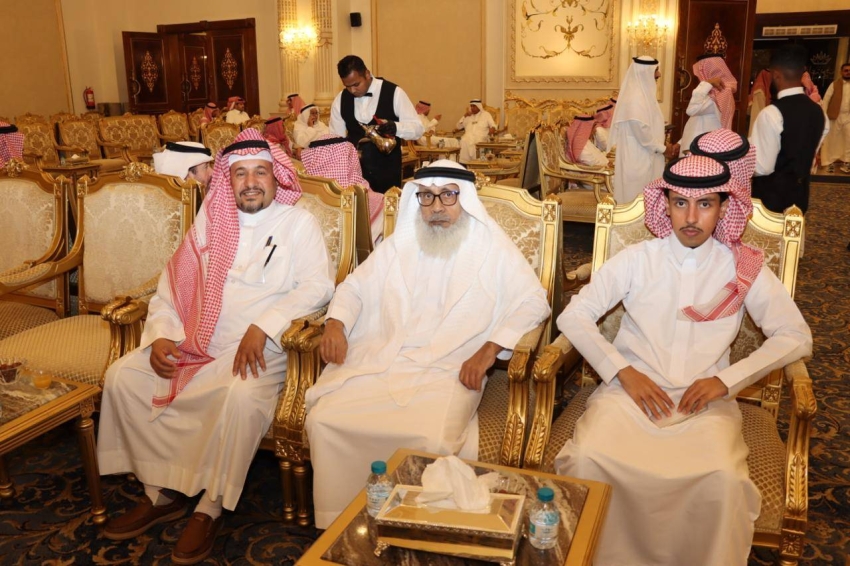
On a cultural evening that restored language's first astonishment, the 'Read and Think' club held a meeting in 'Medina' in the Al-Mughrazat district to discuss the book 'I Am the Other' by James Geary, translated by Mutaib Fahd Al-Shammari, through a reading presented by Munirah Al-Asimi, attended by a number of people interested in reading, thought, and language.
The meeting came under the title (The Secrets of Linguistic Metaphor and How It Shapes Our View of the World We Live In?) to open a contemplative space on metaphor, not as a rhetorical embellishment or a school lesson in the tenor and vehicle and ground, but as a subtle way in which humans think, through which they read the world, and give things names, images, and meanings that go beyond their apparent form.
The meeting discussed the idea that humans do not use metaphor only in poetry and literature, but use it unconsciously in their daily expressions, such as: 'drowning in love', 'burdened with debt', 'the price soared', 'the market collapsed', 'war erupted', 'passion extinguished' — expressions that seem familiar, but reveal the ability of figurative language to transform abstract meanings into tangible images, making human experience closer to memory and understanding.
The attendees also discussed the presence of metaphor in political discourse, where phrases like 'war on terror' and 'war on drugs' recur, which do not describe reality neutrally, but evoke vocabulary of confrontation, danger, victory, and loss, making metaphor an influential force in shaping the audience's consciousness, not just a transient linguistic choice.
The discussion extended to economics and the language of money and debt, through metaphorical images linking money to social status, revealing how things can turn from tools of comfort into symbolic burdens. A person may be master of his simple possessions, then become a slave to his new appearance when under the pressure of social prestige, so that money, which is supposed to grant him greater freedom, becomes the reason for his commitment to a certain image before others.
Commercial advertising was present as a broad field for metaphor, as the advertisement not only sells the product but also sells an image, a desire, and an indirect promise. Fast food, for example, is not presented merely as food, but is linked in the advertisement to pleasure, speed, family, and social success, so that visual language, the brief phrase, color, and gesture become tools to influence the recipient and attract his attention.
The meeting also touched on the language of gestures as a silent metaphorical language: hand movement, posture, tone of voice can carry meanings that go beyond direct speech. There was also talk of folk tales and ancient stories, including the story of Mullah Nasr al-Din, which reveals the paradox between theoretical knowledge and practical skill, when the scholar boasts of his knowledge of grammar, then fails to swim in a moment of danger.
The interventions emphasized that the value of the book 'I Am the Other' lies in taking metaphor out of the confines of the traditional rhetoric lesson into a broader space that makes it part of human thought. Metaphor is not a linguistic luxury, but a tool for understanding the self and the world, and can be a means of revelation and illumination, just as it can sometimes turn into a tool of influence or manipulation when used in politics, advertising, or public discourse.
The meeting concluded with thanks to the attendees and participants, and an emphasis on the importance of continuing the reading meetings that restore reading's lively presence, open broader horizons for the recipient to understand language, thought, and life, and affirm that humans not only live within language, but within the metaphors that shape their way of looking at the world.
Original source: Al-Riyadh


Comments (0)
Be the first to comment.