«The Odyssey»... Cinema at Its Best
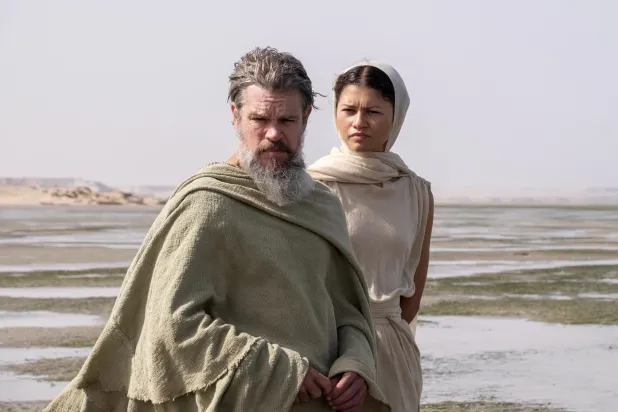
Christopher Nolan's latest film, "The Odyssey," has transcended being merely a new movie release to become a cultural and cinematic event dominating discussions since its premiere.
Christopher Nolan's latest film, "The Odyssey," has transcended being merely a new movie release to become a cultural and cinematic event dominating discussions since its premiere. Audiences have enthusiastically shared its scenes and details with unmatched excitement, while cinemas continue to welcome growing numbers of viewers eager to experience this epic journey.
In Saudi Arabia, this momentum was reflected at the box office, where the film opened with revenues of 9.1 million riyals ($2.43 million) and 145.9 thousand tickets sold during its first week. It topped the weekly box office in one of the most prominent openings of the year, reinforcing the status that Nolan's films now enjoy among Saudi audiences. This launch aligned with the film's global presence, having grossed $263.8 million over its opening weekend—including $123.5 million in the United States and Canada, and $140.3 million in international markets.
Cinema as an Event
It can be said that "The Odyssey" has revived the feeling associated with major cinematic works, where a release date becomes an anticipated occasion, and booking a seat, choosing a theater, and picking the viewing time turn into details of special significance. Opening screenings were packed, the search extended to cities with the largest screens, and many viewers returned for a second viewing to absorb its world and revisit its scenes more calmly.
With each new screening, Nolan's previous films have returned to the circle of comparison. Social media platforms are filled with lists ranking his works from "Memento" to "Oppenheimer," while many attempt to determine the place "The Odyssey" deserves within this career path. Perhaps the significance of these comparisons lies in the fact that they no longer revolve around the film alone, but rather around the legacy of a director whose every new work reopens the discussion on his entire cinematic experience.
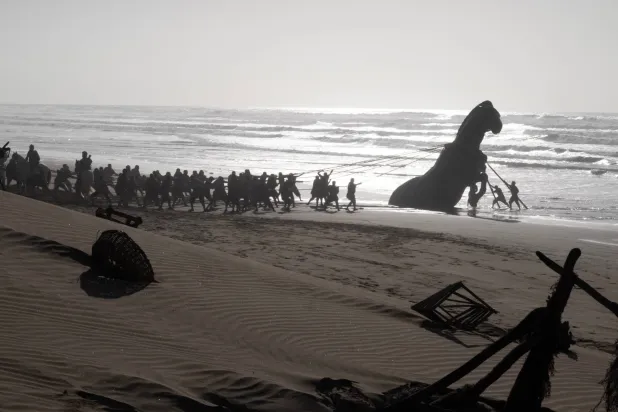
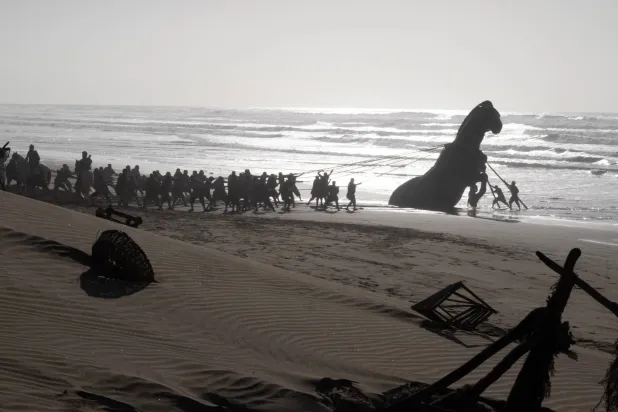
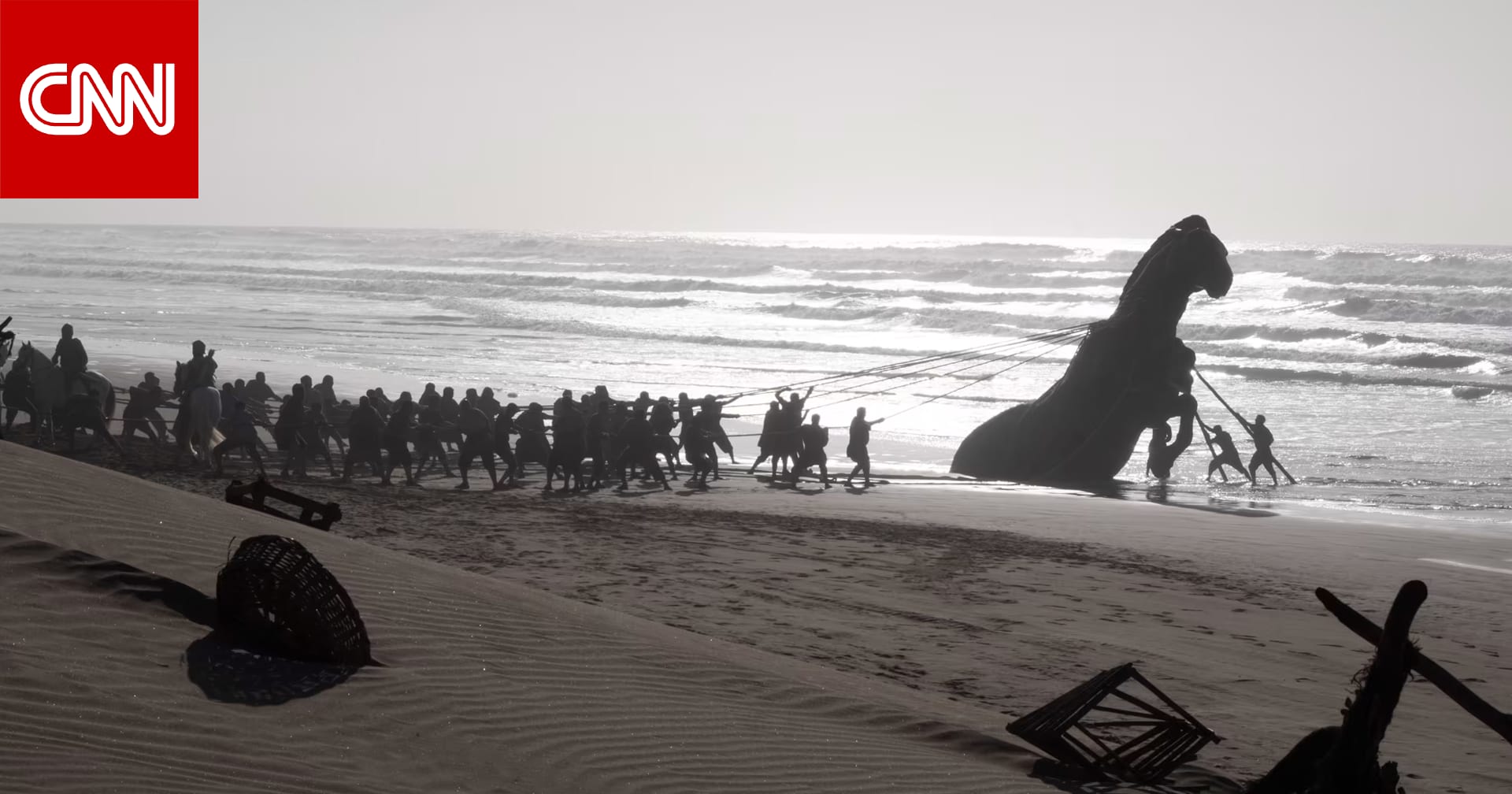
Shot entirely on IMAX cameras for the first time in the history of feature-length narrative films, the movie spans nearly three hours of war, adventure, horror, and emotion, giving each station its own distinct features while keeping the sea as a visual and emotional thread connecting the parts of the journey.
The Return of Homer
The film's impact extended to the text that inspired it, as Homer's epic—written nearly 3,000 years ago—returned to the forefront of attention. Discussions spread regarding its characters, events, differences between its pages, and Nolan's vision. Readers began searching for its translations, while a new audience was introduced to Odysseus, Penelope, Telemachus, Calypso, Circe, and the Cyclops, in an encounter between popular culture and one of the foundational texts of Western literature.
Nolan chose the spirit of the epic as a starting point, then rearranged its world according to his own vision. He preserved the core journey of the King of Ithaca returning from the Trojan War, the years separating him from his wife, son, and homeland, and the dangers testing his wit, patience, and survival skills. In contrast, he gave the story a contemporary cinematic pace, reimagined some of its creatures and characters, and tied its adventures to a clear emotional thread that makes the return to Penelope the center of the journey and its primary driving force.
Odysseus Between Heroism and Fragility
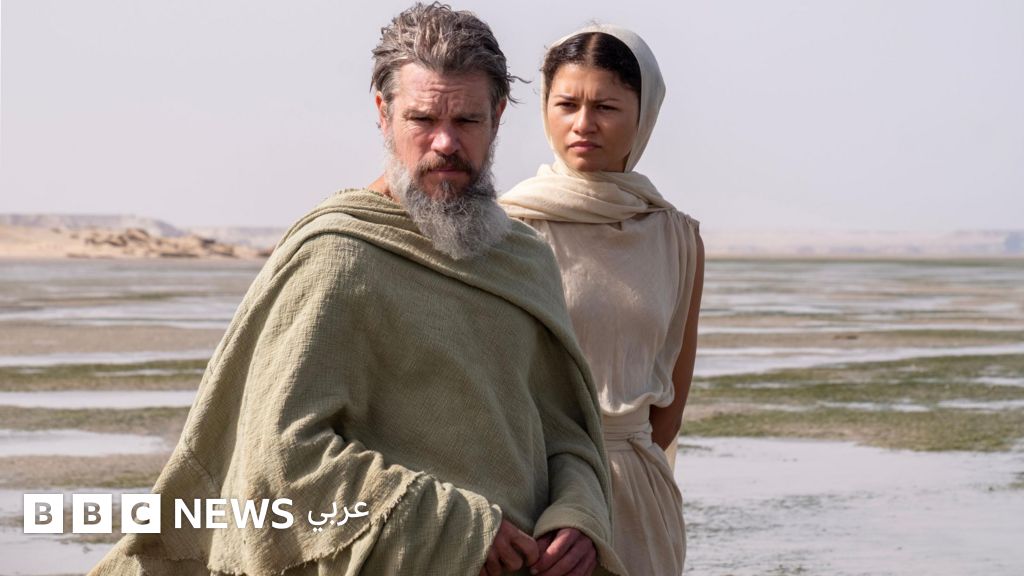
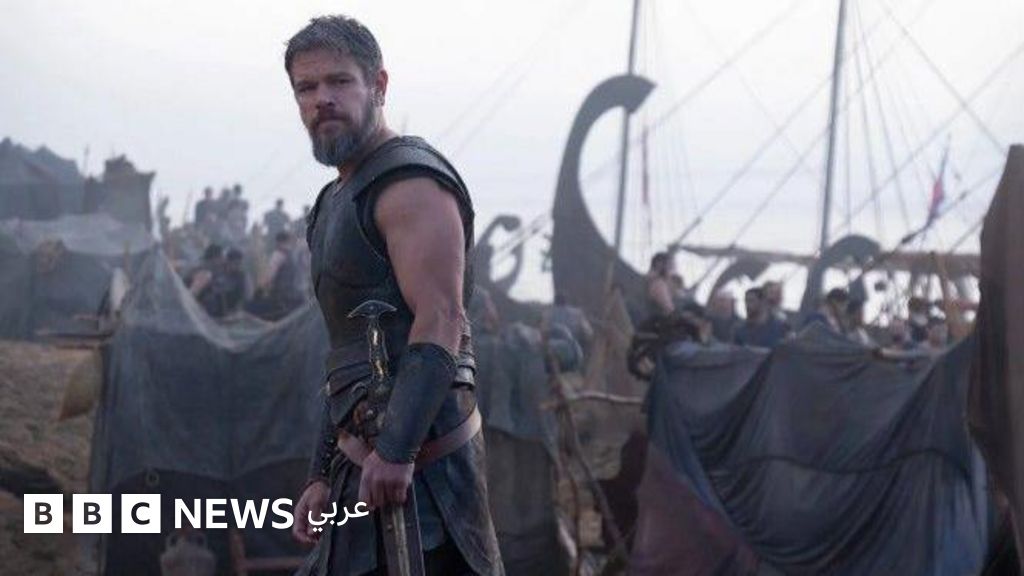
The film portrays Odysseus (Matt Damon) with an image combining strength and vulnerability. He is a leader who knows how to face danger, but he carries within him the exhaustion of war, the bitterness of loss, and the length of absence. As the journey progresses, the luster of the victorious leader recedes in favor of a man testing the limits of his endurance, and the return to Ithaca becomes a psychological test on par with everything he faces at sea.
Penelope (Anne Hathaway) maintains her presence even in her absence from large parts of the events. She is the destination that gives the journey its meaning, and her image accompanies Odysseus whenever hardship intensifies. The film treats his relationship with her as the emotional core of the story, presenting an Odysseus who is far more faithful to his wife than his depiction in Homer's text.
In the epic, his journey is tied to his relationships with Calypso and the sorceress Circe, whereas Nolan chooses a different path that reinforces his loyalty to Penelope, making the longing for her a driving force that supersedes temptation. This change gives the narrative emotional cohesion, making the return as much an act of love as it is the recovery of a throne and homeland. Meanwhile, their son Telemachus (Tom Holland) appears as a young man whose life was shaped in the shadow of a father he knows only from stories, turning Odysseus's return into an encounter between two men, each carrying an imagined image of the other.
Horror Within the Epic
Horror is present as one of the film's most powerful elements; the creatures, islands, and dark expanses carry a tension that builds before danger appears, and Nolan excels at building fear through sound, distance, and anticipation. This tension reaches its peak in the scenes featuring the Laestrygonians, as well as in encounters where myth blends with a primal sense of danger.
Ludwig Göransson's score supports this world with heavy, sustained rhythms that grant the sea a special dread and accompany Odysseus in moments of triumph and defeat. The music sometimes drives the scene with oppressive force, before withdrawing to let silence play its part, especially in moments when the hero confronts his losses.
Race for the Top Spot
The dominance of "The Odyssey" at the Saudi box office left other films competing for the remaining spots. The Egyptian film "Ibn Meen Fihom?" came in second with revenues of 2.9 million riyals ($773 thousand), while "Toy Story 5" took third place, and the Egyptian film "Sakr W Kanaria" ranked fourth.
Total Saudi box office revenues for the week reached approximately 26.6 million riyals ($7.09 million), with nearly 527 thousand tickets sold. Nolan's film alone captured the lion's share of revenues and attendance, during a week that revealed the scale of demand for major cinematic works when they combine mass appeal, a visual experience, and a cultural event.
Original source: Asharq Al-Awsat
Comments (0)
Be the first to comment.