The Story of Fustat in the Ayyubid Era
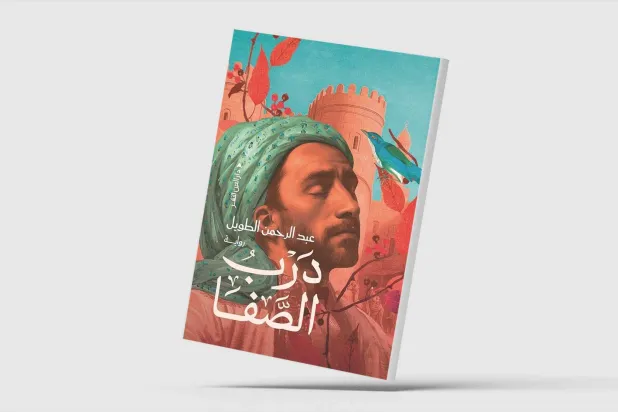
Recently published by Dar al-Ayn Publishing in Cairo, the novel 'Darb al-Safa' is the first novel by researcher and poet Abdul Rahman al-Tawil. It is a historical novel set in the ancient city of Fustat.
Recently published by Dar al-Ayn Publishing in Cairo, the novel 'Darb al-Safa' is the first novel by researcher and poet Abdul Rahman al-Tawil. It is a historical novel set in the ancient city of Fustat during the era of al-Zahir Baybars, chronicling the end of the Ayyubid state and the beginnings of the Mamluk era. It deals with the crisis of a young man who experiences existential suffering in his attempt to discover himself, real suffering represented by his family's crises, and emotional suffering, in addition to his connection to his city.
The novel is historical but filled with a Sufi atmosphere, and it celebrates love, striving, and patience, to tell the stories of humanity across time, where historical events intersect with personal experiences in a deep journey of determination and hope. Throughout the text, the author attempts to revive the language of the time period being narrated, mimicking its vocabulary and structure, so that the reader feels they are living within the ancient language with its great heritage connotations. The novel also clearly relies heavily on embedding poetic verses, making the text a mixture of poetry and narration.
The author had previously published 'Bariq Ghayhabi' (2015), 'Sifr Lam Yakun' (2017), and the book 'Al-Fustat wa Abwabuha' (2024), for which he won the State Encouragement Award in the field of history, archaeology, and heritage preservation.
From the atmosphere of the novel we read: 'Whoever lived in Darb al-Safa became pure.' This was the will that Habib inherited from Umran, and he held fast to it, and vowed to his heart not to depart from it; hoping to attain his father's purity, and eager for 'Umran' to remain in the alley he had bequeathed, and wishing to remain 'beloved' to those he loved. But wishes do not shape destinies; time outlasted the will, outlasted the alley, was stronger than love, more binding than a covenant, and longer than a lover's patience. In the era of Sultan al-Zahir Baybars, the young Mamluk state was achieving its decisive victories over the Crusaders, and the ancient Fustat was entering a new phase of its decline, and Habib ibn Umran was searching for himself in his father's will, in his family that had become a trust in his hands, in his alley where he grew up among its houses and sheltered in its shade, 'and in his ancient city that had stored the ages in its landmarks, and in his beloved who smiled at him with the world in her face, and in the melodies of singing, the strumming of ouds, and the rhymes of poetry, and in the pages of books and the treasures of travels, and in taking oaths from sheikhs and receiving the wisdom of saints, and in seeing wonders and hearing tales of predecessors, so that news gathered with him, and he would be immortalized by his voice in the memory of time.'
Original source: Asharq Al-Awsat





Comments (0)
Be the first to comment.