Cultural / 'Sunken Treasures' Exhibition Tells the Story of the Umluj Ship from a Commercial Voyage to an Archaeological Witness
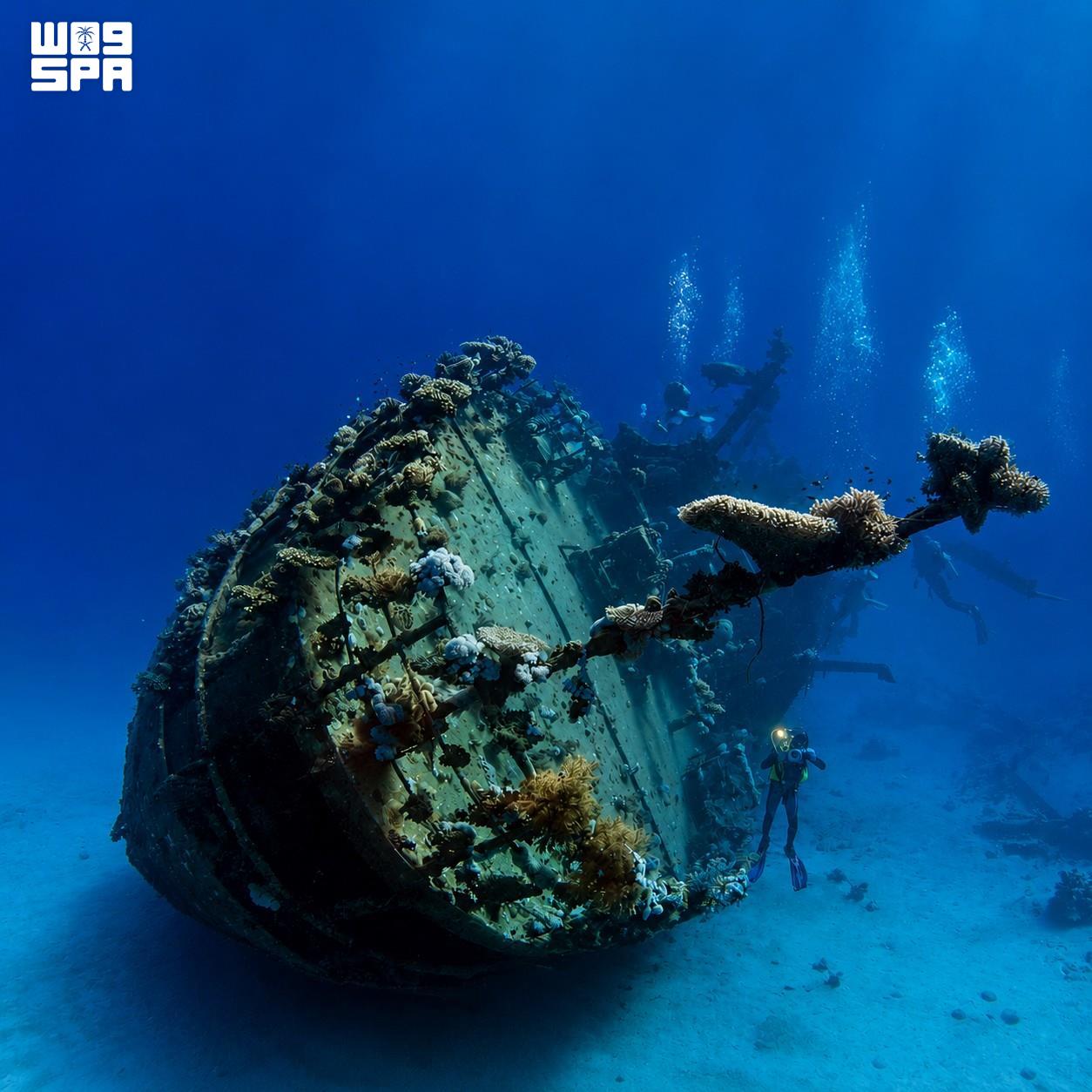
Jeddah, Safar 4, 1448 AH, corresponding to July 18, 2026, SPA — The exhibition "Sunken Treasures: The Maritime Heritage of the Red Sea," held at the Red Sea Museum in Historic Jeddah, offers a cultural and educational experience combining archaeological discovery and historical narrative. Through interactive pathways, it showcases evidence documenting the history of navigation and trade in the Red Sea, as well as the Kingdom's efforts in exploring and preserving marine cultural heritage. The exhibition takes visitors, in the "From Voyage to Wreck" section, on a journey documenting the story of the Umluj shipwreck, one of the most prominent underwater archaeological sites in the Red Sea, which transformed from a merchant ship into an archaeological witness preserving part of the Red Sea's memory for over two centuries. The section recounts the story of a merchant ship about 40 meters long that struck coral reefs off the coast of Umluj and settled on the seabed at a depth of 22 meters, about 230 nautical miles north of Jeddah. The wreck site was discovered in 2007, and archaeological survey and excavation work began in 2015, uncovering a set of evidence reflecting the nature of the ship's cargo and documenting part of the maritime trade networks that connected the Red Sea to Asian ports and other regions. The exhibition displays a number of archaeological finds from the site, including pottery jars and pieces of blue-and-white Chinese porcelain dating back to the 18th and 19th centuries, along with artifacts reflecting details of life aboard the ship and the types of goods carried by merchant ships across the Red Sea. The section also highlights what happened to the wreck site after the ship sank: it was gradually covered by layers of sediment and sand, coral reefs grew around it, and fish and marine life inhabited its remains, turning it into a site combining archaeological value and natural diversity. The exhibition concludes this pathway with an interactive experience showing how the remnants of a sea voyage turned into a submerged memory preserving evidence of humanity and its cargo, emphasizing the importance of maritime heritage as part of the Kingdom's cultural legacy, and raising awareness of the need to protect underwater archaeological sites and preserve them for future generations. // End //19:38 T M 0092
Original source: SPA





Comments (0)
Be the first to comment.