Possible explanation for the sudden cardiac death of some celebrities
A new study by a team of British researchers has shown that sudden cardiac death may be linked to many genetic errors that affect the letters of the DNA strand. The researchers identified 17 genetic errors associated with hypertrophic cardiomyopathy, which is one of the main causes of sudden cardiac death worldwide.
The researchers found that sudden cardiac death, linked to deaths or serious health crises of prominent celebrity athletes such as Fabrice Muamba, Christian Eriksen, and Marc-Vivien Foé, is associated with a set of genetic changes that indicate treatability.
In their study published Tuesday in the journal Nature Communications, a multidisciplinary research team including scientists from the University of Birmingham in the UK revealed new insights into how 'genetic errors' in the DNA strand contribute to hypertrophic cardiomyopathy (HCM).
Spanish Sevilla star Antonio Puerta woke up after his collapse then died (Reuters)
Sudden cardiac death is defined as an unexpected event resulting from a sudden cessation of heart function (cardiac arrest). It usually occurs within an hour of symptom onset in individuals who may or may not have known heart disease. It is fatal without immediate medical intervention.
Cardiomyopathy
Katja Gehmlich, Professor of Molecular Cardiac Pathology at the University of Birmingham and lead author of the study, said: 'Hypertrophic cardiomyopathy often affects healthy, highly fit individuals, and its effects can be severe, as we have seen in cases of prominent footballers such as Marc-Vivien Foé who died during competition.'
She added: 'These findings, with the help of other researchers around the world, will help us find potential ways to treat these genetic defects and better understand how these proteins reshape the hearts of patients with this disease.'
Lead researcher Maya Nour El-Din, a PhD student at the University of Birmingham, explained that 'using a range of laboratory techniques, our team developed a systematic approach that helped identify the genetic changes most likely to cause disease.'
She added: 'We hope these findings will contribute to the development of new treatments for hypertrophic cardiomyopathy and other heart diseases.'
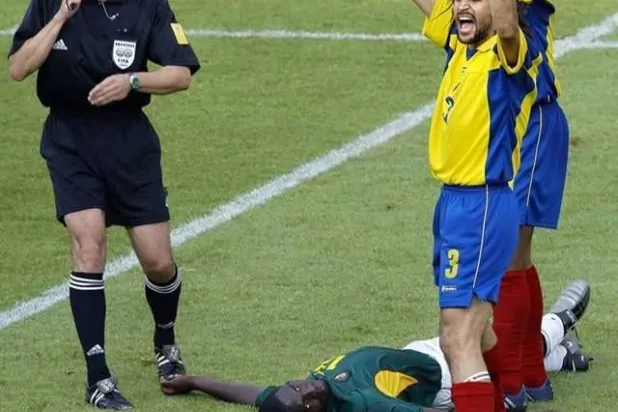
Marc-Vivien Foé, the Cameroonian footballer, had moved to the French league and then to the English Premier League as a professional player, before tragically passing away from a heart attack on the pitch during a match between Cameroon and Colombia in the 2003 Confederations Cup.
Different effects
Although 'genetic errors' in a protein called alpha-actinin-2 (ACTN2) and their role in hypertrophic cardiomyopathy have previously been identified, it has not been determined how these errors lead to cardiac arrest.
In this study, structural and cellular biologists from the University of Birmingham, the University of Oxford, and the Harwell Research Complex in England collaborated to study 17 errors in the ACTN2 protein using a range of experimental methods, and found that they affect the protein in different ways. Some of these errors made the protein less stable, more prone to clumping, and less able to interact with other biological molecules.
Sudden cardiac death is defined as an unexpected event resulting from a sudden cessation of heart function (Reuters)
The researchers also found that these genetic errors have different effects depending on their location within the ACTN2 protein. In particular, a vital region that helps ACTN2 interact with other parts of cells and is important for key cellular processes was identified as a major hotspot for changes caused by these spelling errors.
Genetic testing
Dr. Fayyaz Muhammad, lead author of the study and lecturer at the University of Birmingham, said: 'Many of the experimental approaches used in this study can be easily replicated in other laboratories.'
He added: 'We hope this framework will improve the interpretation of genetic test results for cardiomyopathies associated with the ACTN2 gene, and that it can be adapted to study disease-causing genetic changes in other heart proteins.'
Original source: Asharq Al-Awsat





Comments (0)
Be the first to comment.