Editing Embryo Genes Nears Reality, Reigniting Ethical Debate
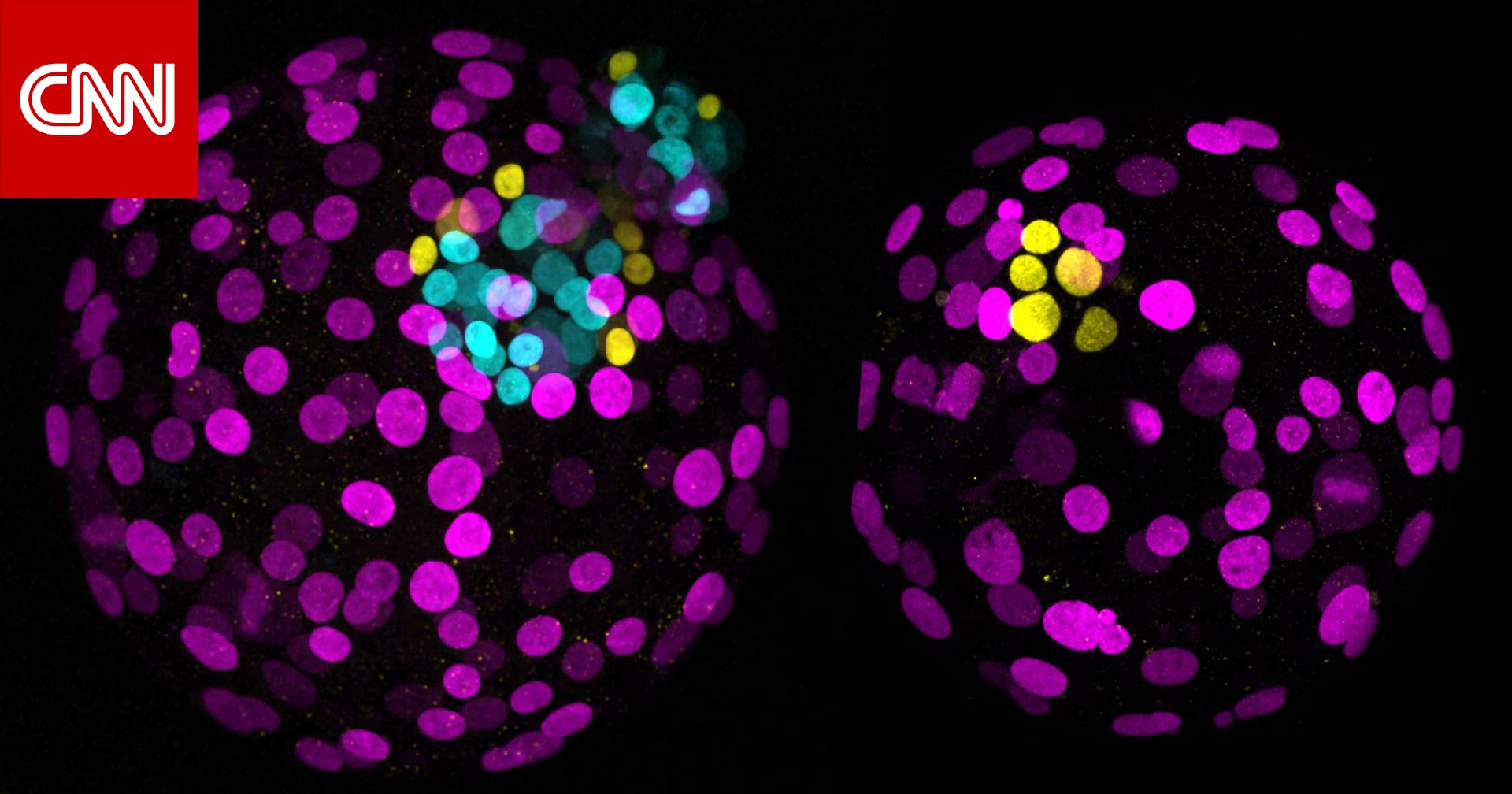
Although scientific consensus and laws in 70 countries currently consider editing the human germline—altering embryo DNA to prevent disease transmission across generations—extremely risky, new research suggests that editing human embryo genes with unprecedented precision may soon be possible.
(CNN) -- Pioneering gene-editing therapies are currently used to treat devastating genetic diseases, saving patients' lives and alleviating their suffering. But these patients may pass disease-causing mutations to their children.
Despite scientific consensus and laws in 70 countries deeming human germline editing—altering embryo DNA to prevent disease transmission across generations—extremely risky at present, new research indicates that editing human embryo genes with unprecedented precision could become possible soon.
Scientists emphasize that major obstacles still prevent safely editing viable human embryos.
Amander Clark, professor of molecular, cellular, and developmental biology at the University of California, Los Angeles, and director of the Center for Reproductive Science, Health, and Education, said, 'Using gene editing in human embryos was completely off the table six years ago,' adding that the new research 'reopens the possibility of using this technology for future therapeutic purposes with embryos resulting from in vitro fertilization.'
Human embryo research remains strictly regulated in most countries, often limited to 14 days after embryo formation.
Also, the public's stance on the idea of 'genetically modified babies' remains unclear, amid ethical concerns about the possibility of using this technology to create 'designer babies' whose genes are selected or edited for desired traits.
Developing a tool that once lacked precision
Katarina Harasimov performs base editing at the Niakan lab at the Loke Centre for Trophoblast Research, University of Cambridge. Credit: Loke Centre for Trophoblast Research, University of Cambridge
The CRISPR-Cas9 gene-editing technology is used in laboratories worldwide and has revolutionized scientific and medical research, enabling scientists to edit the genes of living organisms. In 2020, two of its developers won the Nobel Prize in Chemistry, and in 2023, the first gene therapies for sickle cell disease were approved.
However, this technique is sometimes considered an imprecise tool, as it can cause unintended changes in DNA when editing human embryos, including the potential loss of an entire chromosome.
Concerns over these effects were among the reasons the scientific community condemned the work of Chinese researcher He Jiankui, who announced in 2018 the birth of twin girls from embryos whose genes he edited using CRISPR-Cas9 to make them more resistant to HIV. He was sentenced to three years in prison in 2019 before being released later.
Editing a single letter of DNA
A newer, more precise form of CRISPR technology, known as 'base editing,' can change one DNA base at a time.
This technology was first used in a clinical trial in 2022 to treat a British teenager with leukemia after other treatment options were exhausted, and later received by eight children and two adults. It was also used last year to treat a child with a severe deficiency of the enzyme CPS1, a rare and serious genetic disease.
In two new studies, scientists used this technique to edit early human embryos donated by people who underwent in vitro fertilization, and found that it reduces the likelihood of unintended chromosomal abnormalities.
Cathy Niakan and her team at the University of Cambridge used this technique to study the NANOG gene, which plays a key role in forming the first cells of the embryo that later develop into the fetus and placenta. The study was published on June 25 in the journal Nature.
Niakan said base editing represents a significant advance over CRISPR-Cas9 because it greatly reduces the risk of unintended chromosomal errors.
She explained that the technique can precisely change a single nucleotide base pair within a human genome of about 3 billion base pairs, calling it an 'amazing achievement.'
In another study, Dietrich Eggel from Columbia University used the technique to introduce two genetic mutations into newly fertilized eggs, targeting the PCSK9 gene linked to cholesterol regulation and the HBG gene responsible for fetal hemoglobin production.
Eggel said the two studies represent a step toward heritable genetic modification, but clinical application remains far off. Although the technique does not appear to cause major chromosomal damage, fundamental challenges remain.
A genetically modified human embryo during the first week after fertilization, dividing from one cell to eventually become a structure of about 200 cells called a blastocyst. Credit: Oliver Bower et al./Loke Centre for Trophoblast Research, University of Cambridge
Eggel, Niakan, and their teams found that some edited embryos exhibited what is known as 'mosaicism,' where the desired edit does not occur in all cells, along with 'off-target' effects that edited unintended genes, posing a risk because the embryo will later develop into all body cells.
Eggel said achieving safe gene editing is like a 'long ladder' that scientists have begun to climb, but it requires more research and discussion about its benefits and risks.
Helen O'Neill, assistant professor of reproductive and molecular genetics at University College London, believes that editing the embryo genome has scientific value, as it helps understand why some IVF embryos fail to develop or implant despite appearing normal.
She added that this research may in the future help understand the needs of patients with serious genetic diseases for whom current genetic testing is insufficient.
O'Neill stressed that reducing the debate on embryo editing to the idea of 'designer babies' ignores the real scientific and medical value of this technology.
'Designer babies' concerns
Laurie Zoloth, professor of religion and ethics at the University of Chicago, said the research has reignited the ethical debate on human embryo editing, emphasizing that the risks associated with this technology make its therapeutic use outside of research currently unacceptable from a safety standpoint.
She explained that there are available means to avoid genetic diseases, such as pre-conception and prenatal genetic testing, and embryo screening before implantation during IVF.
She added: 'The problem of mosaicism has not been solved yet, and the long-term effects of this intervention remain unknown. Its safety cannot be tested without an actual pregnancy and birth.'
She also warned of the ethical issues related to 'designing' children to select desired traits, noting that the danger lies in the shift from treating diseases to enhancing human traits, which she called the 'Gattaca problem,' referring to the film Gattaca that depicts a society governed by genetic perfection standards.
She said that editing embryos to prevent serious diseases such as Tay-Sachs might be justified, but she questioned whether this path might lead to increased inequality, with the rich benefiting from genetic modifications while the poor are deprived.
Original source: CNN Arabic


Comments (0)
Be the first to comment.