Ultra-processed foods are poisoning our bodies... what should we stop eating?
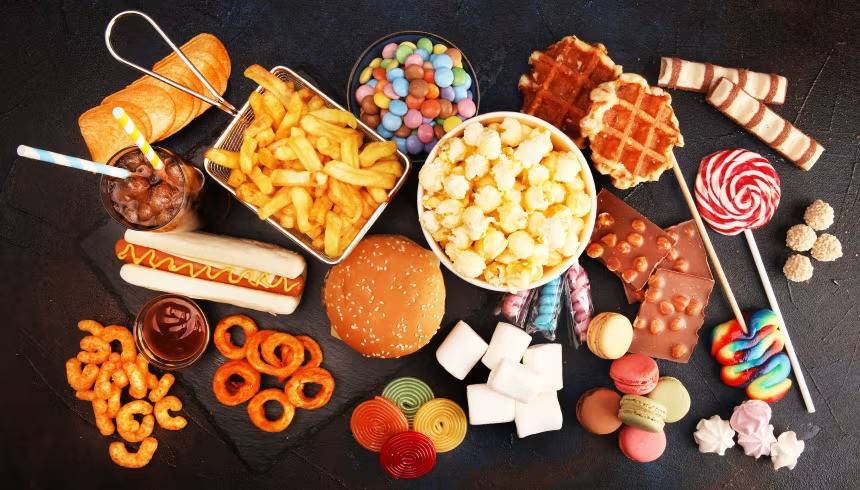
Ultra-processed foods are designed to keep us eating without reaching full satiety, and their excessive consumption is linked to obesity, diabetes, cancer, dementia, chronic inflammation, and accelerated aging. Mitigating their harm begins with reducing intake of sweetened beverages, snacks, processed meats, packaged baked goods, and fast food, alongside policies that limit their marketing and make minimally processed foods more accessible and affordable.
As a journalist specializing in fitness, my main mission is to share information that can help people feel better. To achieve this, I have interviewed countless health professionals, and one specific term keeps recurring as a cause of declining health in the United Kingdom: ultra-processed foods.
In general, talking about food should not be about fear-mongering, but the evidence against ultra-processed foods continues to mount. In this context, neuroscientist and author of 'The Age Code', Dr. David Cox, says: 'One of the main reasons our modern food environment accelerates aging is that many of us weigh our bodies down with more calories than they need, through ultra-processed foods.'
He adds: 'The composition of our bodies ends up changing. Between the ages of 20 and 40, many people lose muscle mass, and it is replaced by internal fat known as visceral fat, which is highly inflammatory.'
Reflecting the growing importance of the ultra-processed food issue, the 'American Journal of Public Health' recently published a special issue on their public health risks, and also created a new section on its website dedicated to this topic.
Below is what experts told me about the latest available research and the horrific health risks posed by ultra-processed foods.
What are ultra-processed foods, and why do we consume them so much?
I found the simplest and most clear definition of ultra-processed foods during a conversation with the author of 'Ultra-Processed People', Professor Chris van Tulleken.
He explained: 'If the package contains an ingredient you wouldn't typically find in a home kitchen, such as emulsifiers or flavorings, it is highly likely that the product is ultra-processed.'
In the UK and the US, these products now account for more than half of the calories consumed by adults, while the proportion for children is approaching two-thirds, according to Dr. Ashley Gearhardt, a professor of psychology and director of the Science and Clinical Laboratory at the University of Michigan.
But why do we consume them in such large quantities? According to Dr. Gearhardt and Dr. Cox, the reason lies in what Gearhardt calls the 'bliss point', which is a precisely calculated combination of refined carbohydrates, often sugar, fat, and salt. This is a combination rarely found in nature, and it drives us to want more without ever feeling fully satisfied.
From an evolutionary perspective, obtaining calories was difficult and linked to survival. Therefore, when we encounter this calorie-rich combination, our brains are biologically hardwired to make the most of it and eat as much as possible, according to Dr. Cox. However, this type of food is no longer rare in the food systems prevailing in the 21st century.
Dr. Gearhardt, who also contributes to the 'Fed Up!' initiative—a group of scientists seeking to raise public awareness about ultra-processed foods—adds: 'This didn't happen by accident.'
She continues: 'Food companies have spent decades designing highly seductive, ultra-processed products that provide great pleasure when eaten, despite the relatively limited nutritional value they offer. They made them cheap, convenient, and promoted them heavily, until they became available everywhere.'
She explains: 'The problem isn't that people suddenly lost their willpower; it's that we created a food environment increasingly dominated by these carefully designed ultra-processed products, which are replacing minimally processed foods in our diet.'
Why is eating more ultra-processed food harmful?
Ultra-processed foods are relatively new, having only begun to dominate supermarket shelves in recent decades, and this is part of the problem, according to Dr. Cox.
He explains: 'Our bodies have evolved to be highly responsive to their surroundings, and that is what has kept us alive for millions of years.'
However, they have not yet evolved to handle the artificial substances found in ultra-processed foods, such as preservatives and sweeteners.
Dr. Cox says: 'We are seeing an increasing number of epidemiological studies showing that immune cells in the gut treat these substances as foreign objects, which over time leads to chronic inflammation.'
He adds that this burdens the immune system beyond its capacity and keeps it in a state of permanent high alert. As anyone who has suddenly been assigned extra work duties knows, their performance in their primary job declines as a result.
Dr. Cox continues: 'The immune system is supposed to perform tasks like detecting cancers in their early stages. This is one of the theories that might explain the rise in their incidence among those under 50.'
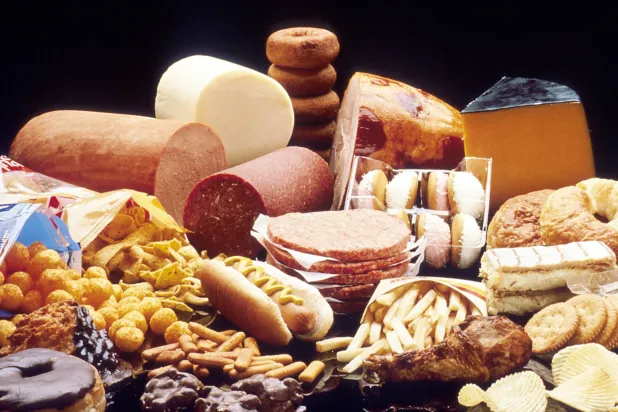
Supermarkets and fast-food restaurants have made ultra-processed foods more accessible than ever before (Getty/iStock).
What does the research say?
Dr. Gearhardt states: 'Studies consistently find that people who consume larger amounts of ultra-processed foods have worse health outcomes, across large population groups and several research designs.'
She adds: 'Two studies published in the recent special issue of the American Journal of Public Health on ultra-processed foods and public health found that high consumption of these foods is consistently associated with an increased risk of metabolic syndrome, diabetes, cancer, high body mass index, blood sugar, and blood pressure, as well as an increased risk of dementia and cognitive impairment in the elderly.'
Last year, 'The Lancet', one of the world's most prominent medical journals, published a series of three research papers on the growing global prevalence of ultra-processed foods and their link to many non-communicable diseases.
An accompanying editorial for the series, titled 'Ultra-processed foods: it is time to prioritize health over profit', began with a clear and unequivocal statement: 'The rise of ultra-processed foods in human diets is detrimental to public health, exacerbating chronic diseases worldwide and deepening health inequalities.'
What can be done to reduce the consumption of ultra-processed foods?
The same report concludes that broader societal change is needed to address the problems caused by ultra-processed foods, through measures that go far beyond just urging people to limit their consumption. While I can advise you to prioritize whole or minimally processed foods, you are facing a food system that makes doing so extremely difficult.
Original source: Independent Arabia




Comments (0)
Be the first to comment.