Old Age... Ordeal or Blessing?
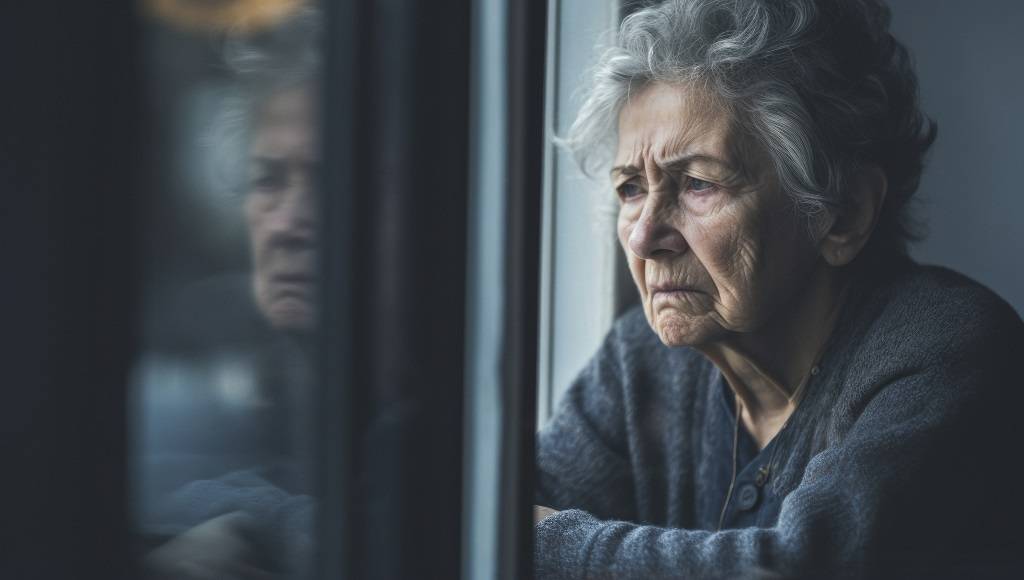
Summary: It can be said that reconsidering stereotypical beliefs about aging and changing the discourse about the elderly could positively transform society into one where everyone can grow older with purpose.
Aging seems an inevitable fate with advancing age, a biological condition affecting living organisms, while expressions assert that it is a defect and damage in the cellular system processes of the human body.
However, the important question today is about the age of old age and the contemporary issues it entails, especially in light of advances in medical care that have raised the average human lifespan beyond what was known in previous decades.
In a recent UN report, we see how the onset of old age varies from one society to another. Some countries consider old age starting at 60 for men and 50 for women, while other countries start the elderly stage for men at 55 and for women at 50, linked to the life expectancy level in each country.
A UN study defined old age not just as biological changes, but also as a state reflecting radical changes in the social activities the individual was accustomed to, considering old age a stage where social relationships and previous roles are abandoned, creating psychological complexes that make the individual lose self-confidence and feel like a useless tool in society.
The issue of aging has become one of the most important and perhaps most dangerous global societal issues due to its intersections with the demographic winter, declining fertility rates, and consequently the decrease in world population, along with advances in healthcare for the elderly and their increasing numbers, which strains state budgets, especially in the realm of social pensions and medical insurance. Are they viewed as non-productive factors? Even until the early years of the third millennium, fears revolved around the increase in Earth's population and the population explosion bomb. Has the situation now changed radically?
The Real Population Bomb
Professor David E. Bloom, an economics and demography professor at the TH Chan School of Public Health at Harvard University, asserts that aging has indeed become the real population bomb and the most prominent global demographic trend. The world population reached about 8.23 billion in 2025, and the transition from 7 to 8 billion took only 12 years, raising long-standing fears related to rapid population growth, such as food shortages, widespread unemployment, depletion of natural resources, and uncontrolled environmental degradation. But the most serious demographic challenge facing the world is no longer rapid population growth but population aging.
A stage where previous roles are abandoned, creating psychological complexes that make the individual lose self-confidence (social media)
In this context, UN reports indicate that the age structure of the world population has changed radically over the years. Global life expectancy rose from 34 years in 1913 to 72 years in 2022, and is expected to continue on this long-term trajectory. At the same time, fertility rates have declined in all countries. Strikingly, when the UN and the World Health Organization were founded, children under 15 outnumbered people aged 65 and over by seven to one. By 2050, these two groups will be nearly equal. In the period from 2000 to 2050 alone, the global proportion of people aged 80 and over will rise to nearly five percent of the world population. What do these shifts in age rates around the globe mean, sparing no continent, as the phenomenon extends across all six continents?
In a nutshell, these shifts herald a huge set of health, social, and economic challenges in the coming decades, and also indicate the possibility of widespread population decline, a possibility still unlikely. Changes will grasp the fabric of life behaviors in general, along with investments in both public and private sectors, potentially opening the door to both opportunities and challenges. Are there specific and reliable figures on the state of rising aging in our present day?
Striking Aging Figures
On October 1 of last year, there was a consensus among major international financial institutions such as the World Bank and the International Monetary Fund that demographic shifts could range from troubling to frightening levels during the second half of the 21st century. In more detail, by 2050, about 80 percent of the elderly will live in low- and middle-income countries, as the pace of population aging has become much faster than in the past. In 2020, the number of people aged 60 and over exceeded the number of children under five years old. Between 2015 and 2050, the proportion of the world's population over 60 years old will nearly double from 12 to 22 percent.
By 2030, one in six people in the world will be aged 60 or over. Currently, the proportion of the population aged 60 and over will rise from 1 billion in 2020 to 1.4 billion. In 2050, the world's population aged 60 and over will double to 2.1 billion. The number of people aged 80 and over is expected to triple between 2020 and 2050, reaching 426 million.
The issue of aging has become one of the most important and perhaps most dangerous global societal issues (AFP)
While this shift in the distribution of a country's population toward older ages, known as population aging, began in high-income countries (e.g., in Japan, 30 percent of the population is over 60), low- and middle-income countries are now experiencing the biggest change. By 2050, two-thirds of the world's population over 60 will live in low- and middle-income countries. In this context, the question arises: Is there a fixed and specific model for dealing with aging issues that applies to all older individuals, east and west, north and south?
Certainly, there is no typical older person. Some 80-year-olds have physical and mental capacities similar to many 30-year-olds, while others experience noticeable declines in their capacities at much younger ages. Hence, it can be concluded that the diversity we see in old age is not random; a large part stems from people's physical and social environments and the impact of these environments on their opportunities and health behavior. Our relationship with our environments is influenced by personal characteristics such as the family we were born into, our gender, and our ethnic origin, leading to health disparities.
The Decade of Healthy Aging
Original source: Independent Arabia






Comments (0)
Be the first to comment.