‘Maya’s Absence’ Suddenly Turns into a ‘Feminist’ Novel in the Usual Sense
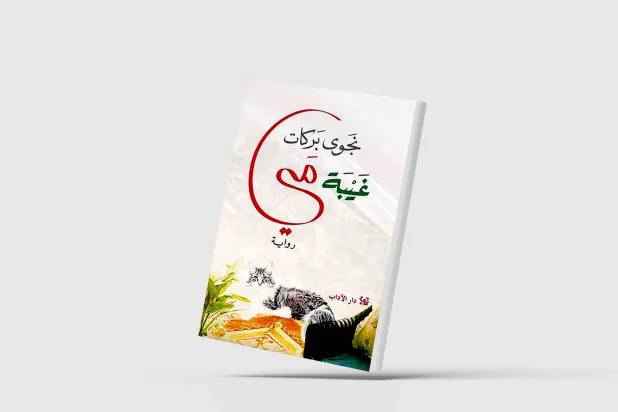
After reading a few pages of Lebanese writer Najwa Barakat’s novel ‘Maya’s Absence’ (Dar al-Adab, Beirut 2025), you realize it is a novel concerned with aging and its repercussions.
Typically, travel writing begins from the moment of travel itself, but Egyptian writer Hanan Suleiman opens her book ‘A Journey in the Memory of War’ by recalling her childhood at age nine, when she sat in front of a television screen following news of a war she did not fully understand but felt it concerned her. She says: ‘There, in Bosnia, I saw the first tragedies of the world creep into my childhood through the screen. Their faces did not resemble ours; lighter skin and eyes, and tongues we only understood through translation. The distance was twofold: geographical, linguistic, and emotional.’
This work is a literary attempt to explore how individual memory transforms into collective memory through travel and direct encounters, at a time when the wounds of the Bosnian war are still present.
The writer carries that war with her in the quiver of her childhood, and her passion for exploring that bond intensifies after she becomes a journalist and novelist, so the trip to ‘Bosnia’ seems like a natural extension of an early curiosity that led her to pack her bag to join the Srebrenica Summer University, which takes her on an intensive journey through Bosnia's history and present, including field trips to historical sites and museums, and meetings with activists and locals.
Post-Genocide
The book, published by Kutubia Publishing House in Cairo, appears as a reading of the effects of war and the culture it produced that preserves memory through museums, symbols, rituals, and literature. The writer arrives in Srebrenica decades after the memory of the genocide it witnessed. Through her daily walks, observations, and simple notes, she traces what connects the present to the past of war, while creating wide contrasts between the aesthetic nature of the place and the massacre it witnessed: ‘On the land of Bosnia, there are beaches, waterfalls, mountains, rivers, and various colors of beauty that captivate the eye, and an active entertainment and tourism sector thrives on them. It is also a global destination for skiing enthusiasts. But the first and most firmly established tourist landmark in people's minds remains the memory of war, or rather the memory of genocide.’
Sensitivity of observation remains a key tool for the writer in monitoring the effects of the Bosnian war on its present, a war that erupted with the collapse of Yugoslavia and resulted in one of the most horrific tragedies in modern Europe, including ethnic cleansing and the Srebrenica massacre, which became a symbol of genocide on the continent after World War II.
The writer pauses at the experience of the summer university she attended. In its early years, it provided full accommodation and care for students from around the world, but it gradually lost donor support, especially after the COVID-19 pandemic, until its capabilities shrank noticeably. This detail does not seem incidental in the book; rather, it turns into a question about the fate of cultural institutions that preserve memory.
The role of that university is not limited to teaching the history of Bosnia; it also plays an annual role in commemorating the ‘Srebrenica massacre,’ as it concludes its programs by participating in the Peace March, during which participants walk in the footsteps of thousands who fled death in 1995. This makes the decline in its support a loss that goes beyond education and knowledge to historical memory itself.
Visual Symbols
One of the most prominent features of the book is that it does not merely document the war, but addresses how Bosnia deals with its memory after the war. Instead of erasing the traces of the tragedy, it chose to keep them as part of its daily life, as embodied by the ‘Sarajevo Roses’—the craters left by shells in the streets that look like flowers blooming in the asphalt.
The writer views them as a complete philosophy in resisting oblivion; the city did not hide its wounds, but kept them visible, so that the streets themselves become an open historical record. From the same idea, she moves to the ‘Srebrenica Rose’ woven by the mothers of the victims, which has become one of the most famous symbols of genocide: 11 petals refer to July 11, white color symbolizes the innocence of the victims, while a green heart in the center evokes the continuation of life. The book draws attention to the ability of culture to transform mourning into a symbol, and the symbol into collective memory, making art itself an extension of the act of resistance. Suleiman does not limit herself to contemplating these visual symbols, which included statues, murals, and museums, but also the political and social structure of the state, pondering the philosophy of belonging itself, saying: ‘The land is spacious for all, but belonging to it is not granted easily,’ in the context of her discussion of the citizenship law in Bosnia and Herzegovina, which does not grant citizenship merely by birth on the country's soil, but requires that one parent be a Bosnian citizen.
Through this legal detail, the writer opens a door to reflection on a society that, after the war, still seeks to protect its highly sensitive demographic and religious balance, where Islamic, Christian, and Jewish identities coexist within a state where the effects of conflict are still present in its political structure. It is a key to understanding the Bosnians' relationship with the land, identity, and memory, which still determines many of their choices.
The writer also traces the memory of genocide in literature, so she makes a point of acquiring Bosnian novels, noting their scarcity in English translation and their weak presence in Arab culture. She devotes space to literary comparisons between these works and others, such as the novel ‘Sarajevo Firewood’ by Algerian novelist Said Khatibi, which in turn invokes the memory of war in the Balkans, and reveals how a novel can cross geographical borders to meet the same human memory.
Through these readings, the book reinforces the idea that literature is no less important than the historical document in understanding societies emerging from wars. If museums preserve facts, novels preserve what is more fragile: fear, nostalgia, disappointment, and the questions that violence leaves in souls. Hence, the writer's literary readings appear as an integral part of the journey, not a break from it, as if she believes that the road to Bosnia also passes through books.
Then, the writer raises questions about the absence of Arab investment in cultural initiatives that preserve the memory of genocide, and support for the institutions concerned, which today suffer from declining funding. This approach aligns with the central idea of the book: the Bosnians' resistance to oblivion by transforming the traces of their historical tragedy into a living visual, literary, and human language.
Literature is no less important than the historical document in understanding societies emerging from wars
The writer highlights the challenges facing cultural institutions that preserve memory, such as the summer university whose support declined after the COVID-19 pandemic, threatening its continuity. She also reveals how symbols like the ‘Srebrenica Rose’ have become cultural icons combining mourning and life, affirming art's ability to transform pain into collective memory. Questions about identity and belonging in a religiously and ethnically diverse society remain open, amid complex citizenship laws that reflect the sensitivity of the demographic composition.
Original source: Asharq Al-Awsat



Comments (0)
Be the first to comment.