Atherosclerosis: Can Artificial Intelligence Help Doctors Detect It?
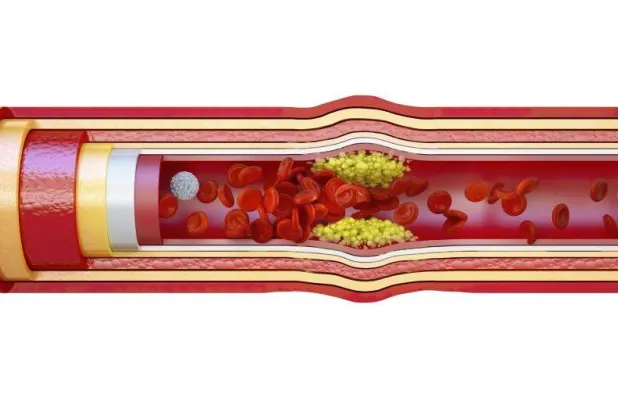
A new clinical trial is launched to deploy smart tools.
Artificial intelligence tools can uncover additional details about the quantity and type of plaque deposits in the heart's arteries. However, it remains to be seen whether this information can help prevent further heart attacks.
Atherosclerosis
Atherosclerosis—defined as the buildup of plaque inside artery walls—means that arteries lose their flexibility (or become stiff). While some of these deposits are calcified and hard, others are not; soft (non-calcified) deposits are actually more dangerous due to their higher likelihood of rupturing and forming a clot that leads to a heart attack.
A specialized computed tomography scan, known as coronary computed tomography angiography (CCTA), can detect both hard and soft plaque, as well as blockages in the arteries supplying the heart.
Artificial intelligence for analyzing arterial images
Many medical device companies are marketing AI algorithms that analyze these images more deeply to determine the quantity of each type of plaque in the heart arteries. Earlier this year, some private insurance companies and Medicare began covering the costs of AI-based reports, which range between $850 and $1,000, in addition to the cost of the CCTA scan itself.
Do the additional insights derived from these AI-enhanced results make a substantial difference? In other words, can knowing the amount of soft and hard plaque with greater precision change your doctor's treatment recommendations? And will following that advice reduce your likelihood of having a heart attack?
Dr. Michael Lu, director of artificial intelligence at the Cardiovascular Imaging Research Center at Massachusetts General Hospital, affiliated with Harvard University, says: 'Right now, we don't really know. But several studies are currently underway to explore this.'
New trials to test the promising potential of AI-driven atherosclerosis analysis
In July 2026, 25 research institutions across the United States—including Harvard-affiliated Massachusetts General Hospital—began enrolling participants in a clinical trial sponsored by the National Institutes of Health (NIH) aimed at finding better ways to prevent heart attacks.
Dr. Michael Lu, associate professor at Harvard Medical School and co-principal investigator of the trial, says: 'The goal is to identify individuals in the young-to-middle-age brackets who have atherosclerosis and test different strategies—including AI-enhanced plaque analysis—to reduce the amount of plaque in the coronary arteries.'
For more information about this clinical trial, which is scheduled to conclude by 2032, please visit: https://preemptstudy.org.
Traditional methods for detecting atherosclerosis
- Stress tests: In the past, doctors relied on stress tests to detect blockages in the heart arteries. These tests monitor the heart's electrical activity, heart muscle function, and blood flow patterns while the heart is subjected to stress induced by physical exercise or stimulating medications. However, abnormal results typically appear only when a person experiences severe narrowing in one or more arteries (exceeding a 70 percent blockage).
- Angiography: Following an abnormal stress test result, the next step was often angiography, a procedure involving the insertion of a catheter into an artery near the wrist or groin, guiding it to the heart, and injecting a dye that shows up clearly on X-ray images. The resulting two-dimensional image reveals how efficiently blood flows through the heart.
- Cardiac CT scan: This scan is faster and less invasive compared to traditional angiography. The process involves injecting dye into the arm, followed by a series of high-speed X-ray images that create three-dimensional pictures of the heart's blood vessels. This procedure is recommended as an initial tool to evaluate individuals experiencing chest pain or other symptoms that may be heart-related.
- Calcium scoring: This is a coronary artery calcium (CAC) CT scan that also reveals arterial stiffness, but it only detects hard, calcified plaque and misses the softer, more dangerous plaque. The CAC scan is recommended for assessing future heart attack risk exclusively in asymptomatic individuals who fall into the borderline or intermediate category for cardiovascular disease.
Controlling blood pressure
One in three American adults has high blood pressure, which is concerning. Although medically known as hypertension, many people do not realize they have it due to the absence of clear symptoms or warning signs. However, when high blood pressure is coupled with abnormal cholesterol and blood sugar levels, the damage to the arteries, kidneys, and heart accelerates dramatically.
Fortunately, high blood pressure is easy to detect and treat. Through the special health report titled 'Controlling Your Blood Pressure,' you can learn how to keep your blood pressure within a healthy range simply by making lifestyle changes, such as losing weight, increasing physical activity, and following a healthy diet.
Artificial intelligence and atherosclerosis: Benefits and limitations
Dr. Michael Lu explains that CCTA has been used for years in clinical trials to monitor how soft plaque responds to drug therapy, noting: 'We start patients on a medication or a placebo, and then repeat the CT scan a year or two later.' Currently, a physician spends an hour or more manually reviewing each scan image to measure the volume of hard and soft plaque. Theoretically, AI can accomplish this task much faster.
However, Dr. Michael Lu points out that no AI application is 100 percent accurate, so results will still require physician review.
Current observational data indicate that AI-based plaque analysis provides useful information that could improve healthcare and enhance heart health.
Dr. Michael Lu adds: 'However, many experts are waiting to see whether AI-guided plaque analysis will actually help prevent further heart attacks, and whether the additional cost incurred is justified.'
* Harvard Heart Letter, Tribune Media Services.
Original source: aawsat.com






Comments (0)
Be the first to comment.