Burnout in the Middle Ages... How did people understand it then?
Burnout is not a product of the modern era; medieval thinkers described exhaustion, despair, and loss of motivation centuries ago, and offered advice that still intersects with modern psychotherapy methods.
Burnout in the Middle Ages... How did people understand it then?
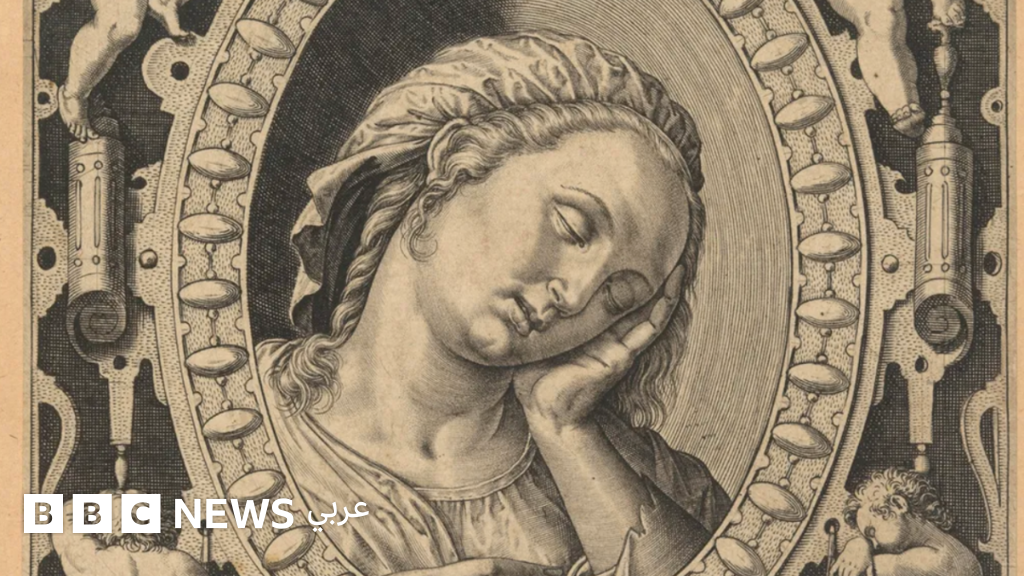
Image caption, an engraving from 1612 depicting the vice of 'acedia', a condition that medieval thinkers believed was treatable.
Article Information
Author, David Robson
Published 4 hours ago
Reading time: 7 minutes
Stress and mental exhaustion are not products of the modern era; they were common in the Middle Ages as well. Surprisingly, many ideas from that time about dealing with burnout still seem relevant today.
John Cassian observed that the symptoms recurred constantly: fatigue, despair, a desire to be anywhere but at work, mental confusion, or what he described as 'a kind of illogical confusion of the mind' leaving his colleagues incapable of work, feeling useless, and eager for 'the consolation of sleep'.
If you have ever suffered from burnout, exhaustion, or depression, some of these feelings may seem familiar, and you might think this suffering is a product of the pressures of the 21st century.
But Cassian wrote that in the 5th century AD, and he was not addressing modern executives, but early Christians worn out by their spiritual struggles.
Can these accounts help us understand our contemporary suffering, and even offer a way to deal with it?
Tips to help you live a happy life without annoyances
Why do women suffer from psychological stress and exhaustion more than men?
Image caption, Cassian discussed in his manuscripts symptoms of exhaustion, despair, and mental fog
This is the idea put forward by historian Peter Jones in his new book 'Medieval Self-Help: A Journey into the Medieval Mind', which offers a fascinating glimpse into the methods used by what Jones calls 'healing priests' to help their parishioners overcome their spiritual distress.
Skip the most read and continue reading
US army continues strikes on Iran, Revolutionary Guard attacks sites in Gulf and Jordan again
Messi vs Lamine Yamal: 'A real miracle made by fate'
Why do mosquitoes bite some people more than others?
Tips to help you protect your hearing for years
His research shows that feelings of exhaustion have accompanied humans throughout history, which in itself may offer some consolation to those experiencing deep psychological distress.
Jones says: 'The Middle Ages are brimming with immense wisdom.' We have already seen the popularity of books inspired by ancient Stoic philosophies, and perhaps it is time to also return to some medieval manuscripts and extract the lessons they hold.
Image caption, in the 5th century AD, John Cassian was among the early Christian thinkers who played the role of 'healing priests'
Lost in Siberia
Jones drew the idea for the book from a personal crisis he experienced, which he described as 'the coldest winter of my life.' For reasons he still finds difficult to explain, he agreed to become head of the history department at Tyumen University in Siberia.
The cold was so severe that he lost sensation in his legs after just twenty minutes outside. He also struggled with the language and deeply missed his family in Dublin.
He wrote: 'I was supposed to continue my research, prepare my lessons, and get on with my life, but I could not bring myself to do anything.'
When he began preparing a new course on the seven deadly sins, he found in the medieval texts he was reading a resonance with his personal suffering.
He says: 'You realize they went through exactly the same things we do. Feelings haven't changed, people faced the same crises.'
Today, we might associate the word 'sloth' with deliberate idleness or laziness, but medieval writers recognized the emotional emptiness underlying this state.
Image caption, 'Acedia', or spiritual apathy, was one of the seven deadly sins, a system used by medieval people to understand human nature
Jones explains that the 'deadly sins' are not in the Bible, but were formulated by early Christian thinkers, including Cassian. They were later revised by Pope Gregory I, who saw them, according to Jones, as 'an ideal tool for understanding disturbances of the soul.'
This concept, which allowed 'organizing and dealing with all thoughts', included seven sins: pride, envy, wrath, sloth, greed, gluttony, and lust.
By the 13th century, manuals spread guiding healing priests on the best ways to help their parishioners overcome these problems during confession.
Jones says: 'When you look at this material, you find it resembles psychotherapy a lot'; instead of rebuking the faithful, 'it encouraged a deep and precise dialogue, revealing what goes on inside the soul.'
Acedia: Absence of love and emptiness of the soul
Sloth was the sin closest to describing what Jones felt in Siberia. Today, we may associate the word with deliberate idleness or laziness, but medieval writers recognized the emotional emptiness at the core of this state.
It was then known as 'acedia', and includes, according to Jones, 'absence of love, inability to care, and emptiness in the soul.'
He adds: 'It is the state where things that used to brighten your day lose their power to stir any feeling in you, leaving you cold and indifferent.'
Image caption, an engraving from 1612 depicting the vice of 'acedia', a condition that medieval thinkers believed was treatable.
Skip the podcast and continue reading
Worth noting
In-depth explanation of key events and topics, to help you understand the most important changes around you and their impact on your life
Episodes
Podcast end
Jones says he found in a 13th-century text something that deeply touched his experience. The text is known as 'Manuscript 306', preserved at Trinity College Dublin.
The author describes 'acedia' as being like 'standing in the middle of a raging river, facing a current that foams and strikes my legs, without having the energy to move forward.' This image of stagnation and helplessness seemed very familiar to Jones during his winter in Siberia.
As for the writings of the 'Archpoet', an anonymous 12th-century German poet, they reveal intense frustration with his work as a bureaucrat, in complaints that any modern executive might find familiar.
Jones explains: 'His poems dealt with working endlessly in a absurd job he saw as trivial and pointless, giving it his all while it relentlessly drained him.'
Bernard of Clairvaux compared striving to live a virtuous life to running on rough terrain; anyone who runs a long distance is bound to stumble or fall at some point, according to Jones.
Jones is not the only historian to find parallels between medieval suffering and modern ailments. In her book 'Exhaustion', cultural historian and executive coach Anna Katharina Schaffner directly links the 'acedia' described by medieval Christians to burnout in our time, with symptoms including a tendency to eat for comfort and engage in empty distractions instead of doing meaningful work.
She writes: 'It is a familiar vicious cycle; those suffering from acedia become less able to meditate and engage in spiritual matters, while the poor means they resort to regain energy make their condition worse.'
Original source: BBC Arabic





Comments (0)
Be the first to comment.