Don't Ask How Argentina Won... Ask How They Survived!
A famous study by the World Health Organization about a decade ago revealed that Buenos Aires has an exceptional number of psychotherapists—222 per 100,000 residents—compared to just 30 in the United States, according to The Athletic network.
When you watch the Argentine national team, it's easy to understand why: after every match, you feel the need to talk to someone, to unload what you've experienced over ninety minutes or more. One moment you're drowning in despair, the next you're soaring in ecstasy. A mix of adrenaline and dopamine makes football seem like a natural drug. So it's no wonder Argentines follow their team everywhere. It goes beyond patriotism; it's an addiction. Everyone tells you it's not healthy, but nothing else gives you that feeling, so you return to it time and again.
This feeling peaked in Atlanta, where the world champions seemed on the verge of elimination. After having to play extra time against Cape Verde, Argentina found themselves two goals down against Egypt until the 79th minute of the round of 16 match. At that moment, Opta's probability model gave Argentina just a 0.6% chance of coming back. They needed another miracle, and it seemed the era of coach Lionel Scaloni, known as 'La Scalonița', was coming to an end, while obituaries began to be written for Lionel Messi's World Cup career.
It was one of those days where everything goes against you. Argentina fell behind, then Messi missed a penalty, while Egyptian goalkeeper Mostafa Shobeir turned into an impenetrable wall, saving one attempt after another, including a very close header from Alexis Mac Allister.
Scaloni tried to turn the game around by bringing on Lautaro Martínez and Nico González for Rodrigo De Paul and Nicolás Tagliafico, but Egypt scored a second goal immediately after a quick counterattack. However, referee François Letexier received a signal from VAR and disallowed the goal due to a foul on Lisandro Martínez. That did not affect Egypt, who sensed their opponent's confusion and scored a legitimate second goal minutes later.
At that moment, Messi looked up to the sky with desperate features, then fell to the ground after Lautaro wasted another chance he had created for him. After playing 120 minutes four days earlier against Cape Verde, and with a difficult qualification there through an own goal, it seemed Argentina had exhausted all its energy.
But the truth was different.
Argentina is crazy. Whenever everyone thinks they're finished, they come back to life. That happened at the Qatar World Cup four years ago, when they lived on the edge, going to penalty shootouts against the Netherlands in the quarterfinals and then against France in the final. Football that pushes your nerves to the brink of madness, but amidst this madness stands a genius named Messi.
And the historic comeback came. Even American football legend Tom Brady wrote on X: 'This might top the comeback from a 28-3 deficit,' referring to his team's historic comeback in the Super Bowl.
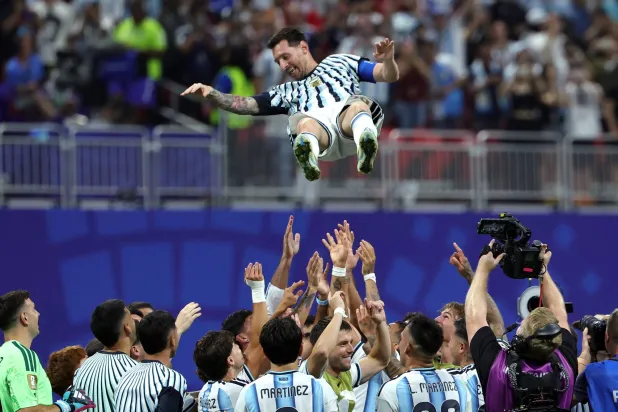
Just ten minutes before the end, Messi sent in a cross that Cristian Romero headed in for the first goal, then Messi fired a shot that hit the crossbar before nestling in the net, completely changing the game's complexion. As the greats always do, Messi imposed his will on the proceedings.
Nevertheless, Egypt almost snatched victory in the final moments, had it not been for a heroic intervention by Leandro Paredes in a one-on-one situation, saving his country from a certain goal.
And as the match was heading to extra time, the knockout blow came in stoppage time, when Lautaro lifted a cross that Enzo Fernández converted into the winning goal, sending the stands into ecstasy, while Scaloni hid his face in shock, as his team once again escaped the brink of elimination.
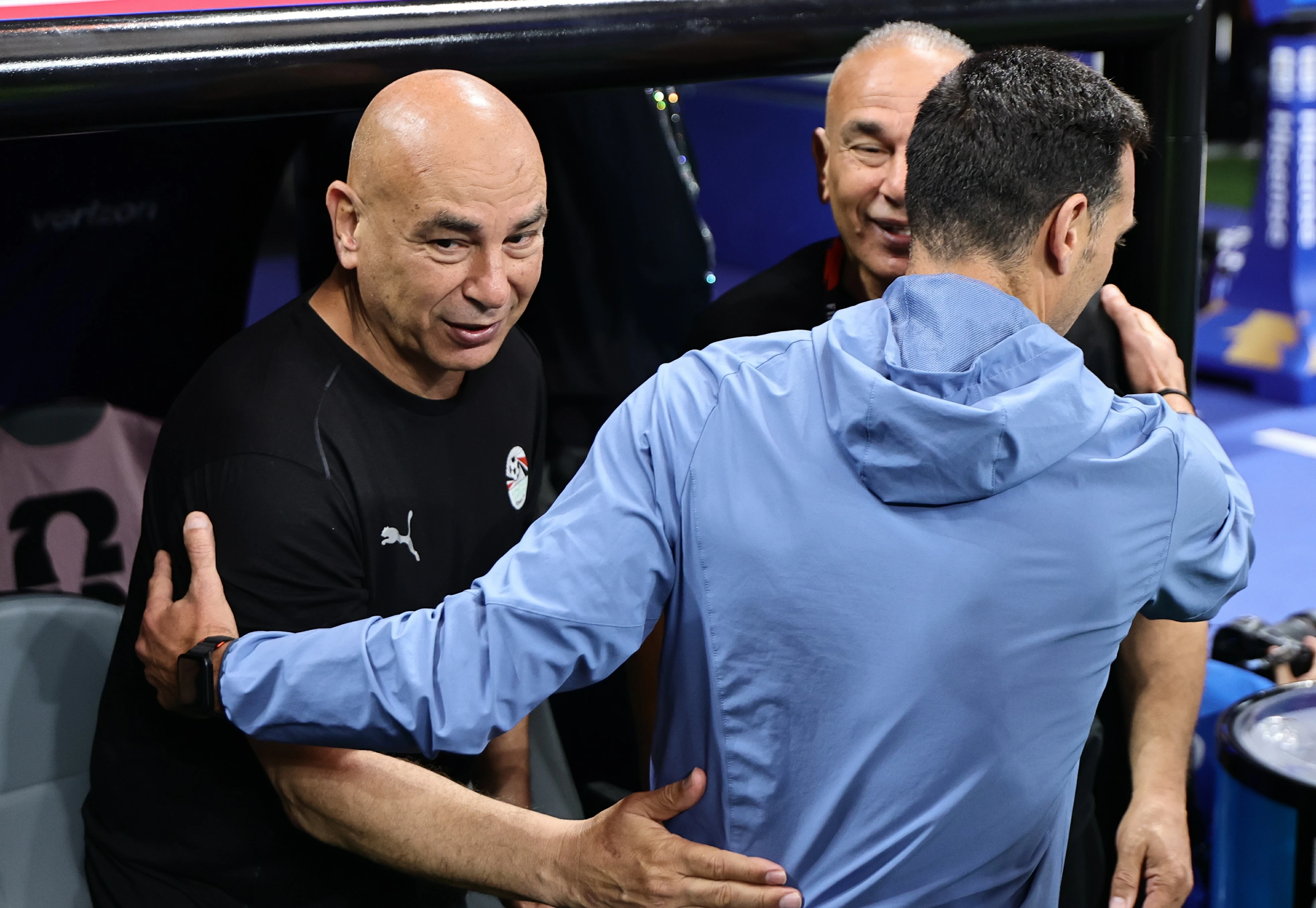
Scaloni said after the match: 'The emotions this team gives us are incomparable. Reliving these feelings is incredible. I coach for moments like this. We're not in the final, but what we experienced today rivals the greatest moments we've been through.'
The Argentine coach admitted he couldn't hold back his tears again, adding: 'I'm an emotional person by nature, some even call me a crybaby, and I have no problem with that.'
As for Messi, tears flowed after the final whistle, and after regaining his composure, he said: 'What this team did in this match was crazy.'
Beyond Argentina, perhaps the current edition of the World Cup can be described as the tournament of madness. Successive surprises, non-stop comebacks, matches undecided until the final seconds—from England's historic comeback at the Azteca, to Belgium's uprising against Senegal, to Paraguay's elimination of Germany.
Despite all the off-field controversy the tournament has seen, whether due to visas, match schedule changes, or controversial refereeing decisions, what happens on the pitch remains even crazier and more exciting.
Argentina does not merely coexist with this madness; it embodies it fully. It embraces it, lives by it, and transmits it to everyone. In the end, it seems the whole world has caught the Argentine madness, and perhaps everyone really needs the number of one of those psychotherapists in Buenos Aires.
Original source: Asharq Al-Awsat


Comments (0)
Be the first to comment.