Study Reveals Best Exercises for Burning Fat Without Losing Muscle
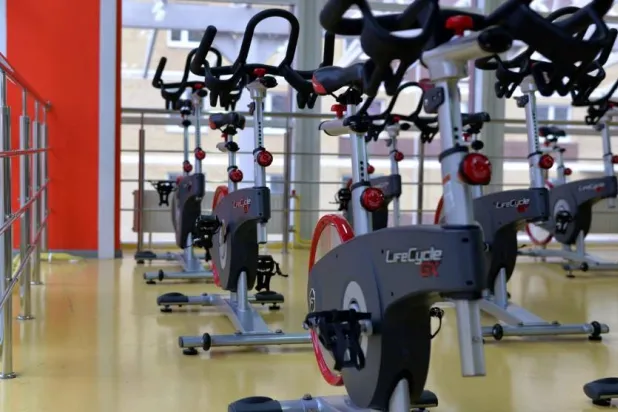
When losing weight, the body loses not only fat but also part of muscle mass (lean mass). Research indicates that between 20 and 40 percent of lost weight comes from lean mass. With advancing age, preserving muscle becomes more important for maintaining strength, mobility, and independence.
A recent study suggests that high-intensity interval training (HIIT) may help older adults maintain muscle mass while reducing body fat.
HIIT Exercises May Help Preserve Muscle
Researchers followed 123 healthy adults, average age 72, who participated in supervised training sessions three times a week for six months.
Participants were divided into three groups:
- High-intensity interval training (HIIT).
- Continuous moderate-intensity aerobic exercise.
- Low-intensity exercise.
The results showed that both the HIIT and moderate-intensity exercise groups lost fat and reduced visceral fat (belly fat). However, only the HIIT group maintained muscle mass while reducing body fat percentage, whereas the other group lost a small amount of muscle along with fat.
The researchers noted that the differences between groups were limited and may not have a noticeable impact on health or physical performance in daily life. Therefore, the study does not prove HIIT is significantly better than other methods, but it may offer a small additional benefit for improving body composition in healthy older adults.
Why Might These Exercises Help?
HIIT involves alternating short bursts of intense physical activity with recovery periods.
Lakshmi Kumar, an exercise physiologist, said high effort drives the body to recruit more fast-twitch muscle fibers compared to continuous moderate-intensity exercise.
She added that these fibers are responsible for generating strength and power, and stimulating them may help maintain muscle mass even on a low-calorie diet.
HIIT also raises calorie burning during and after exercise through what is known as excess post-exercise oxygen consumption (EPOC), but the contribution of this phenomenon to total calories burned remains limited.
Kumar explained that these exercises also improve muscles' ability to produce energy and enhance the heart's efficiency in pumping blood and delivering oxygen to muscles.
Not the Only Solution
People gradually lose muscle mass with age due to a condition known as sarcopenia, which may weaken strength, balance, mobility, and overall health. Maintaining muscle helps support independence, strengthen bones, and improve blood sugar regulation.
But experts warn against relying solely on HIIT.
Kumar said resistance training remains the most important factor for preserving muscle mass during weight loss, along with adequate protein intake, good sleep, and sufficient recovery time between strenuous workouts.
She added that it is best to combine HIIT with moderate-intensity aerobic exercise, such as brisk walking, cycling, or light jogging, as these exercises build aerobic fitness while HIIT improves the ability to perform high-intensity efforts.
She emphasized that the optimal long-term health program combines regular physical activity, resistance training, moderate-intensity aerobic exercise, interval HIIT sessions, along with proper nutrition and adequate recovery.
Is It Suitable for Everyone?
Experts warn that HIIT is not suitable for everyone, especially:
- People who have not exercised for a long time.
- Those recovering from injuries.
- Individuals with untreated heart disease.
Kumar advises building fitness gradually through walking, cycling, or jogging before starting HIIT, and those with heart disease or uncontrolled metabolic disorders should consult a doctor before doing it.
The study concludes that the best exercise program is one that can be maintained long-term, not relying on a single type of exercise.
Original source: aawsat.com




Comments (0)
Be the first to comment.