Ebola spreads to two more provinces in Democratic Republic of Congo
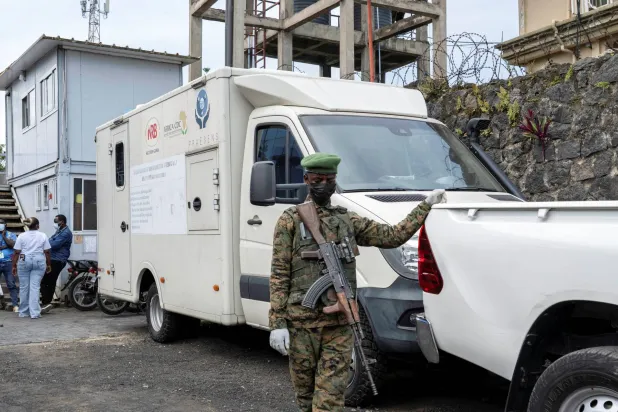
Ebola outbreak in Congo in two new provinces: Haut-Uélé and Tshopo
Under the weight of fear and heat... crews train to confront Ebola
As the spread of the Ebola virus expands in northeastern Democratic Republic of Congo, Doctors Without Borders is stepping up efforts to train teams that may have to face the epidemic.
Since the outbreak was detected on May 15, Ebola has spread faster than any previous outbreak, and has so far killed 600 people in a poor region where armed groups are active, according to Agence France-Presse. Under a tent at a Doctors Without Borders training center in Nairobi, ten health workers, who may be deployed to the epicenter or work in neighboring countries, are being trained on how to perform their duties while protecting themselves from the virus, which poses a real danger to medical staff.
Ebola has killed more than 15,000 people in Africa over the past 50 years, and causes a highly contagious hemorrhagic fever transmitted through the body fluids of infected people, whether alive or dead. Among more than 1,700 confirmed cases in the Democratic Republic of Congo since the start of the outbreak, 112 infections have been recorded among health workers, of whom 35 have died.
The center has so far trained about 100 Doctors Without Borders staff and is preparing to receive staff from the Kenyan Ministry of Health and other non-governmental organizations. Diana Corbin, an assistant medical coordinator for Doctors Without Borders in the Central African Republic, said: 'One of our projects is near the border with the Democratic Republic of Congo, so we want to be prepared and ensure our teams are ready.' The 37-year-old Mexican doctor has never dealt with the Ebola virus.
Strict protocols
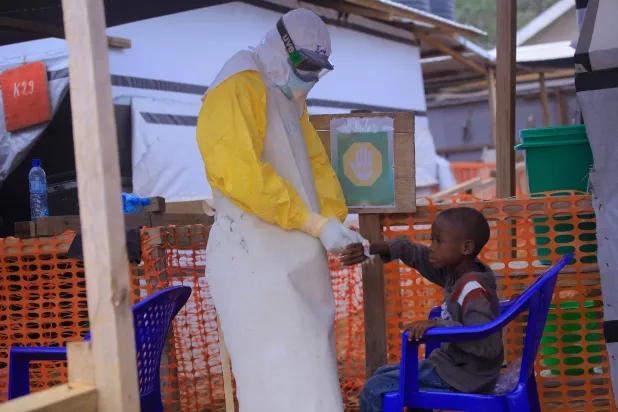
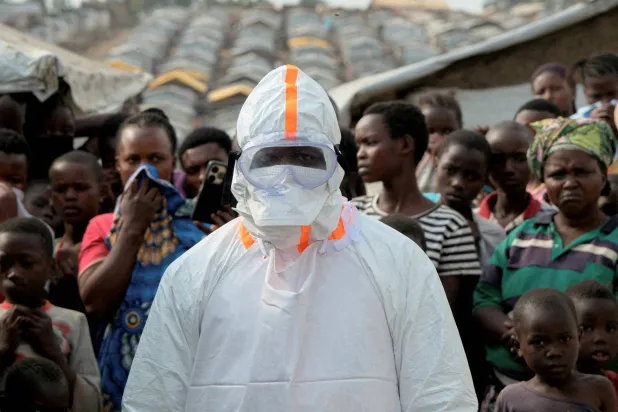
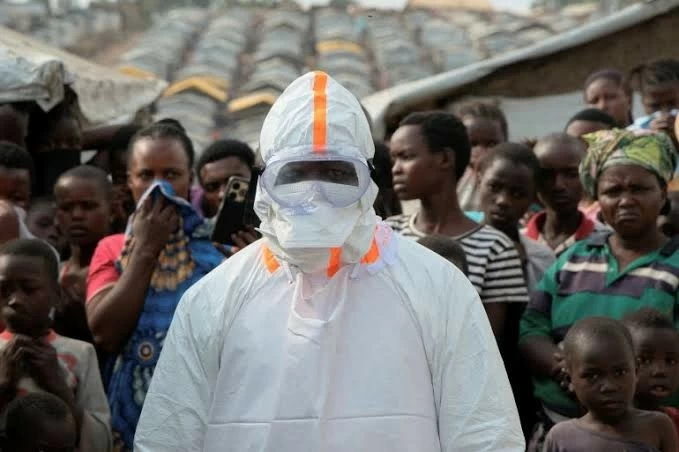
The first difficulty is wearing protective equipment correctly: a yellow suit, rubber boots, an apron, a wide hood with a collar, a mask, goggles, and two pairs of gloves; one rubber and the other disposable.
Training on disinfecting the body of an Ebola victim before burial ceremonies in Kenya on July 10 (AFP)
The time of wearing the equipment is recorded on the collar. Once equipped this way, health workers lose large amounts of fluids through sweating and cannot work for more than one hour in Congo's heat and humidity. All participants are experienced, but the danger of the virus, the discomfort of protective gear, strict protocols, the need to always work in pairs, as well as psychological pressure and climatic conditions, all create special challenges.
Sissé Baba Ndiaga, the field health awareness officer, said: 'We have knowledge and think we can handle this type of epidemic, but when we put on personal protective equipment, we face a completely different reality.' He added: 'We must control the psychological pressure,' whether personal pressure or that suffered by 'colleagues' and 'the patient.'
Ndiaga, 43, previously worked during the deadliest Ebola waves, which killed 28,000 people in West Africa between 2013 and 2016, and is currently preparing to deploy to one of the areas of the current outbreak.
The trainer reminds participants of the different areas, whether low or high risk, according to the presence of confirmed cases, bodies, or suspected cases, and of the protocols, the need to monitor a colleague, and to leave immediately when feeling near exhaustion, which is likely due to the heat inside the protective gear.
No room for error
Diana Corbin said: 'I don't think dealing with Ebola patients is scary if one is aware of the procedures to follow.' She added: 'It becomes more frightening when there is no trust in team members... Trust is essential.'
Medical training on fighting the Ebola virus in Kenya on July 10 (AFP)
After putting on the gear, participants simulate examining a woman who says she has a fever and vomiting, or transporting the body of a deceased patient, taking necessary precautions. Then comes the process of removing the protective layers without exposure to infection, a delicate process also performed in pairs, while a colleague continuously sprays a disinfectant solution.
The training is not limited to safety procedures, but also emphasizes the importance of communicating with local communities. Participants try, for example, to convince a hypothetical patient to undergo isolation and testing for Ebola, while she insists she has malaria.
Angela Thiong'o, an official at the Doctors Without Borders center, said that good communication 'helps build trust.' She added: 'When the population understands the necessity of health measures, they become more willing to cooperate.' The population also becomes able to 'recognize the symptoms of Ebola and seek treatment early.'
This also helps dispel myths and misinformation about the virus, and teaches residents procedures such as proper handling of 'highly infectious' bodies and organizing safe burial ceremonies.
At the end of the training, Dr. Corbin said that what must be remembered is that 'there will be many stress factors' in the field. She added: 'This is just a simulation, so reality will be much more intense.'
Sissé Baba Ndiaga said: 'Here we could make mistakes, but in Bunia (the epicenter of the outbreak in the Democratic Republic of Congo) there is no room for error.'
Original source: Asharq Al-Awsat


Comments (0)
Be the first to comment.