'Elderly Care' in Mecca Region Implements 'Quality of Life Enhancement' Initiative
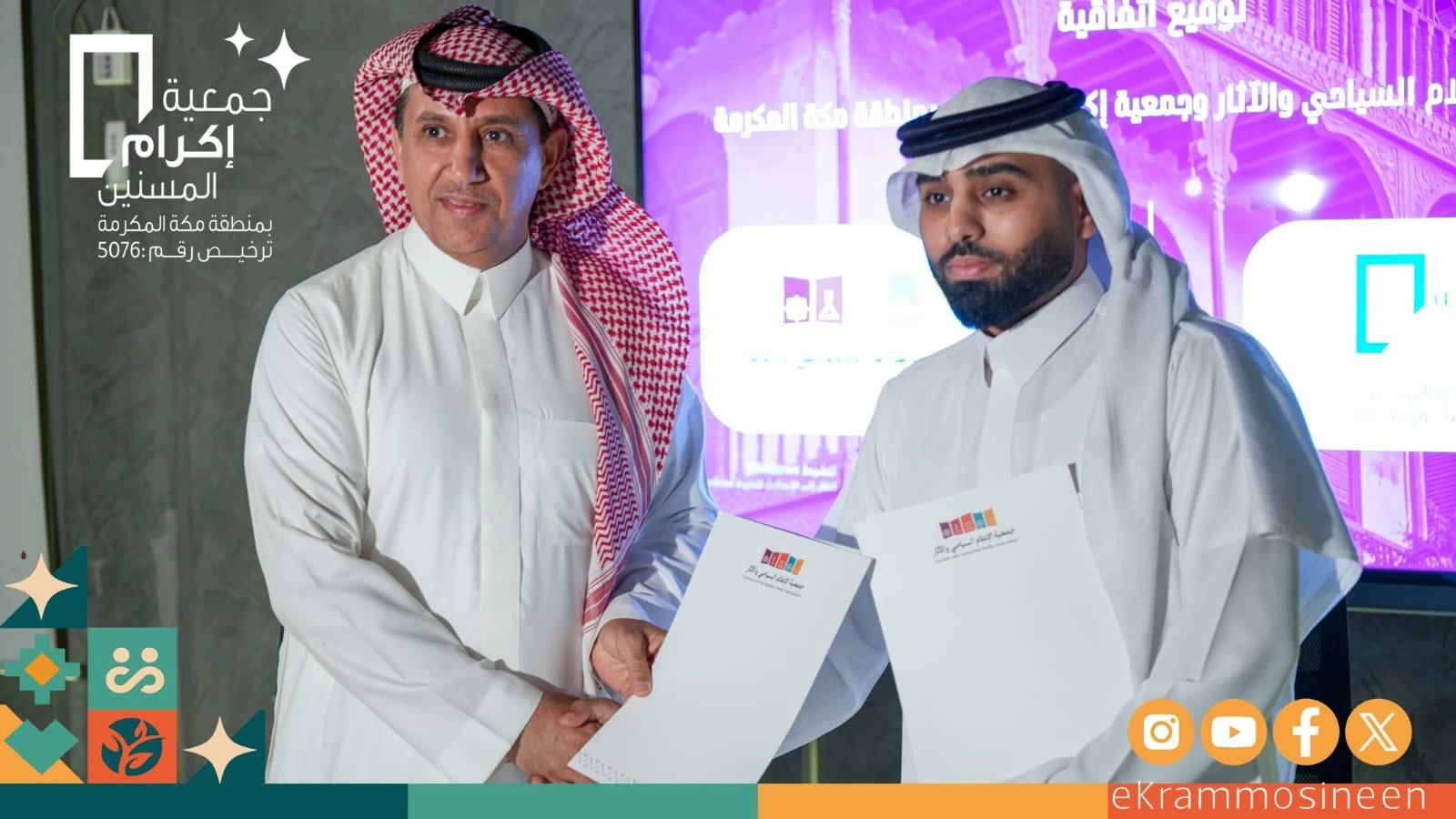
As part of its efforts to enhance the quality of life for the elderly and in implementation of its goals to provide an entertainment, sports, cultural, and social environment, the Elderly Care Association in the Makkah region implemented the Quality of Life Enhancement Initiative (Tourism-Sports), with the participation of a number of charitable organizations and volunteer teams. The initiative included a package of sports events and activities, along with information corners and booths in the tourism field, providing an integrated experience that contributed to enhancing community participation and spreading awareness of the importance of sports and tourism in improving the quality of life for the elderly. The initiative also witnessed the participation of...
The Deputy Governor of Yemen's Taiz Governorate, Dr. Abdulqawi al-Mekhlafi, affirmed that Saudi Arabia is a strategic partner for Yemen, and its role has not been limited to political support for legitimacy but extended to include economic support, humanitarian response, and funding development and reconstruction projects.
He said, in an interview with Okaz, that in light of the difficult economic conditions Yemen is going through, Saudi support has had a significant impact in strengthening the ability of state institutions to continue performing their functions and alleviating the suffering of citizens, noting that Saudi support in Taiz Governorate is clearly present through qualitative projects that directly address citizens' needs in the sectors of education, health, roads, energy, and water, which reflects a deep understanding of development priorities and confirms that the relationship between the two countries is based on a real partnership that goes beyond relief support to capacity building and sustainable development. The Deputy Governor of Taiz touched on a number of important topics.
• How is the situation in Taiz Governorate and the conditions of its people and residents?
•• Taiz is not just a governorate that faced war; today it represents a national model of resilience and administration under exceptional circumstances. It has borne double burdens due to the siege and targeting of infrastructure, and has received large numbers of displaced people, which has put unprecedented pressure on public services and limited resources. Despite that, the local authority, with support from the Presidential Leadership Council, the government, and regional and international partners, has managed to maintain minimum services and gradually work on restoring state institutions and improving performance levels in several sectors. We are aware that the scale of needs is still large and the effects of the war have not yet ended, but we believe that Taiz has moved from the crisis management phase to the gradual reconstruction phase, based on the will of its people, state support, and development partnerships that have begun to bear fruit.
Saudi Arabia is a strategic partner for Yemen
• Tell us about Saudi support for Yemen in general and for Taiz Governorate in particular.
•• Saudi Arabia is a strategic partner for Yemen, and its role has not been limited to political support for legitimacy but extended to include economic support, humanitarian response, and funding development and reconstruction projects. In light of the difficult economic conditions our country is going through, this support has had a significant impact in strengthening the ability of state institutions to continue performing their functions and alleviating the suffering of citizens.
In Taiz Governorate, Saudi support has been clearly present through qualitative projects that directly address citizens' needs in the sectors of education, health, roads, energy, and water, which reflects a deep understanding of development priorities and confirms that the relationship between the two countries is based on a real partnership that goes beyond relief support to capacity building and sustainable development.
• What about the support of the Saudi Program for the Development and Reconstruction of Yemen and the King Salman Humanitarian Aid and Relief Center for the governorate?
•• The Saudi Program for the Development and Reconstruction of Yemen is today one of the most important development partners in Taiz Governorate, as it works according to an integrated development vision targeting the sectors most related to citizens' lives, under the supervision of Ambassador Mohammed Al Jaber, who pays special attention to Taiz and is keen to implement qualitative projects there.
In education, the College of Medicine project at Taiz University is being implemented with all its modern facilities and equipment, along with the establishment of educational complexes and a technical and vocational institute for girls, contributing to the preparation of qualified cadres that meet the needs of the labor market. In the health sector, support includes the establishment of a specialized hospital for cancer treatment to be an educational and referral hospital, in addition to a rural hospital in Al-Mawasit District, enhancing health services in the city and countryside.
In the roads sector, the program contributed to the rehabilitation of the Hayjat al-Abd road, a strategic artery linking Taiz to the temporary capital Aden. Preparations are also underway for other urban road projects, foremost of which is the rehabilitation and maintenance of most city streets connecting the districts, in addition to Prince Sultan bin Abdulaziz Tourist Road, a vital artery linking the city to Jabal Sabr and Al-Arous Peak, which holds great tourism, economic, and social importance. After its rehabilitation, it will have a direct impact on improving economic movement and tourism revitalization in the governorate.
In the energy sector, the government power plant project with a capacity of 50 megawatts is one of the most important strategic projects awaited, as it will restore government electricity service to Taiz city after more than a decade of outage, and will be a turning point in improving public services, encouraging investment, and stimulating economic activity.
The program's projects also extended to the coastal districts of Taiz, through the implementation of road and hospital projects and support for educational institutions, reflecting the comprehensiveness of the development vision.
As for the King Salman Humanitarian Aid and Relief Center, it continues to play a pivotal humanitarian role by implementing water, health, food security, and shelter projects, most notably the project to support water sources in Taiz city, which will help alleviate one of the most urgent crises. We view these projects as an investment in the stability of the Yemeni people and the future of the governorate, and we greatly appreciate this brotherly role and look forward to expanding areas of cooperation in the coming phase.
• What services is the governorate lacking, and what helped you face challenges?
•• Today, Taiz's needs go beyond temporary solutions and require strategic projects that rebuild infrastructure on sustainable foundations. Foremost among these priorities is the government power plant project as an entry point to improve various service and economic sectors, along with the seawater desalination project from Mocha to Taiz, which we see as the strategic solution to fundamentally end the water crisis. The governorate also needs to complete road projects, especially the rehabilitation and maintenance of most city streets connecting the districts, and the rehabilitation of Prince Sultan bin Abdulaziz Tourist Road linking the city to Jabal Sabr and Al-Arous Peak, due to its importance in stimulating commercial and tourism activity, in addition to sewage projects, hospital expansion, and development of educational institutions, commensurate with the population density and the economic and scientific role that Taiz plays.
Despite limited resources, what helped us persevere is the integration of efforts between the local authority and the government, the unlimited brotherly support from Saudi Arabia, donor support, and above all, the exceptional will of the people of Taiz who have proven that development can continue even in the most difficult circumstances.
Security situation improvement in Taiz
• What about the security situation in the governorate, and how do you manage it?
•• The security situation in Taiz is witnessing an incremental improvement compared to the conditions the governorate is going through, thanks to continuous coordination between the local authority, the military establishment, and security agencies.
We work on the principle that security and development are two parallel tracks, so we focus on strengthening the rule of law, combating crime, and developing the institutional performance of security agencies, to enhance citizen confidence and provide a stable environment for investment, work, and production.
Despite the proximity of front lines, the governorate has succeeded in maintaining a reasonable degree of stability, and we continuously strive to develop this performance to keep pace with the aspirations of citizens.
Original source: Okaz

Comments (0)
Be the first to comment.