Have Scientists Managed to Regrow Lost Teeth?
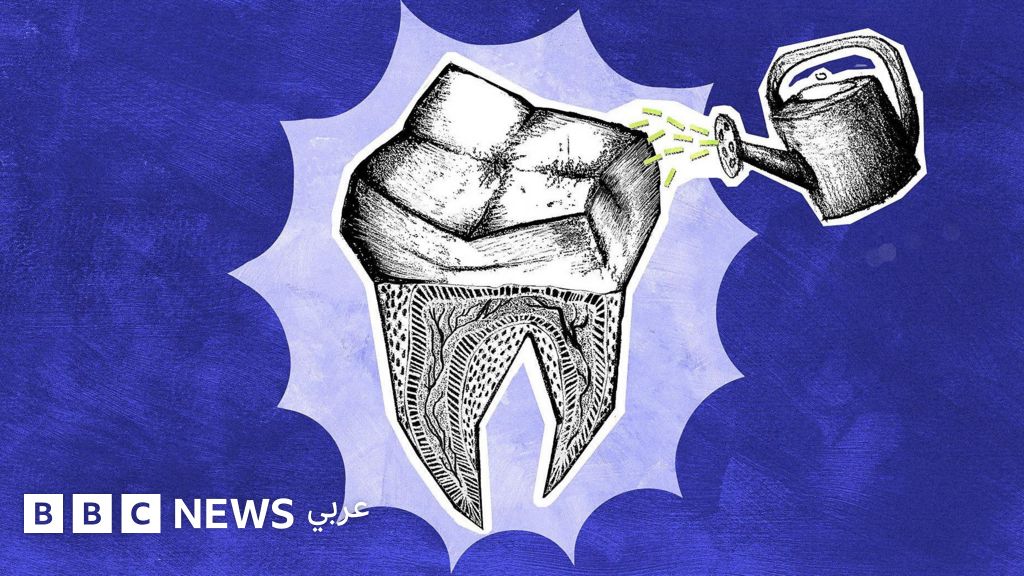
Scientists are working on developing treatments based on regenerative medicine to regrow teeth, in an effort to provide an alternative to traditional fillings and dental implants. If this vision is realized, a visit to the dentist might one day involve the regeneration of damaged dental tissue, or even an entire tooth, instead of restoring it with synthetic materials or extracting it.
Have scientists managed to regrow lost teeth?
Article Information
Author, Sarah Sloat; Role, BBC News
Published 7 minutes ago
Read time: 6 minutes
Although teeth play a greater role in health than many realize, current solutions for treating tooth loss are temporary and ineffective. What if we could regrow our teeth?
Some studies indicate that more than 70 percent of adults fear going to the dentist. Their anxiety and lack of trust in fillings and drilling cause them to neglect routine cleaning and care.
However, biochemist Hannele Ruohola-Baker receives emails almost daily from people begging her to undergo strange dental experiments that go beyond the routine pain of most dental visits—they are asking for her help in regrowing their teeth.
This is because Ruohola-Baker is part of a growing group of scientists around the world who are harnessing the power of regenerative medicine to replace traditional dental procedures for millions of people who have lost teeth and suffer from dental pain.
What are the correct ways to brush teeth?
"The e-cigarette created black holes in my teeth"
If this vision is realized, a dentist visit might one day include the regeneration of damaged tooth tissue, or even a whole tooth, rather than repairing it with artificial materials or extracting it—a prospect that is attractive not only because it is new, but also because teeth play a greater role in health and wellness than many may realize.
Says Ruohola-Baker, associate director of the Institute for Stem Cell and Regenerative Medicine at the University of Washington in the United States: "When we started, one thing became clear to me: people are ready to try something new in dentistry."
Open your mouth wide
Pamela Yelick, a professor at the Tufts University School of Dental Medicine in the United States, says: "Teeth are your window to the world. If you are afraid to open your mouth or cannot eat properly, your health will deteriorate significantly."
"Historically, it has been undervalued that oral health is key to good general health," Yelick adds.
Skip the most read and keep reading
The other World Cup winner... Lamine Yamal's little brother who captivated the internet
The Houthis announce a "naval blockade" on Saudi Arabia, and the coalition vows to respond to any threat
Trump's performance, the perfect end to a World Cup marked by extravagance - in The Guardian
Trump discusses with the new British Prime Minister "clearing mines from the Strait of Hormuz"
Skip the podcast and keep reading
Worth paying attention
An in-depth explanation of the most prominent events and topics, to help you understand the most important variables around you and their impact on your life
Episodes
Podcast end
It is now known that dental problems, such as bacteria resulting from gum disease, increase the risk of heart disease and respiratory infections. They are even linked to Alzheimer's disease. At the same time, tooth loss is linked to increased illness and early death. It affects the ability to eat, chew, and smile, and can harm mental and social health—a vicious cycle that may begin in childhood.
Dentists have many tools to help address this problem. They can fix cavities by removing the damaged part and filling the space with a synthetic material, such as composite resin. They can also use fillings to repair small cracks and fractures.
But these are imperfect solutions. For example, there is a large variation in the longevity of fillings, which may last anywhere from about 5 to 20 years.
It is also not uncommon for patients to have to undergo "repeated interventions" for such procedures, says Anne George, a professor of oral biology at the University of Illinois at Chicago in the United States.
The University of Illinois professor says this is because these treatments focus primarily on "fixing the damage, rather than restoring biological function."
"Instead, regenerative dentistry could represent a paradigm shift, as it focuses on healing," she adds.
Image caption, teeth consist of four main layers: enamel, dentin, cementum, and dental pulp
Self-filling cavities
Anne George, a professor of oral biology at the University of Illinois at Chicago, says cavities, for example, "are the most common cause of tooth damage."
Teeth consist of four main layers: enamel, dentin, cementum, and dental pulp. Decay develops when plaque bacteria feed on sugars, producing acids that gradually dissolve the enamel layer. Dentin lies beneath the enamel and is softer and less resistant to decay; when enamel is lost and dentin is exposed, the risk of decay increases.
Professor Anne George researches proteins that help dentin grow, calcify (become hard), and repair itself. She was also part of a team that cloned one of the genes that helps build dentin, which contributed to a deeper understanding of the mechanisms of tooth formation for this tissue and maintaining it in the first place.
She says this knowledge could lead to new treatments that stimulate damaged teeth to repair decay by forming new dentin on their own, eliminating the need for traditional fillings to plug holes.
Ruohola-Baker and her team are also working on developing "living fillings"—but those fillings rely more on tooth enamel rather than dentin.
After studying wisdom teeth donated for research, the scientist discovered that the specialized cells that produce tooth enamel (ameloblasts) die after human tooth eruption, so they cannot be stimulated after the tooth has emerged.
Instead, the team used chemical signals to induce some stem cells to become ameloblasts, and other stem cells to become dentin-producing cells (odontoblasts). When combined in a laboratory dish, they produced a tooth organoid that secretes enamel proteins on its own.
Ruohola-Baker anticipates a future where these enamel proteins are used in dental fillings, or painted on cracked teeth. But her long-term goal is to grow an entire tooth in the lab: she eventually wants to transplant the engineered cells needed to build a tooth into a patient's mouth, leaving "nature to do the rest," as she puts it.
How to cultivate a tooth
If a tooth is severely affected by cavities and decay, the best and easiest treatment might be to extract it and replace it with a dental implant—a combination of a screw-shaped abutment, an artificial crown, and a connector.
But implants do not have nerves that help with sensation while chewing, so it is possible for a patient to bite with too much force unintentionally, which could lead to breaking the implant.
Bacteria can also adhere to the implant, causing a condition that could affect remaining healthy teeth. Artificial crowns need to be replaced after about 15 years, and their cost can reach thousands of dollars, depending on the type of health insurance the patient has.
Image caption, researchers expect regenerative dentistry solutions to eventually be available to the public
Original source: BBC Arabic



Comments (0)
Be the first to comment.