How American Salads Went from a Healthy Choice to a Source of Anxiety and Fear
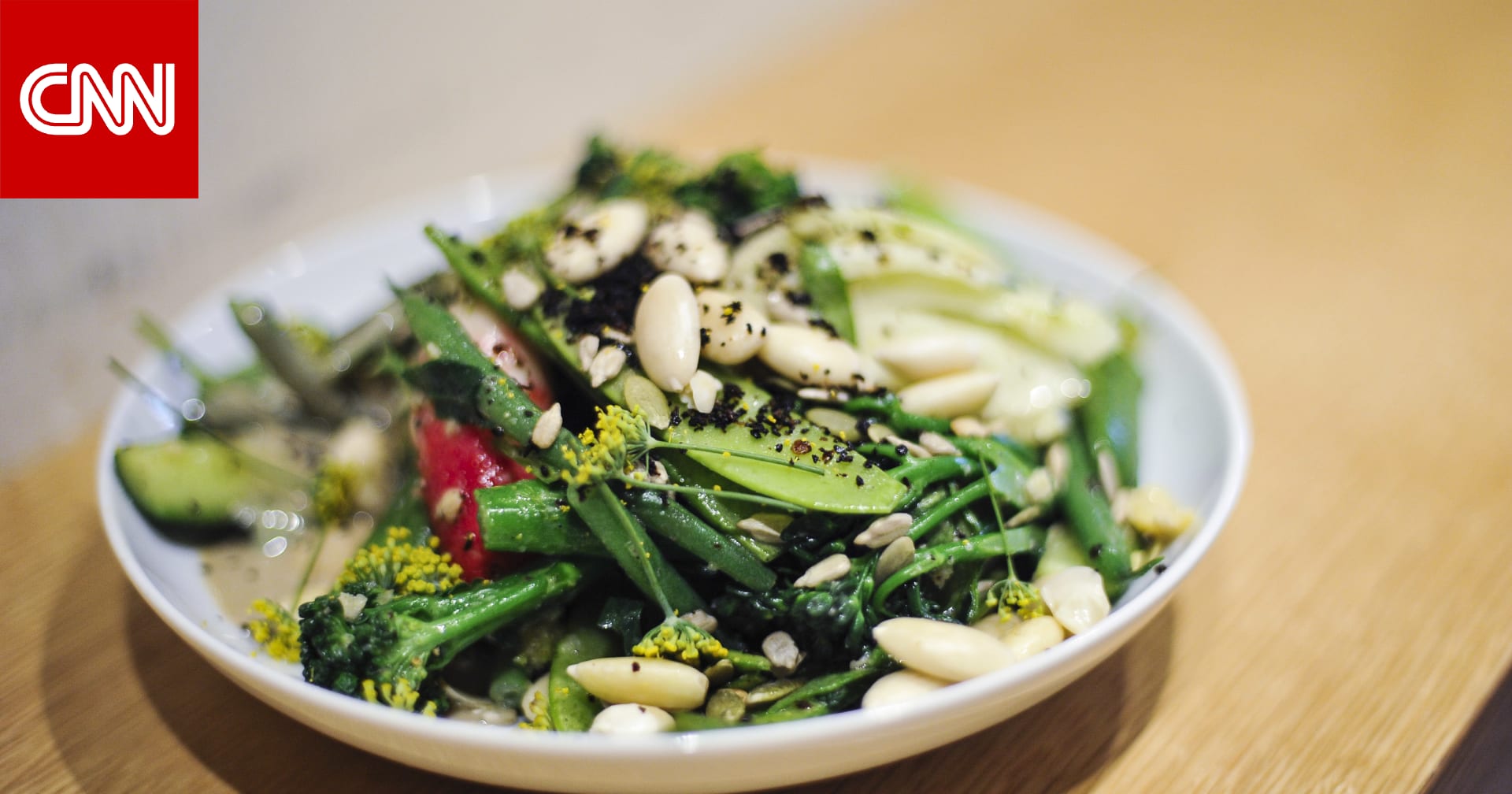
As cases of diarrhea caused by the Cyclospora parasite rise in the United States, some restaurants and consumers have been forced to make changes in their food practices.
As cases of acute diarrhea rise in America, some restaurants and consumers have been forced to make changes to their food practices.
For example, Street Beet, a vegan restaurant in Detroit, has started removing the outer layer of lettuce and washing it twice as a precautionary measure.
While some customers prefer not to add it to their meals, others choose dishes free of ingredients dominated by green.
Chicken Caesar wraps, made from tofu chicken with miso dressing, are among the most popular dishes at the restaurant, but demand has declined recently.
Overall, the restaurant's sales dropped by about $3,000 last week compared to the same period in previous years.
Danay Florias, the restaurant's operations manager, said: 'We suspect this is due to the community's concern about eating out and commercial products. The decline was very noticeable, and we expect it to continue until the outbreak subsides or is contained and its source identified.'
Has the era of salad ended?
So far, no specific type of food, farm, or supplier has been identified as the source of the Cyclospora outbreak, a microscopic parasite linked to cases of acute diarrhea across the country, particularly in Michigan and Ohio.
Given that fresh leafy greens and berries have caused past infections, consuming them can lead to digestive problems lasting days.
Hana Hargrove, a pediatric dietitian in Detroit, said her family has changed their eating habits, especially after some friends were infected with the parasite.
The family now chooses frozen berries and vegetables, thick-skinned fruit that can be peeled, and canned fruit instead of fresh produce.
Although she still washes fresh produce she buys with water only, she pays 'extra attention' to its cleanliness, rather than just rinsing it quickly.
However, Hargrove believes the uncertainty surrounding the outbreak may push people to make unhealthy food choices, noting that most people do not get enough fiber in their diets.
After health authorities recommended cooking produce until it reaches an internal temperature of 158 degrees Fahrenheit to kill the microscopic parasite, she herself is considering lightly boiling fruit to be able to enjoy it.
Which parasite are we talking about?
Not everyone seems to be worried.
In New York City, where hundreds of people have been infected with Cyclospora, vegetable-based restaurants have continued to serve customers as usual.
Employees at Sweetgreen in the Williamsburg neighborhood of Brooklyn said some customers inquired about the hygiene standards in the kitchen before placing orders.
But the branch saw no decline in sales last week. The same applies to neighboring branches of Cava and Dig Inn.
Portia's Cafe, a vegan restaurant in Ohio—which has recorded more than 360 confirmed cases since June 1—said customer numbers are lower than usual, but it has not noticed a significant change in overall sales.
While the restaurant follows state-approved health protocols, some of the vegetables it uses are grown in-house, while others are sourced locally.
A spokesperson for Taco Bell said the company 'voluntarily and temporarily removed some limited ingredients in a number of its restaurants as a precautionary measure,' even though officials have not confirmed a link between the outbreak and any specific 'ingredient, supplier, restaurant, or retail store.'
Laurie Schalow, chief corporate affairs and food safety officer at Chipotle, confirmed that the company is monitoring ongoing investigations into the Cyclospora outbreak, explaining: 'We do not believe, at this time, that the ingredients we source are linked to this outbreak.'
'Outbreaks like this—and possibly worse—will happen again'
It is natural for Cyclospora infection to worry people, as it can cause very unpleasant symptoms including diarrhea, cramps, and bloating. Some infected people have reported being confined to the bathroom for days due to the severity of symptoms.
Some politicians believe the outbreak comes amid broader changes made by the Trump administration to healthcare infrastructure.
In 2025, the US Centers for Disease Control and Prevention (CDC) made tracking Cyclospora and other foodborne illnesses optional, while mandatory surveillance was limited to Salmonella and E. coli.
Democratic Representative Rosa DeLauro of Connecticut said: 'Outbreaks like this, and possibly worse, will happen over and over again unless we change course.'
But not all fresh produce is necessarily affected by the outbreak. Gotham Greens, a regional indoor farming company operating across the US, stated on Instagram that its products are safe regardless of the outbreak, as they are grown in controlled greenhouse environments and protected from many external factors that can affect field-grown produce.
Influencers in the food and wellness sectors have urged consumers to replace traditional grocery stores with local farmers' markets.
Jeff Stenthorp, owner of a small farm in Washington state, said he has received calls from customers worried about the parasite, despite no major outbreak in the state.
He added that the few points of contact between his farm and the end consumer give him confidence in the safety of his products, especially given the absence of health advisories or product recalls in Washington.
Although small farms are not immune to disease outbreaks, their small size makes it easier to monitor safety measures.
Stenthorp noted that large commercial farms may be more vulnerable to contamination risks due to 'exploitative labor practices.'
He explained that workers are often paid based on the amount of crop they harvest, which may discourage them from taking bathroom breaks or calling in sick.
Stenthorp believes the anxiety surrounding Cyclospora may have a positive side, helping people recognize deficiencies in the American food system.
He said: 'I just hope this pushes some people to think about the structure of our food system as it currently stands; it is not necessarily good for our planet, our health, and the people who work in it.'
Original source: CNN Arabic



Comments (0)
Be the first to comment.