How a fitness tracking app revealed a woman's pregnancy before she knew it?
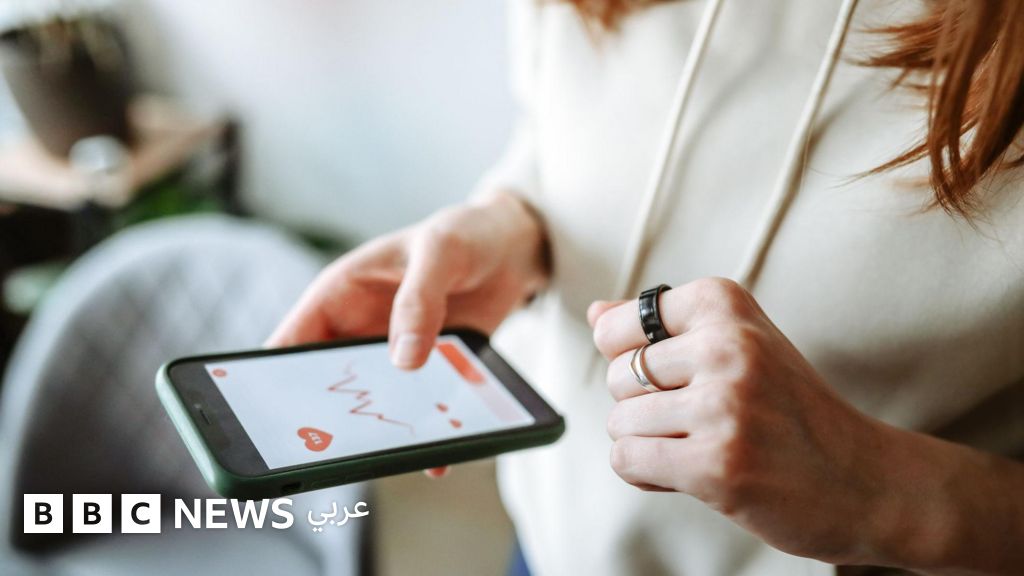
Fitness tracking apps help monitor women's physical changes, such as increased body temperature and heart rate, which may help detect early pregnancy and even miscarriage. What's the story?
How a fitness tracking app revealed a woman's pregnancy before she knew it?
Article Information
Author, Ashita NageshRole, BBC
Published 2 hours ago
Reading time: 5 minutes
Ravika was celebrating her birthday during a holiday with her husband when she received an unusual alert from her fitness tracking app.
The Oura smart ring indicated that her health status was poor, detecting an elevated heart rate, increased body temperature, and a decrease in what is known as heart rate variability. Despite this, Ravika did not feel tired; she felt perfectly fine.
When the app did not show improvement in these indicators after a week, the 34-year-old lawyer from the West Midlands in central England conducted an internet search and found a community of women who confirmed that their fitness tracking devices were giving them pregnancy indicators based on data collected by those devices.
Ravika did not get a positive pregnancy test result until another week later.
Do some women see colors that others cannot?
However, after experiencing some cramps and receiving a notification on her phone stating that her body appeared to be under severe stress, she consulted a doctor who told her she would need to return in ten days for additional tests to verify whether the pregnancy was stable.
The waiting period was extremely harsh, and it drove her to anxiously monitor her fitness tracker indicators, even waking up at 4 a.m. every night 'just to update the app and see if the indicators were still low and if the body temperature was still high.'
She says, 'I was clinging to hope that the pregnancy would be viable.'
She added that those indicators turned into an 'obsession,' explaining, 'For me, it felt like a matter of life or death.'
Skip most read and continue reading
The other World Cup winner... Lamine Yamal's little brother who captivated the internet
How Trump plunged the United States into many crises? - The Guardian
Bahrain claims to have thwarted Iranian attacks, and Jordan 'downs missiles' targeting the kingdom
Have scientists succeeded in regrowing lost teeth?
Skip podcast and continue reading
Worth attention
In-depth explanation of the main events and topics, to help you understand the key changes around you and their impact on your life
Episodes
Podcast End
For many women, the first sign that may indicate pregnancy is the absence of the expected menstrual period, which roughly coincides with the time when a pregnancy test becomes possible. Except for some tests claiming early detection, most cannot detect hormonal changes until the first day of a missed period.
Ravika is one of hundreds of women who mention online that they discovered these signs early through data provided by their fitness tracking apps.
What does the placenta have to do with anti-aging injections? And what do we know about busting a smuggling network?
Notably, fitness tracking devices, including smart rings, smartwatches, and chest-mounted trackers, have become widespread in the UK. According to a study by YouGov, 36 percent of British adults in January 2026 owned and used a fitness tracking device, nearly double the percentage recorded in July 2019.
The Finnish-American company Oura leads sales in the smart ring market, which also includes India's Ultrahuman and Hong Kong-based RingConn.
Predicting pregnancy and miscarriage too
Image caption, Ravika says her Oura smart ring indicated her health was poor, yet she felt perfectly fine
One of the key indicators of pregnancy is a change in a woman's body temperature, making fitness tracking devices capable of monitoring body temperature popular among women trying to conceive.
During a normal menstrual cycle, a woman's body temperature remains elevated until just before the period starts, then drops sharply.
In early pregnancy, body temperature typically remains elevated. If a fitness tracker records body temperature, it can detect this early sign.
Ravika, alongside monitoring her indicators, began reading posts on Reddit from women who said their Oura smart ring not only predicted their pregnancies but also predicted miscarriages through the ring's 'vital signs' notification.
Sofia, 32, was one of those women. She lost her pregnancy twice, and her Oura ring had shown pregnancy indicators through collected data in both instances, before she got pregnant a third time with her son, who is now five months old.
When she first became pregnant early last year, she made sure to check her app every morning.
AI simulates the effect of skincare products before use
She said, 'I would wake up and see the temperature indicator continue to rise. Then one morning I saw in the app that my temperature had dropped, so I realized something was wrong.'
She added, 'When I had the miscarriage, I was mentally prepared to a large extent because of the data I had seen.'
The same thing happened three months later, so Sofia and her husband decided to temporarily stop trying to conceive. However, during that period, she received a notification from her ring about 'minor signs of stress' and noticed her body temperature had risen again. She took a pregnancy test, which came back positive.
Although this pregnancy was stable, anxiety accompanied her throughout the first weeks, and she frequently checked her data.
She said, 'I would say, oh my God, will it happen again? And I remember waking up at 4 or 5 a.m. just to check the app and see if my temperature had dropped.'
She added, 'I was so focused on this data that when I reached the seventh or eighth week of pregnancy, I had to remove the ring and did not wear it for the entire first trimester.'
Increased anxiety
Stuart Lavery, consultant in reproductive medicine at University College London Hospital, says: 'It's natural for people to turn to this technology to better understand their health and try to detect things as early as possible because planning for a pregnancy has a huge impact on their lives.'
However, he warned: 'We may be moving faster than our current knowledge allows.'
He added: 'We need much more data on how reliable these technologies are and more studies, otherwise anxiety levels will increase significantly.'
Original source: BBC Arabic





Comments (0)
Be the first to comment.