Lene Hellene Løken: 'In Defense of Self'... Uses Voice to Restore Life
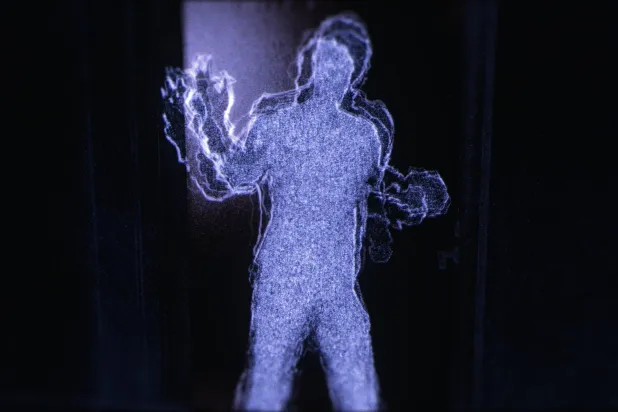
True empathy begins when one can see the world from another's perspective
Norwegian filmmaker Lene Hellene Løken said that her documentary 'In Defense of Self' was not an attempt to retell the killing of its subject, Morten Mikalsen, but rather an effort to restore his voice and perspective, which were lost upon his death. She emphasized that the audio recordings he left behind were the true gateway to understanding his personality and psychological state, as they carry an authenticity that cannot be conveyed by documents or official reports.
Løken added, in a Zoom interview with Asharq Al-Awsat, that 'the film relied on more than 35 hours of audio recordings that Morten's parents handed over to me.' She explained that she preferred to rely on his real voice rather than written documents, because writing has already undergone a process of interpretation and processing, while the voice retains the emotions and reactions as they first emerged from the person. She affirmed that she believes listening to a person offers greater intimacy than looking at them, as the voice carries layers of emotion that are difficult to perceive through images alone.
The family of the late writer helped the director and provided her with photos and documents (YouTube).
She noted that this perception was one of the main reasons behind the cinematic approach she adopted in the film; she did not merely present the case documents, but resorted to re-enacting the investigations, building the narrative on the original audio recordings, because her goal was not to reproduce the official account, but to bring the viewer closer to the human truth that Morten lived.
The documentary 'In Defense of Self,' which began its festival journey during the last edition of the Copenhagen International Documentary Film Festival, tells the story of Norwegian writer Morten Mikalsen, who, according to the film, 'suffered from psychological disorders and alcohol addiction before being shot dead by police during a security intervention.'
The film reconstructs his story through his personal audio recordings, which reveal his inner struggles and worldview, in an attempt to restore his absent voice and open a broader discussion about dealing with psychiatric patients, police violence, and the limits of responsibility of care institutions in protecting the most vulnerable groups, according to the director.
The director presented her vision of what happened through the film (YouTube).
Løken explained that she was interested from the beginning in restoring the perspective that no one had heard, stressing that 'the account known to the public was based on the testimonies of police officers who were outside Morten's home at the time of the incident, while his voice completely disappeared after his death.'
She added that she always wondered what he was feeling in those moments, considering that reaching the truth cannot be achieved through a single narrative, but requires listening to all parties.
She said that the recordings revealed a completely different side of Morten's personality; he constantly talked about his literary projects and the scripts he was writing, which helped her build the dramatic structure of the film. She noted that this vast material posed an ethical challenge because she had to select specific parts and exclude others, which necessarily meant presenting her own reading of his personality. She added that throughout the editing process, she ensured that the abbreviation did not change the meaning or distort the truth.
She affirmed that 'the film does not claim to possess the absolute truth, but presents Morten's perspective as I understood it through the material he left behind,' explaining that 'any documentary necessarily carries the filmmaker's vision, and she did not want to claim complete neutrality because that ignores the nature of cinematic work itself.'
Regarding her personal experience with the film, she described it as one of the most difficult experiences in her professional life, noting that she spent five full years working on the project, years that left a clear psychological impact on her and the crew. She pointed out that 'everyone suffered from varying degrees of insomnia and psychological stress, to the point that I felt Morten's psychological symptoms haunted us every time we returned to work on the film after a break.'
Norwegian film director Lene Hellene Løken (production company)
The director believes that 'the film presents a human experience that transcends the borders of Norway because it discusses issues related to mental health, addiction, and the relationship between patients and state institutions, topics that can resonate in many societies.' She indicated that her goal was not to present a work about a specific crime, but to place the viewer inside the psychological experience that Morten lived, so that they feel what he felt; because true empathy begins when one can see the world from another's perspective.
Regarding the film's world premiere at the Copenhagen International Documentary Film Festival (CPH:DOX), Løken said that 'what caught my attention most was the extent of the audience's interaction with the story,' explaining that discussions continued long after the screenings ended, as attendees asked many questions about Morten, his parents, the case, police violence, and how psychiatric institutions deal with patients.
She added that a number of viewers approached her after the screening to talk about their personal experiences with psychiatric care systems, considering those moments to be the most important for her, because they confirmed that the film succeeded in opening a dialogue that goes beyond the details of the case itself, reaching broader questions about human dignity and the right to have one's voice heard even after death.
Original source: Asharq Al-Awsat




Comments (0)
Be the first to comment.