What is the best clothing to resist heat waves?
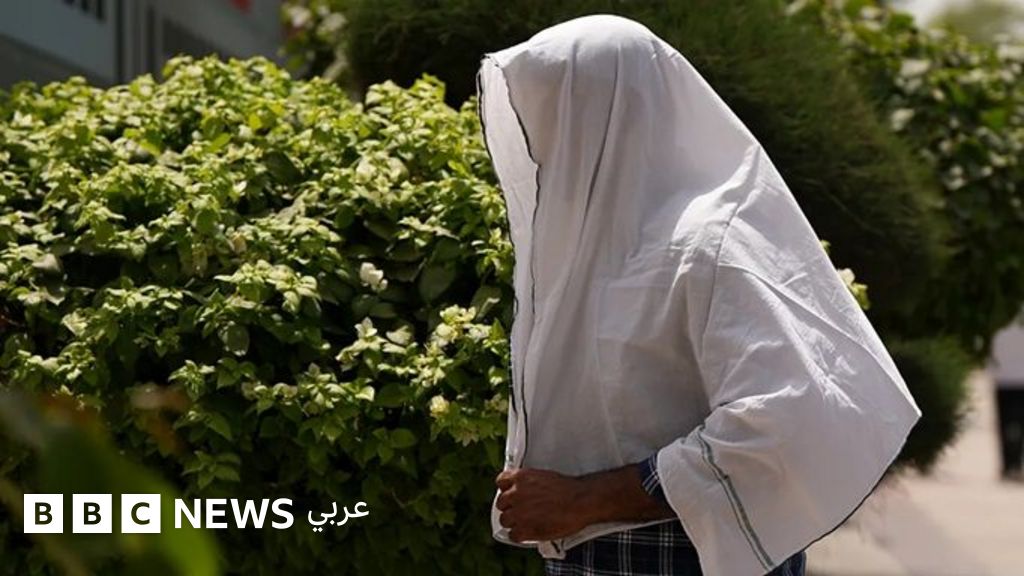
American scientists have found that fabric type plays a major role in maintaining body temperature on hot days, and that spraying the body with a little water helps cool it down.
What is the best clothing to resist heat waves?
Published 5 August 2023
Last updated 2 minutes ago
Reading time: 5 minutes
Is the weather dry or humid? This question may be the most important factor when choosing what to wear in hot weather.
With extreme heat waves increasing worldwide due to climate change, the clothes we wear play an important role in helping us keep our bodies cool. Studies indicate that choosing appropriate clothing may allow raising the thermostat setting by about two degrees Celsius without affecting comfort levels, which could help reduce energy consumption, costs, and greenhouse gas emissions in the long term.
So, what is the best clothing to face the heat?
What are the maximum temperatures the body can withstand?
Do extreme heat waves affect the summer tourism market in Europe in the future?
Kuwaiti researcher: "Gulf policies for protecting workers from heat have no scientific basis"
Image caption, Not everyone can wear the most appropriate clothing for hot conditions at all times, but placing a wet scarf around the head or neck can help.
Color and design
When it comes to colors, many prefer to wear white clothes in summer because they reflect sunlight, while black absorbs more light.
But the picture is more complex than that, because heat does not come only from the sun; the body also constantly emits heat. When this heat hits white clothing, part of it is reflected back toward the body.
In 1980, a study examined why Bedouins wear black robes in the desert. The Bedouins are groups that traditionally lived a nomadic or semi-nomadic life in desert areas of the Arabian Peninsula, the Middle East, and North Africa.
Skip most read and continue reading
Houthis announce "naval blockade" on Saudi Arabia, and the coalition threatens to respond to any threat
The other World Cup winner... little brother of Lamine Yamal who took the internet by storm
United States attacks "Iranian military command centers and naval capabilities," and Tehran responds by targeting "American facilities" in Kuwait and Bahrain
Trump's parade a perfect ending to a lavish World Cup - The Guardian
The researchers concluded that the amount of heat the tribesmen were exposed to was almost similar, whether they wore black or white robes.
How does that happen?
Black fabrics have a greater ability to radiate heat, and they also absorb heat emitted from the body, which may also contribute to cooling.
The secret of Bedouin clothing lies in it being black and loose at the same time, especially when there is wind. Loose black clothing heats the air between the fabric and the skin, creating an upward airflow similar to a chimney effect, carrying heat upward and helping the body cool.
The study stated: "The amount of heat gained by a Bedouin exposed to desert heat remains similar whether he wears a black or white robe."
It added that the additional heat absorbed by the black robe was dissipated before reaching the skin.
This means that the looseness of clothing may be more important than its color. However, if clothes are tight, light colors remain the best choice.
Also, fabrics with a raised texture, such as seersucker or piqué commonly used in sports polo shirts, help keep the fabric relatively away from the skin instead of sticking to it.
Fabric type makes a difference
Fashion coordinator and writer Heather Newberger says choosing the fabric type is as important as choosing the clothing design.
She adds: "If you're wearing a loose denim jumpsuit, you'll feel much hotter than someone wearing tighter clothes but made of lightweight fabrics like gauze or chiffon."
When it comes to garment construction, lightweight woven fabrics like cotton and silk tend to drape more loosely on the body than knitted fabrics.
This becomes more important in humid conditions. In dry weather, moisture-wicking properties may suffice because sweat evaporates relatively easily. But when it's hot and humid, the air is already saturated with water vapor, making sweat evaporation more difficult.
Rhett Allen, associate professor of physics at Southeastern Louisiana University in the United States, says:
"It is best to choose a fabric that allows water vapor to pass through so as not to hinder sweat evaporation. Some modern sports fabrics do this efficiently, while cotton does not achieve the same result."
Which fabrics are best?
Skip podcast and continue reading
Worth paying attention to
In-depth explanation of the most important events and topics to help you understand the key changes around you and their impact on your life
Episodes
End of podcast
All textiles trap, to varying degrees, the infrared radiation emitted by the body. This is beneficial in cold weather, but less so on hot days, which is why breathable fabrics are particularly important.
Uncoated cotton, linen, nylon, and polyester are classified as breathable fabrics to varying degrees, as they allow heat and moisture to escape through the weave.
However, these fabrics differ from moisture-wicking fabrics, which actively draw water away from the body.
Cotton absorbs moisture well, but it dries slowly. If a person sweats heavily, their clothes may stay wet for a long time, reducing comfort.
Linen is characterized by excellent ventilation due to its large fibers, but it also dries slowly.
Merino wool is popular among outdoor enthusiasts because it allows air to pass through and wicks moisture away from the body without easily retaining odors.
In contrast, nylon and polyester are widely used in sportswear because they wick moisture away from the skin and dry quickly, although they tend to retain odors.
Some studies have shown that nylon has a greater ability to absorb moisture and move it away from the body compared to polyester, but it takes longer to dry.
Research has also indicated that clothing made from bamboo fibers may provide a good level of thermal comfort due to their low thermal conductivity.
Is wearing less clothing the best solution?
George Havenith, professor of environmental physiology and ergonomics at Loughborough University in the UK, says the most effective way to keep the body cool is to reduce the amount of clothing as much as possible, when appropriate.
Clothing protects the skin from sunburn, but it also forms a barrier that limits heat exchange between the skin and the air.
The less skin covered by clothing, the greater the opportunity for cooling through sweat evaporation.
However, protecting the skin from UV rays remains a top priority when exposed to the sun.
New science
Sportswear companies like Nike and Adidas are investing millions of dollars in developing smart fabrics that help improve thermal comfort.
Scientists are also working on developing materials that allow body heat to escape more efficiently, by combining two contradictory properties: reflecting visible light coming from the sun, and allowing infrared rays emitted by the body to pass outward.
Original source: BBC Arabic





Comments (0)
Be the first to comment.