Six ways to encourage children to eat vegetables
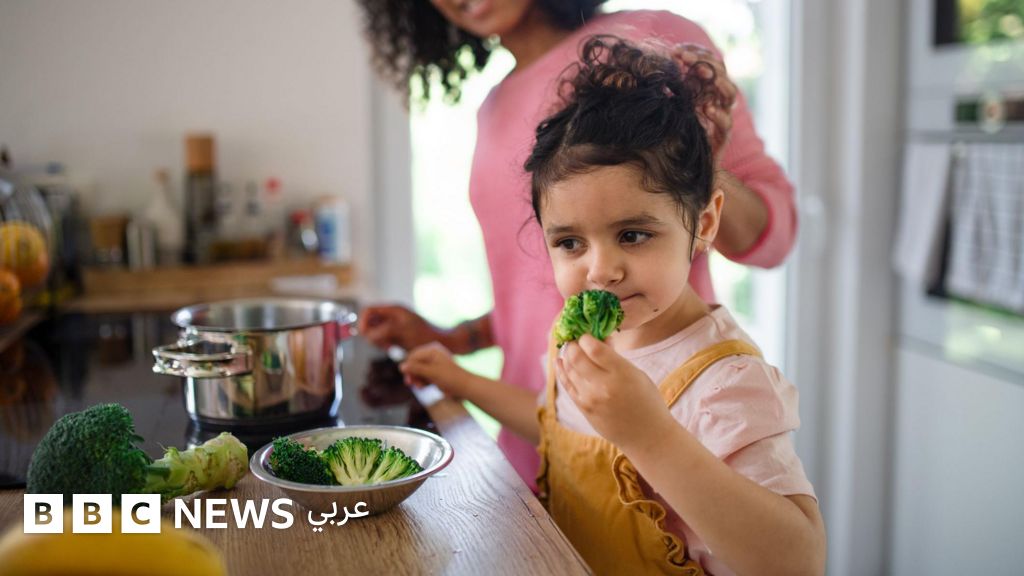
Small changes in the way food is presented can make a significant difference in children's health
Six ways to encourage children to eat vegetables
Image caption, Children tend to ask to taste food more than once before eating it
Article Information
Author, Melissa HogenboomRole, BBC Future
Published 1 July 2026
Reading time: 6 minutes
It may not be easy to feed children enough vegetables. Parent forums and chat groups are filled with questions like: 'Is it normal that my child only eats beige foods?', referring to pale or starchy foods, such as some processed foods.
One reason is that children's preference for sweet foods starts early. Even breast milk contains natural sugars that give it a somewhat sweet taste. Once children start eating solid foods, it can become difficult to persuade them to eat a piece of broccoli or a spoonful of spinach.
Hidden sugar: How much are you actually consuming?
Seven simple tricks to help you eat healthy
But children need a varied diet that includes plenty of fruits and vegetables. An unhealthy diet can affect cognitive abilities, concentration, behavior, and even academic performance. Childhood obesity rates are also rising, which is linked to long-term health concerns and worse educational outcomes.
Fortunately for parents, scientists have researched new ways to improve children's eating habits and have found some innovative solutions. Here are six simple things that research says can be tried at home:
1. Repetition
Marion Hetherington, professor of biopsychology at the University of Leeds in the UK, says that introducing different types of vegetables to children in early childhood and repeating them regularly can help improve their acceptance. She adds that the preschool years are the most effective period for promoting children's liking of vegetables.
Hetherington says: 'If you haven't started increasing the introduction of vegetables to children by the age of five, it may be too late.' Studies have found that children typically need to try a food several times before they accept it.
However, evidence varies on how many times a child should be offered a food before accepting it, with estimates ranging from five to 15 times. This may reflect differences between children.
Children under one year old may need fewer exposures compared to preschoolers aged three or four, who typically show higher levels of neophobia (fear of new foods).
Skip most read and continue reading
Do you really need to avoid gluten?
Ukraine strikes a major oil station in the Russian city of Saint Petersburg
'A meal I ate on vacation ended up infecting me with 38 parasites in my brain'
Hossam Abu Safiya: Warnings of life-threatening danger after repeated assaults in an Israeli prison
This process can even begin before the child is born. There is evidence that what the mother eats is transmitted to the fetus through amniotic fluid and may later influence the child's food preferences.
2. Serve vegetables first
Image caption, Increasing vegetables in the breakfast plate increases children's intake of dietary fiber
Skip podcast and continue reading
Worth paying attention
In-depth explanation of the most important events and topics to help you understand the key changes around you and their impact on your life
Episodes
End of podcast
Simply telling children that food is good for them can backfire, as they are more likely to choose foods described as 'tasty' over those described as 'healthy'. So, think about the timing of serving vegetables during the meal.
Serving vegetables at the beginning of the meal, when children are hungriest, increases the likelihood they will eat them. Hetherington says: 'Children often eat what they like most first.' She adds: 'By the time they get to the peas, they have lost the desire to eat them.' So, serving vegetables first may help reduce competition from other higher-calorie foods.
Barbara Rolls, professor of nutritional sciences at Pennsylvania State University in the US, says encouraging children to eat vegetables first also helps them avoid overeating.
Although vegetables are not typically part of breakfast in Western diets, there is no reason not to eat them at the start of the day. You could try adding mushrooms and spinach to omelets, or zucchini to breakfast pancakes.
In a 2023 experiment at eight childcare centers in the UK, researchers found that children ate vegetables at breakfast more than 60% of the time they were offered.
3. Increase the portion of healthy foods
If incorporating vegetables into breakfast or serving them at the start of a meal seems impractical, another method is to adjust the proportions on the plate by reducing higher-calorie components and increasing the vegetable portion.
This can be done simply by increasing the amount of vegetables as a side dish, or grating vegetables like carrots and zucchini and adding them to sauces.
Studies have shown that people tend to eat a similar volume of food, and they consume more vegetables when the ratio of meat to vegetables in a meal is changed. It has also been shown that increasing the amount of fruits and vegetables on a child's plate by 50% leads to an increase in the amount they eat.
Other research has revealed that preschool children eat more vegetables and fewer unhealthy foods when they are given a choice between different types of vegetables at meal times.
Image caption, Serving vegetables before other foods may increase the likelihood of eating them
4. Change the shape of vegetables
Changing the way a child sees the food they eat can help. Much of what we want to eat starts with our eyes first. (Read more about how we trick ourselves into eating better). When children face multiple options, they tend to choose food that looks more familiar and appealing.
Therefore, changing the presentation of food can help encourage children to eat more vegetables.
Image caption, Creativity in presenting vegetables may increase children's appetite for them
A team of researchers found that children were more likely to try new foods when they were presented in an artistic way on the plate. Other research showed that children eat more fruits and vegetables when cut into appealing shapes, such as butterflies, flowers, or bears, suggesting that making healthy foods look more fun increases their appeal.
Research has also shown that making healthy food more visible and easily accessible as a snack encourages consumption. It was found that children aged 10 to 13 chose and ate more vegetables when several types were offered in one bowl, in pre-portioned servings, rather than distributed across multiple plates. Another study showed that preschoolers ate 36% more vegetables when food was divided into portions on a plate with separate sections.
Original source: BBC Arabic




Comments (0)
Be the first to comment.