The Dead Save the Living in Saudi Arabia
In a message aimed at encouraging the community to donate after death, the Saudi monarch and his crown prince registered in 2021 in the National Organ Donation Program.
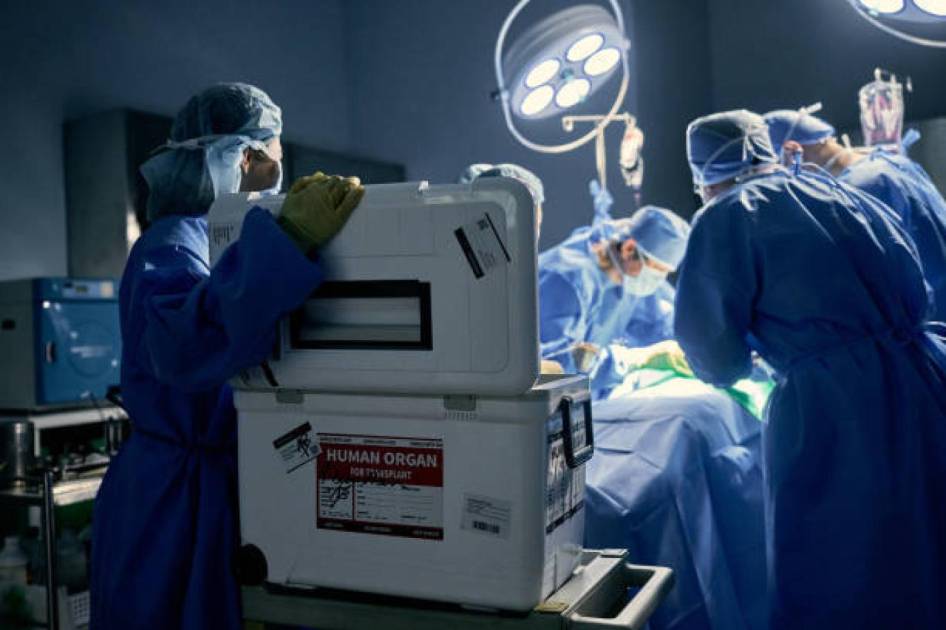
In less than 48 hours, the Saudi Center for Organ Transplantation coordinated four operations to retrieve organs from brain-dead donors. By the end of the mission, 12 patients, including four children, had a new chance at life after receiving heart, liver, lung, and kidney transplants in a complex logistical operation spanning several Saudi cities and a neighboring Gulf state.
The announcement by the Saudi Center for Organ Transplantation, founded in 1983, reflects a broader transformation in the kingdom's organ transplantation sector, a health and humanitarian project that the country has been trying to develop in recent years by expanding infrastructure, encouraging posthumous donation, and reducing waiting lists for thousands of patients.
Organ transplantation is the final treatment for patients with end-stage organ failure, and these operations heavily depend on rapid coordination between hospitals, surgical teams, and medical evacuation, as some organs remain viable for transplantation only a few hours after removal.
The Saudi Center for Organ Transplantation said the recent operations included two heart transplants, one for a child; two liver transplants, one for a child; a lung transplant; and six kidney transplants, ending the suffering of patients who relied on life support devices or dialysis sessions.
The center's Director General, Dr. Talal Al-Qoufi, explained that organ distribution was carried out according to approved medical criteria and priorities, noting that the success of the operations resulted from coordination between hospitals, medical teams, and the air medical evacuation department, as well as the consent of donors' families to donate their relatives' organs.
Saudi donors and an Emirati case
The operations were conducted in cooperation with hospitals in Bisha, Al-Ahsa, and Abha, in addition to the UAE program for organ and tissue donation and transplantation "Hayat," as part of a Gulf program for organ exchange, reflecting the expansion of regional cooperation in this field.
Read more
"Organ Transplantation"... Can you live with the memories and feelings of the deceased?
"Organ donation" queues may become a thing of the past
Saudi Shura Council begins its parliamentary year with "trial" of the Entertainment Authority and organ donation
Officials say the kingdom is working to build an integrated organ transplantation system, including expanding transplantation centers, developing national databases, accelerating organ transport via air medical evacuation, as well as awareness campaigns aimed at increasing the number of posthumous donors.
King and Crown Prince took the lead in donation... donors increased
Saudi Arabia currently has 31 organ transplantation programs distributed across specialized hospitals, while the latest data from the center shows it has so far carried out 1,706 transplants from living donors and 393 from brain-dead donors, in addition to 152 air medical evacuation missions to transport organs and medical teams.
To spread the culture of organ donation, on May 12, 2021, the Saudi monarch King Salman bin Abdulaziz and his crown prince Prince Mohammed bin Salman registered in the National Organ Donation Program, in a message aimed at encouraging the community to donate after death.
Official figures reflect the acceleration of posthumous donation programs in the country, with donation approvals increasing by about 40 percent between 2021 and 2023, while the number of organs transplanted from deceased donors rose by more than 64 percent during the same period, from 261 organs to 429, as part of the kingdom's efforts to expand the donor base and reduce waiting lists for organ failure patients.
Riyadh first...
According to data from the Saudi Center for Organ Transplantation, the number of registered individuals willing to donate organs has risen to more than 544,000 people, with Riyadh region residents topping the list at about 146,500 registrants, followed by Makkah region with more than 118,000, then the Eastern Province with about 66,700.
In contrast, the number of registrants is about 23,700 in Madinah, 23,900 in Asir, and 11,900 in Qassim, while the remaining registrations are distributed across the kingdom's regions, including Tabuk (10,600), Jazan (9,700), Hail (5,600), Al-Jouf (5,400), Northern Borders (4,400), Al-Baha (1,800), and Najran (1,600).
The institutional regulation of organ transplantation in Saudi Arabia dates back to 1983, when the National Kidney Center was established, before it transformed in 1992 into the Saudi Center for Organ Transplantation as its scope expanded to include all organs.
You can donate with the push of a button
In an effort to facilitate participation, citizens and residents can now register their desire to donate organs or withdraw it electronically through the "Tawakkalna" app.
This comes as the center continues awareness campaigns aimed at raising awareness of the importance of posthumous donation, as the most influential factor in increasing the chances of saving patients who are waiting for an organ that may be the difference between life and death.
Original source: Independent Arabia




Comments (0)
Be the first to comment.