Dust Waves in Saudi Arabia: Why They Occur and How to Protect Yourself and Your Family?

Learn about the causes of dust waves in the Kingdom of Saudi Arabia, and the practical measures to protect your health and your family from their harmful effects.
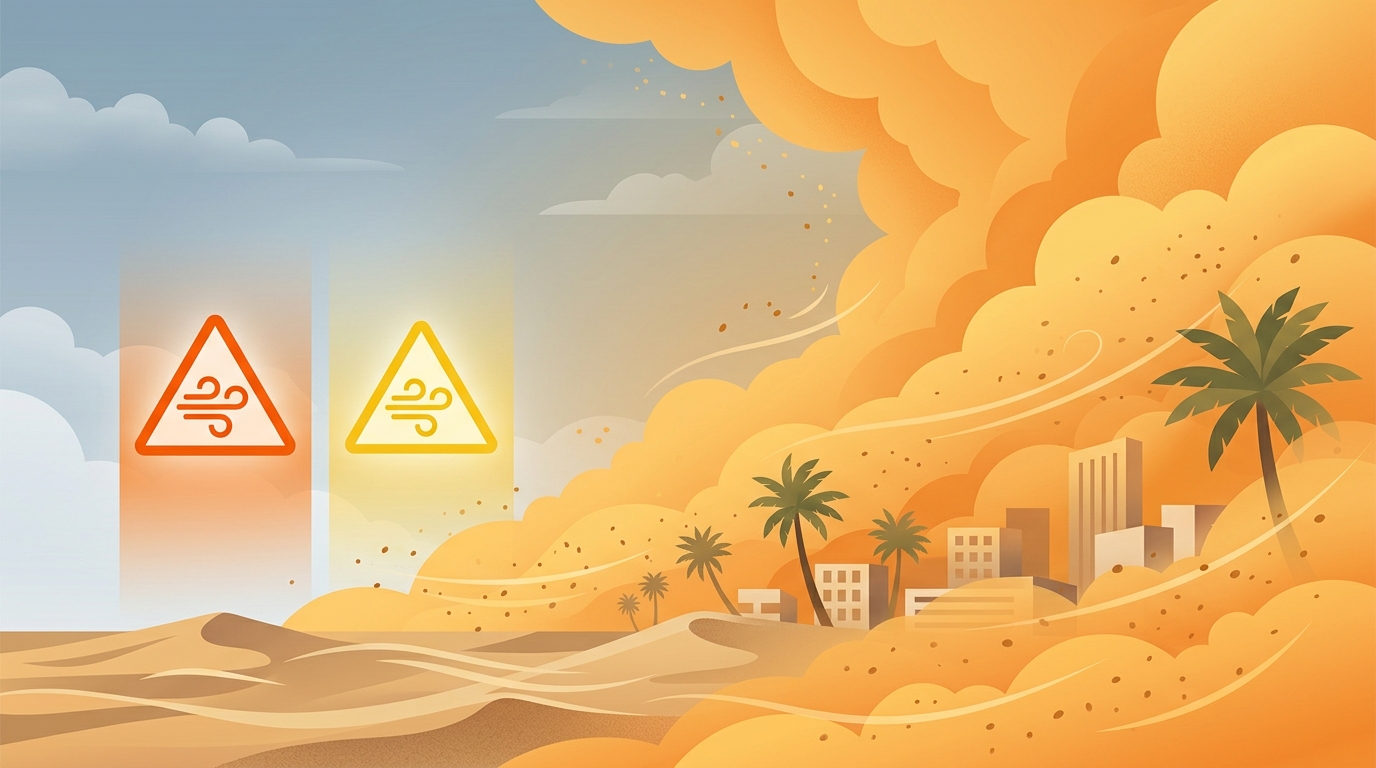
Dust waves are a common natural phenomenon in the Kingdom of Saudi Arabia, especially during spring and summer, when strong winds carry huge amounts of dust and sand, leading to reduced horizontal visibility and negative impacts on health and the environment. In this article, we review the main causes of this phenomenon and offer practical tips to protect you and your family from its harm.
Although dust waves may seem familiar to residents, understanding their mechanisms and taking necessary precautions can significantly reduce health risks, especially for people with respiratory diseases or allergies. Read on to learn everything you need to know.
What are dust waves and how do they form?
Dust waves are atmospheric phenomena that occur when strong winds stir up dust and sand particles from the Earth's surface, lifting them into the air and transporting them over long distances. The intensity of these waves ranges from light dust storms to severe sandstorms that cover vast areas and last for hours or days.
These waves typically occur in dry and semi-dry areas, where the soil is loose and vegetation cover is sparse. In Saudi Arabia, most regions, especially the central, eastern, and northern areas, are affected by this phenomenon, often associated with low-pressure systems or seasonal winds.
Why do dust waves occur in Saudi Arabia?
There are multiple reasons why the Kingdom is prone to dust waves, most notably its geographical nature. Most of its land is desert or semi-desert, providing huge amounts of movable sand and dust. In addition, low rainfall throughout the year makes the soil dry and easily airborne when winds blow.
Climatic factors also play a pivotal role, as low-pressure systems form in spring and summer, causing strong winds to blow from the north and northwest, known as 'northern winds' or 'shamal'. These winds sweep across deserts and stir up dust, sometimes reaching high speeds that lead to violent dust storms.
Furthermore, some human activities may exacerbate the phenomenon, such as unplanned urban expansion, overgrazing, and unsustainable agriculture, which remove natural vegetation cover and leave the soil exposed.
Health effects of dust waves and how they affect the body?
Dust waves contain very fine particles that can be inhaled deep into the respiratory system, causing multiple health problems. Common symptoms include irritation of the eyes, nose, and throat, coughing, sneezing, and shortness of breath. For people with asthma or allergies, these waves can trigger severe attacks.
Prolonged exposure to dust may also cause chronic lung inflammation and increase the risk of cardiovascular diseases, especially among the elderly and children. Therefore, it is essential to take preventive measures during these waves.
How to protect yourself and your family from dust waves?
First, monitor weather forecasts and meteorological warnings to avoid going out during dust storms. If you are outdoors, wear a medical mask or appropriate respirator to block fine particles, and wear protective goggles to shield your eyes.
Second, at home, close windows and doors tightly, and use air purifiers equipped with high-efficiency particulate air (HEPA) filters to clean indoor air. You can also humidify the air using humidifiers to reduce dust formation.
Third, wash your face and hands regularly, and rinse your nose with saline solution after returning from outside. For asthma and allergy patients, ensure that necessary medications are available and use preventive inhalers as directed by your doctor.
Fourth, avoid strenuous physical activities outdoors during dust waves, and keep children and the elderly indoors. If driving, reduce speed and use low-beam headlights to improve visibility.
Dust waves are an integral part of the climate of the Kingdom of Saudi Arabia, but by following simple preventive guidelines, their health impacts can be significantly reduced. Always remember that prevention is better than cure, and awareness of this phenomenon helps you protect yourself and your family. Keep up with weather updates, and always be prepared to face these waves with practical and effective steps.




Comments (0)
Be the first to comment.