Why do heatwaves affect women more?
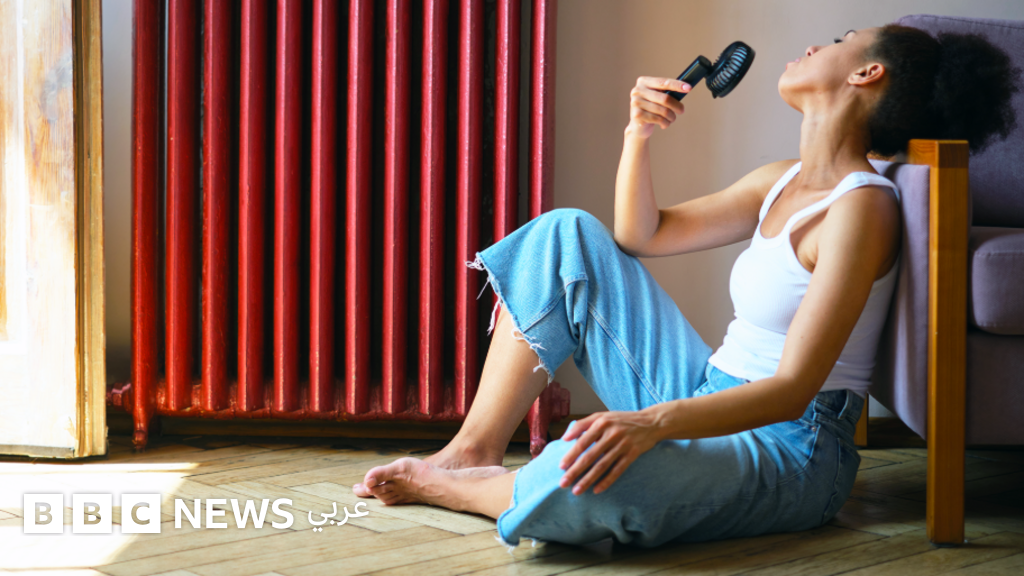
Experts call for greater awareness of heat-related risks to women and for more focused efforts to protect them.
Why do heatwaves affect women more?
Article Information
Author, Emily Atkinson
Published 6 hours ago
Reading time: 6 minutes
"Stress, irritability, dizziness, bloating, and extreme fatigue."
These are the words that appear frequently in comments sent by women to the BBC, after they barely recovered from the record heatwave that hit the country in June, as more hot weather approaches.
Dr. Ngat Are, a general practitioner in the UK's National Health Service specializing in women's health, told the BBC that extreme heatwaves can affect anyone, but they pose a "severe test" for women's cardiovascular systems and affect them more severely than men.
Dr. Kate Binhou-Gomez, an academic public health consultant at the UCL Institute for Global Health, said women may also be slightly more vulnerable to heatwave-related death than men, although more evidence is needed.
Therefore, as heatwaves become more intense and frequent in the UK due to climate change, experts are calling for increased awareness of the risks threatening women and more focused efforts to protect them.
More than 2,000 additional deaths in France during the peak of the heatwave
Hormone levels and the body's response to heat
Biologically, the increased risk for women is due to two main factors: natural fluctuations in hormone levels and their bodies' response to heat, which differs from that of men, as Dr. Ngat explains.
Research, including a study conducted in 2025, indicates that women produce less sweat and begin sweating at a higher temperature.
This impairs the body's ability to quickly shed excess heat and also makes it harder to realize when their bodies are under stress, simply because the amount of sweat visible on the skin or clothing is less.
Skip most read and continue reading
Syria gives Trump a way to bypass the Strait of Hormuz – article in The Telegraph
Why do mosquitoes bite some people more than others?
Death of South African player Jayden Adams days after World Cup participation
Iran threatens to 'not comply with agreements with the United States', and a US military delegation visits Lebanon
Skip podcast and continue reading
Worth attention
In-depth explanation of key events and topics to help you understand the most important changes around you and their impact on your life
Episodes
End of podcast
The same study found that women also have a higher internal temperature and a higher body fat percentage than men, forming an additional insulating layer.
Additionally, natural fluctuations in women's hormones disrupt the functioning of the brain's temperature regulation systems, according to Dr. Ngat.
Levels of estrogen and progesterone change significantly during the menstrual cycle, perimenopause, menopause, pregnancy, and breastfeeding, which can weaken the body's ability to regulate its temperature.
And all of this puts a strain on our cardiovascular systems, especially in hot weather.
Heatwave choking Europe, how do we protect ourselves?
But biological factors are not the only ones increasing our risk of heat stroke, as Dr. Binhou-Gomez, co-author of a study on gender differences in heatwave-related deaths, explained.
She added that our social and economic conditions, such as having a lower income or being more likely to care for loved ones, may have a greater impact on our ability to protect ourselves in hot weather.
She noted that age is another factor; the older a person gets, the more sensitive they are to heat, and since women live longer than men on average, we are more exposed to health risks.
Older people are also more likely to have dementia, which may limit their ability to feel thirst, or conditions requiring diuretics to lower blood pressure, both of which can increase their vulnerability to heat stress, according to her.
More discomfort during the menstrual cycle
Dr. Ngat explained that hormone levels rise and fall during the menstrual cycle, as does the body's sensitivity to heat.
Progesterone rises during the second half of the cycle, before menstruation begins. She adds that this can raise basal body temperature, increasing discomfort, especially if you are already feeling hot.
Then menstruation begins, and estrogen, which regulates body temperature, drops to its lowest level, increasing the strain on the heart to cool itself.
Michaela Finn, from North London, who was menstruating during the heatwave in late June, said: "I bled a normal amount, but I noticed a significant increase in fatigue, dizziness, anxiety, and insomnia."
She added: "My work shifts also coincided with these days. I felt very dizzy while showering in the morning and had to take sick leave. My body was completely exhausted, and I suffered from aches and cramps."
Image caption: Charlie Paddock, 27, said her menstrual symptoms worsened during the heatwave in June
Charlie Paddock, 27, from South London, said she almost fainted twice and that the hot flashes were extremely severe, while Jess Allingham, 26, said she felt extreme fatigue, more than usual, and complete mental confusion.
Dr. Ngat noted that when losing blood during menstruation, the body also loses iron, which can affect sleep.
She added that iron deficiency, which studies indicate is especially common among women with heavy menstrual bleeding, also affects oxygen delivery, increasing the workload on the cardiovascular system.
Hot flashes and night sweats may worsen for menopausal women
According to Dr. Ngat, hot flashes and night sweats are common symptoms in perimenopausal and menopausal women due to decreased estrogen levels.
The same applies to women undergoing medical or surgical menopause, used to treat hormone-sensitive cancers, as well as some important gynecological conditions such as endometriosis and polycystic ovary syndrome.
Dr. Ngat explained that during heatwaves, the intensity and frequency of hot flashes and night sweats may increase, which could be exacerbated by global warming, according to a study on the impact of climate change on menopause.
Image caption: Rosaline West (right) and Hilary Seriff (left) said they suffered more due to the heat
Hilary Seriff, 57, from Cheshire, described the hot flash episodes she experienced during the heatwave in June: "They were truly terrible, especially at night."
She added: "I would doze off and suddenly the hot flashes would hit me. I was already feeling hot and felt no relief at all. It was like a double whammy. Hormone replacement therapy helps a lot, but it doesn't control the hot flashes."
Original source: BBC Arabic





Comments (0)
Be the first to comment.