Why do mosquitoes bite some people more than others?
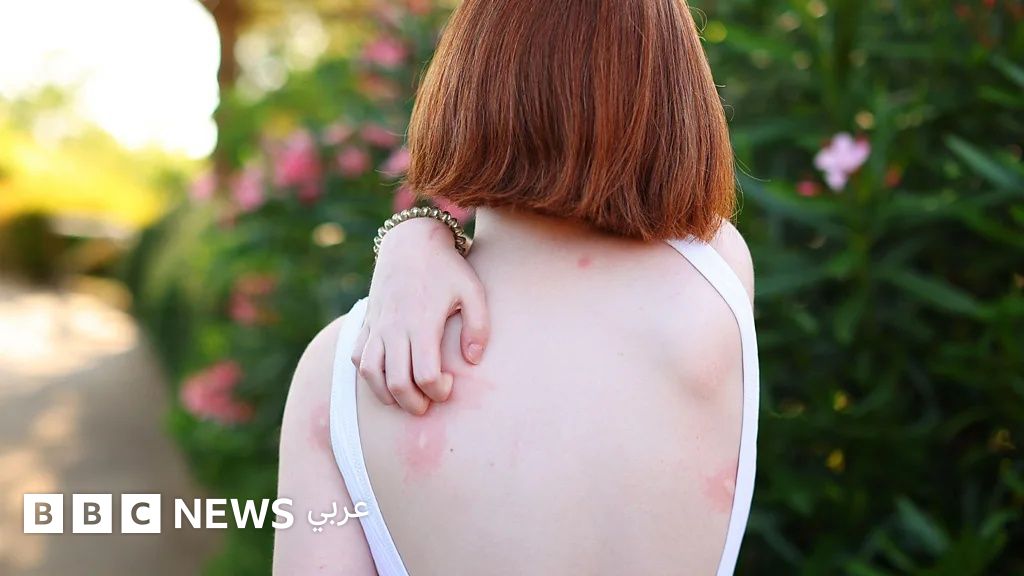
Mosquitoes bite some people more than others due to factors such as body odor, carbon dioxide, skin temperature, and even genetic factors. What's the story?
Why do mosquitoes bite some people more than others?
Article Information
Author, Catherine WangRole, BBC
Published 9 minutes ago
Reading time: 5 minutes
Long before mosquitoes are attracted to us, they sense signals emitted by our bodies from a distance. Are you among the favorite targets of these blood-sucking insects?
I am one of those people who are always attracted to mosquitoes. Wherever I go for a summer holiday around the world, one thing is certain for me: I will inevitably be bitten by mosquitoes, and I will get a large bite that causes an itchy sensation on my skin that lingers for weeks.
At the same time, some of my companions suffer nothing, and may not get a single mosquito bite. Even those who do get bitten often show no sign other than a small red spot on the skin. So my friends have been joking that my blood must be "mosquito-attracting."
The unique mosquito that inhabits the London Underground
And it turns out this notion holds some truth. Our bodies emit biological signals, including exhalation during breathing as well as body odor, which reveal a person's susceptibility to bites. For some people, these signals are so attractive that mosquitoes cannot resist them.
Here are three methods these blood-sucking insects use to track people for biting.
Carbon dioxide: a sign of an impending bite
Only female mosquitoes bite humans, as they are attracted to blood for the protein necessary for egg development. They rely on visual and olfactory signals to identify their target from up to about ten meters away. Among these signals is carbon dioxide released by the body through exhalation and the skin.
This exhalation sends a carbon dioxide signal to mosquitoes, activating what is known as "host-seeking behavior" in the mosquito's sense of smell. Thus, adults are more attractive to mosquitoes than children, as they emit larger amounts of carbon dioxide.
It also means mosquitoes are attracted to non-human sources that emit carbon dioxide, making dry ice and carbon dioxide cylinders effective mosquito traps.
Skip most read and continue reading
How did Haitham Hassan become the talk of the football world after his notable brilliance against Argentina?
Araqchi visits Oman for talks on the Strait of Hormuz, and Iran denies Trump's statements about its request for negotiations
The volcanic eruption that caused the loudest sound in recorded history
Bonnie Tyler... the husky voice that changed the power ballad
Body heat increases mosquito attraction
Studies have concluded that mosquitoes are also attracted to heat and humidity (and carbon dioxide enhances this attraction to heat).
Consequently, pregnant women are twice as attractive to mosquitoes as non-pregnant women, attributed to increased metabolic and respiratory demands during pregnancy, leading to greater exhalation of heat and carbon dioxide.
Steve Lindsay, professor of public health entomology at Durham University in the United Kingdom, says: "You have something like a small furnace in your body; you are warmer."
People who engage in physical activities are temporarily more attractive to mosquitoes, especially during and immediately after exertion, due to increased metabolic demands that boost carbon dioxide release, raise body temperature, and cause sweating. Larger individuals may also attract mosquitoes because they typically emit more body heat and more carbon dioxide during exhalation.
Skin releases an odor that attracts mosquitoes
Skip podcast and continue reading
Worth attention
In-depth explanation of the most important events and topics, to help you understand the key changes around you and their impact on your life
Episodes
Podcast end
When mosquitoes get close, to about ten meters away, they identify their victims through signals, including skin odor.
Lindsay says: "Scent is the core of the matter." It determines which person the mosquito will bite, adding that "small highly volatile chemicals make the difference; mosquitoes live in a chemical world."
Lindsay and other scientists refute the common belief that people with "mosquito-attracting blood" are the most bitten. Instead, they find that mosquitoes are attracted to each person's unique "skin odor." The skin microbiome can break down carbohydrates, fatty acids, and peptides on the skin surface into volatile organic compounds that evaporate easily and mosquitoes can distinguish. Human skin contains over 500 volatile organic compounds.
Mosquitoes are naturally attracted to ammonia and lactic acid on the skin, and the presence of carboxylic acids enhances this attraction.
Researchers at Rockefeller University in the United States analyzed the skin odor of 64 people who wore nylon sleeves for six hours. Mosquitoes were allowed to choose between the nylon samples, which served as "scent collection tools." The experiment results showed a clear preference for the odor of people with higher levels of carboxylic acids.
Scented chemicals repel mosquitoes
The researchers also rated each person's attractiveness, finding that the highest attractiveness was 100 times greater than the lowest. These differences remained stable over the years, regardless of changes in a person's lifestyle.
Lindsay says: "Your relative attractiveness level (to mosquitoes) remains largely constant."
The skin microbiome can also affect our attractiveness to mosquitoes. Researchers at Wageningen University in the Netherlands concluded that people who were more attractive to malaria mosquitoes had a different bacterial community on their skin compared to less attractive people—a more abundant but less diverse community.
The likely reason is that skin bacteria play an important role in releasing body odor, and human sweat is odorless to the human sense of smell in the absence of bacteria.
Studies on twins showed that identical twins attract mosquitoes to the same degree, while non-identical twins differ, suggesting that the odor influencing "bite susceptibility" may be hereditary.
Variation in mosquito bites
People's responses to mosquito bites vary greatly. A genome-wide study revealed a strong genetic relationship between our immune system genes and their effect on how the body responds to mosquito bites. Notably, these genetic regions overlap with regions associated with allergies.
Furthermore, a predisposition to a stronger and more intense response to mosquito bites (in terms of size and itching severity) may influence a person's perception that they are a "mosquito magnet."
Heather Ferguson, professor of medical entomology at the University of Glasgow in Scotland, says: "Some people think they get bitten more because their response is stronger, while others may get bitten repeatedly but barely show any response."
Original source: BBC Arabic



Comments (0)
Be the first to comment.