Scientists Predict the Date of Death of the Last Plants on Earth

Listen to the article: Audio text automatically generated by an automated system.
0:00
2 minutes to read
A new scientific study has revealed that plants may continue to survive on Earth for about 1.87 billion more years, before changes to the sun ultimately eliminate the last forms of plant life.
According to the study, published in the Journal of Geophysical Research: Atmospheres, two researchers used advanced climate models to simulate Earth's future over two billion years, aiming to determine the maximum expected lifespan of the plant biosphere. They concluded that the increase in the sun's brightness will be the decisive factor in the end of plants on the planet.
When will the last plant die?
The study results showed that the last plant on Earth could remain alive until about 1.87 billion years from now, making the lifespan of vegetation longer than previous scientific estimates suggested.
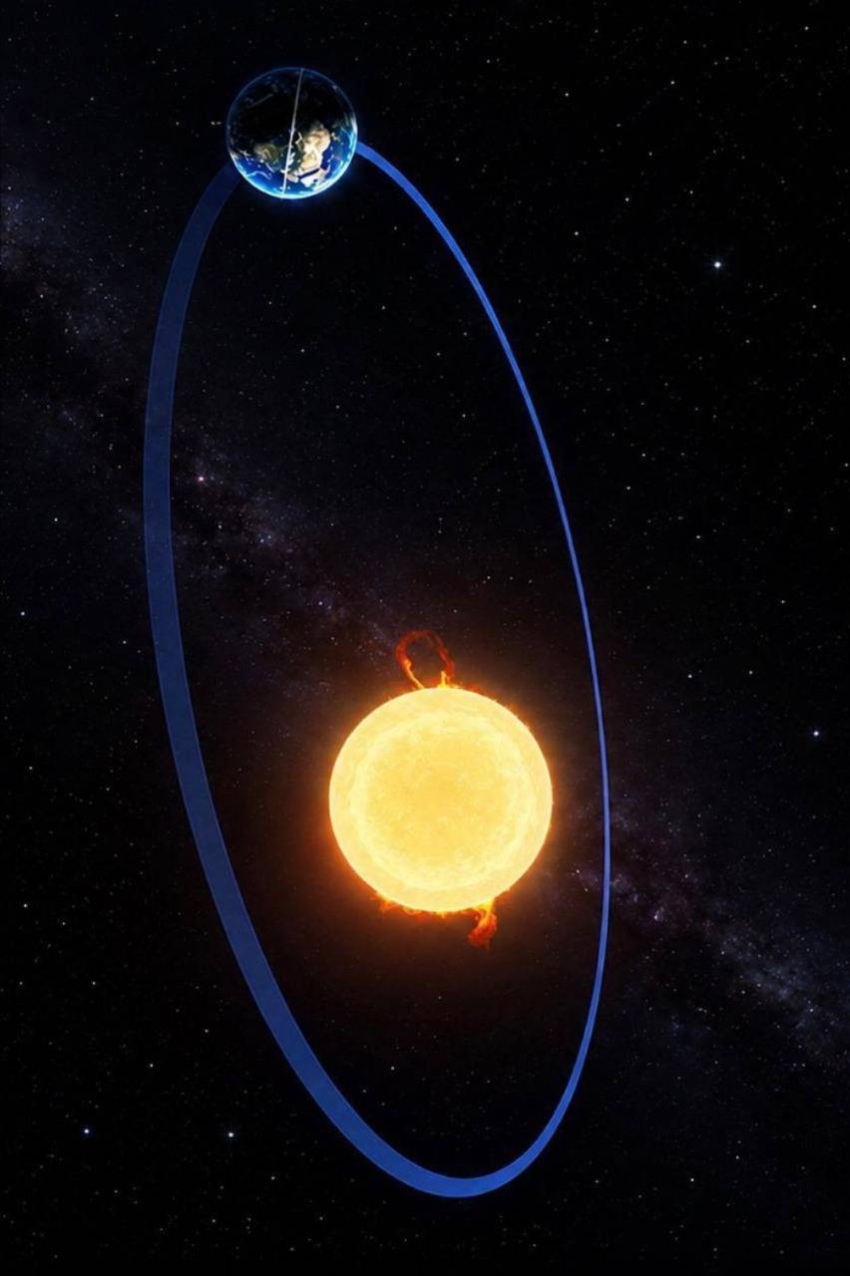
The researchers explain that the sun will gradually become about 20% brighter compared to its current level, which will ultimately lead to either a sharp rise in temperatures or a drop in carbon dioxide levels essential for photosynthesis, both of which pose a direct threat to plant survival.
End Scenarios
The researchers relied on two different models to simulate the future climate on Earth.
In the first scenario, natural geological processes continue to pull carbon dioxide from the atmosphere, gradually reducing its concentration until plants can no longer perform photosynthesis, causing them to go extinct after about 1.84 billion years.
The second scenario assumes carbon dioxide levels remain stable, but Earth's temperature continues to rise until the average reaches about 65°C (149°F), a temperature that terrestrial plants cannot withstand, with the last plants disappearing after about 1.87 billion years.
Can the end be delayed?
Despite these predictions, the researchers note that their models do not account for the possibility of plants evolving over hundreds of millions of years, or intervention by an intelligent civilization with advanced technologies that could alter environmental conditions on Earth.
The researchers propose future hypotheses, including that plant evolution may enable them to adapt to new conditions and move to higher layers of the atmosphere.
They also discuss ideas such as using space shields to block some of the sun's rays or technologies to cool the Earth.
But these remain theoretical ideas that have not proven practically feasible.
Video Player is loading.
Current Time 0:00
Duration 1:16
Loaded: 5.19%
Remaining Time 1:16
The researchers believe that life on Earth may be more resilient than current conditions suggest, and that the limits facing plants today do not necessarily represent the maximum capacity of life to adapt in the future.
The study team concludes that the most likely scenario is the continuation of life on Earth for as long as the planet remains habitable, making the future of plants much longer than many might imagine.
Ad material
Ad material
Read also
Could be habitable: Discovery of a super-Earth-like planet 25 light-years away Science
Astronomical discovery opens a window on Earth's future and reveals features of the sun's end Science
Original source: Al Arabiya


Comments (0)
Be the first to comment.