The Era of the Guardian Intellectual is Over
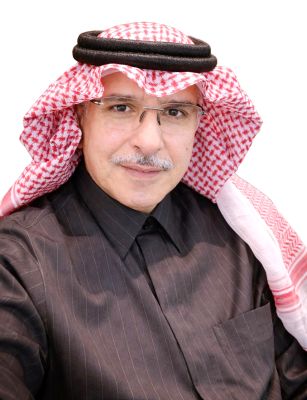
Abdul Latif Al Sheikh
The Era of the Guardian Intellectual is Over
July 19, 2026 - 00:00 | Last update: July 19, 2026 - 00:00
Follow Okaz channel on WhatsApp
In a bygone era, the intellectual occupied a space larger than his true size, not necessarily because he was the most knowledgeable, nor because he was the most capable of producing solutions, but because society had limited resources, platforms were scarce, and information passed through narrow gates. Those who owned the platform owned the right to interpret, and those who owned the right to interpret approached the authority of guidance. Thus arose the model of the intellectual who is not content with expressing his opinion, but speaks as if he is the spokesman for society, the sole interpreter of its transformations, and the one with the right to determine what the state should do, what people must accept, and what they must reject.
That era is over, and with it ended the privilege that some intellectuals long enjoyed. Today, Saudi Arabia does not seek someone to explain how to think, nor does it wait for anyone to draw its path from his seat, because it has become a state that knows what it wants, possesses its tools, and builds its decisions on institutions, data, expertise, and measurement. No speech, no matter how brilliant, can compete with a project that achieves, a study that analyzes, or a specialization that offers a practical solution.
This transformation is not hostility towards culture, nor a devaluation of the true intellectual, but rather the end of the guardianship function that crept into the cultural scene under many names. The problem was never in those who think, but in those who think their thinking grants them authority over others. It was not in those who write, but in those who treat writing as a permanent mandate to guide the state and society, to the point that some seemed as if their existence was a necessity, their absence a void, and their opinion not just one opinion among others, but a scale by which phases are measured.
Today, the entire question has changed. No one asks: Who said it? Rather: What did he contribute? Big names alone are no longer sufficient to create impact, because value has shifted from the fame of the speaker to the competence of the idea, from the brilliance of the phrase to the strength of the result, from media presence to measurable effect. This is the real reason behind the decline of many names that once filled screens and pages, then disappeared from the scene without any decision banning them, without any dispute expelling them, because they simply lost the function that created their presence.
Some old names did not disappear because they were marginalized, but because they did not realize that the tools had changed, that the society they used to address is no longer the same society, that the state they tried to indoctrinate no longer awaits their prescription, and that the people who used to receive opinion from one window are now faced with thousands of sources. Knowledge is no longer exclusive to the writer, study exclusive to the academic, or analysis exclusive to those skilled in long talk. When sources of knowledge expand, the space for guardianship narrows; when institutions advance, the influence of the individual who built his status on monopolizing interpretation recedes.
The new Saudi Arabia is not hostile to the intellectual, but it does not grant him status merely for being an intellectual. It does not consider an article a project, nor does it consider oratory an achievement, nor does it place the eloquent on the same level as the one who produces results. It seeks an expert who reads numbers, a researcher who understands variables, a specialist who knows where the flaw lies, and a project leader who turns an idea into reality. This does not mean that the word has lost its value, but that the word is now required to prove its connection to reality, to provide knowledge, to open a path, and to help understanding, not just to showcase its owner.
The center of gravity has shifted from the authority of discourse to the authority of competence. This transformation is deeper than a mere change in taste, because it rearranges people's standing within the public sphere. Status is no longer granted to those who speak more, but to those who know more; not to those who object louder, but to those who offer a better alternative; not to those who make an impression, but to those who make an impact. Therefore, some intellectuals who long lived on attacking decisions and interpreting society found themselves facing a new reality that does not reward noise, nor gives priority to those who describe the problem from afar.
The difference between the guardian intellectual and the expert is clear. The guardian intellectual asks you to believe him because he sees what you do not see, while the expert presents what can be tested. The guardian intellectual defends his status, while the researcher defends his method. The guardian intellectual needs an audience that believes in him, while the specialist needs a result that confirms his competence. Therefore, the new era does not eliminate thought, but liberates it from the authority of individuals; it does not eliminate culture, but returns it to its natural function: a tool for understanding, criticism, and expanding awareness, not a platform for issuing orders.
The modern state does not build its future with grand slogans, nor manage its files based on a writer's mood, nor change its policies because a voice was raised. Rather, it relies on agencies, work teams, research centers, specialized expertise, and indicators that measure success and failure. When knowledge becomes institutional work rather than individual heroism, the old illusion that places the intellectual above society automatically collapses, and his value transforms from being a guardian of consciousness to being a contributor to its production.
Thus, the absence of many names from the scene is not a mystery, a conspiracy, or a feud with culture, but a natural result of the expiration of the role they played. Some did not disappear because people turned against them, but because they did not change with them. Some did not lose their presence because platforms narrowed, but because society expanded. Some did not lose their influence because the state ignored them, but because the state no longer needed someone to explain itself to itself.
Today, Saudi Arabia does not seek an intellectual who raises his finger in its face, but a mind that adds value; not a name that fills the scene, but competence that fills the gap; not a discourse that describes the future, but work that builds it. Here lies the real transformation: the intellectual who understands his era will find his place, the intellectual who revises his tools will remain, and the intellectual who transforms from a preacher to a researcher, from a guardian to a partner, from a star to a knowledge producer, will not fear the new phase.
But he who still believes that society awaits his guardianship, that the state needs his wisdom, and that the platform grants him authority, will discover too late that the problem is not the decline of culture, but the rise of competence.
Final point:
The era of the intellectual has not ended; what ended is the era of the intellectual who thought that speech grants him the right of guardianship. For nations are not led by those who describe the path, but by those who know how to build it.
Original source: Okaz



Comments (0)
Be the first to comment.