Permanent Displacement in Lebanon: It Changes Not Only Homes but Also Identities
SummaryThe displacement of hundreds of thousands of Lebanese due to war has turned from a temporary experience into a long-term reality for many, imposing psychological, social, and cultural challenges, with difficulty returning to their destroyed or unsafe areas. Despite pressures and loss of belonging, contact with host communities contributed to a gradual cultural exchange that reshaped some customs and social relations, as happened in previous displacement episodes in Lebanon's history.
At the start of the Israeli war on Lebanon, more than one million people were displaced from their targeted areas in southern Lebanon, the southern suburbs of Beirut, and the Bekaa. Some went to shelters, while others moved to relatives' homes or rented houses in various Lebanese regions, awaiting their return home. Since the ceasefire with Israel came into effect on June 21, more than 640,000 displaced people have returned to their homes and villages, while 500,000 people remain displaced according to the International Organization for Migration.
Some displaced people were awaiting a return that is no longer possible, turning temporary displacement into a permanent state for them, and there may be no return then. Some displaced returned to their homes at one point, but many are forced to stay away from their homes. Among them are those who moved to areas near their towns, and others chose distant areas with different environments from their original ones, whose inhabitants have customs that may differ from theirs, and circumstances forced them to do so. These circumstances impose cultural and social interaction on them along with many challenges they face.
Psychological Pressures and Challenges
It is estimated that the number of southern towns whose residents are still unable to return, and which are within the restrictions and the "yellow zone", is at least 70 towns. Due to widespread destruction, ongoing threats, and dangers associated with returning, the residents of these towns cannot return, at least in the near future, forcing them to continue living in environments different from their original ones, amid customs different from theirs. The conditions of forced displacement uprooted them from their familiar environments and placed them before many challenges, imposing social and cultural integration amid new customs and cultures imposed by these different hosting environments>
Between the alienation of the new place where they are, and the tension it creates in their souls, and the difference in customs in new geographical areas that impose on them a new lifestyle, even different dialect, foods, and traditions, the challenges they face are numerous, requiring time to integrate. This recalls the cultural exchange that occurred throughout history in Lebanon, where entire customs, foods, dishes, and even sewing techniques and arts, among others, were transferred.
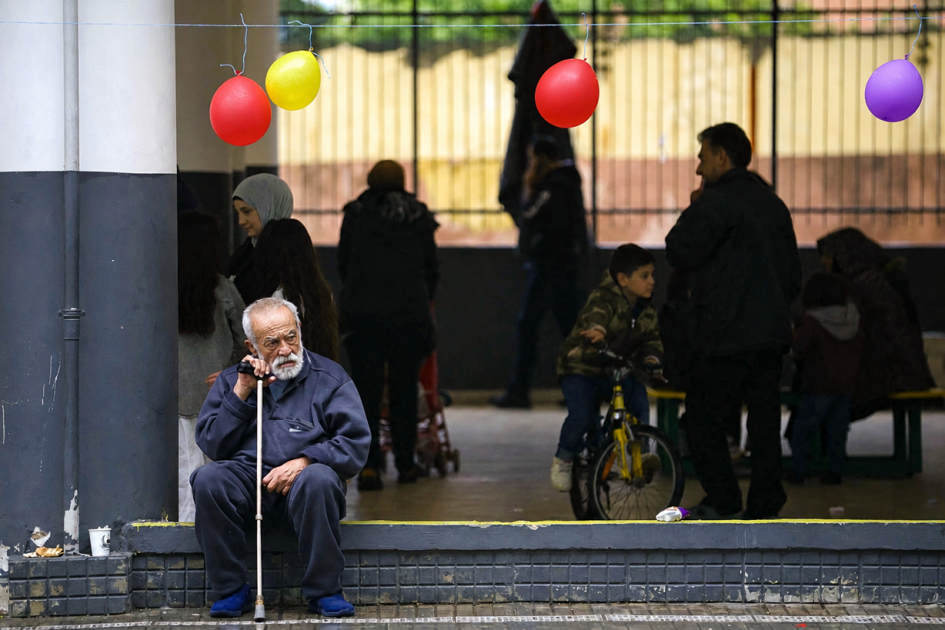
Some displaced people were awaiting a return that is no longer possible, turning temporary displacement into a permanent state (AFP)
"We learned each other's customs"
Hassan (42 years old) from the southern town of Yaroun, who has been living for months in the city of Zgharta in northern Lebanon, says: "At first we felt like strangers, even the way of greeting was different. We were surprised that neighbors would knock on the door carrying a tray of sweets or invite us for coffee without any occasion. Over time, my wife started preparing dishes that we used to find strange, such as Zgharta-style makmoura, while our neighbor asked us to teach her how to prepare southern mujaddara and tray kibbeh as we make it in Yaroun. Today my children speak northern words we didn't know, and they play with the neighborhood kids as if they have known them for years. No one chose these circumstances, but they created a relationship that would not have existed without displacement."
For her part, Samar, a mother in her thirties who moved from the town of Aita al-Shaab about two years ago to live in a house in the Matn al-Shamali area where she has acquaintances and relatives, says: "When I arrived in the town here, I felt like a stranger to everything, even the way people talked and dealt was different from what we were used to in the south. After months, I started working in a small shop, and there I got to know women from the area. They started asking me about southern dishes and how we prepare mouna and olive oil, and in return I learned from them recipes I didn't know and customs related to holidays and occasions. Even my dialect changed a bit, and I started using words I didn't say before. Today I still miss my town, but I discovered that difference does not prevent closeness; rather it can be the beginning of friendship and a new life."
What does psychology say?
According to psychotherapist Lana Qasqas: "The change is not limited to place; it extends to social, cultural, and economic levels, in addition to changing work conditions, which places many demands on families to readapt to the new situation, as well as changing customs in the host environment, even dialects and communication methods, and the simplest things related to life, starting from the way of greeting, which may differ from one area to another or one environment to another, to the point that communication words may differ between environments, confirming the need for mutual readaptation."
Then a change occurs in social relations as well, and the need to build a new alternative support network emerges. Even family roles and responsibilities change in the movement of displacement, especially if displacement occurs without a man or in case of loss of a family member, which affects the nature and level of roles in the family. Additionally, every person belongs to the place they are in, and loss of belonging is a loss of identity, and there is great difficulty in belonging to a different new society, accompanied by a feeling of alienation in a different geographical location even if within the homeland."
An existential experience involving loss of place and identity
Qasqas continued: "There are additional psychological difficulties due to the loss of the home and the area to which a person belongs. This is not a passing experience for the individual, but rather a mourning and major loss with multiple psychological effects. There is complicated grief due to grieving over memories, household items, neighbors, the town, and many other things. The hardest part is that this loss is not given enough time to overcome, and it is accompanied by a feeling of insecurity and instability, and anxiety about what may happen in the future. Matters may develop into post-traumatic stress disorder due to multiple traumas of losing the home, loss of land, and inability to return. Also, symptoms of depression may develop due to feelings of helplessness and lack of belonging, psychological and physical exhaustion, and due to nostalgia for the place to which the individual belongs."
At the same time, Qasqas emphasizes that displacement is not merely a move from one place to another or a geographical transition, but rather an existential experience involving loss of place, identity, and support networks, and confronting major psychological and social challenges. Although it may lead to a process of belonging and acquiring a new cultural environment through continuous adaptation, in the long term, it is even possible to gain new social patterns and different values and customs that contribute to re-forming a sense of belonging, affecting quality of life negatively or positively depending on how the individual deals with the issue.
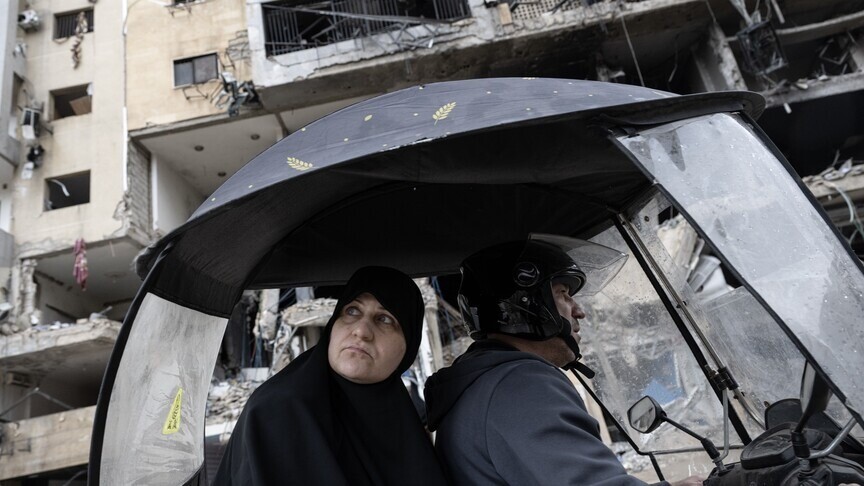
In safe displacement periods, exchange occurs and there is readiness for it with engagement in others' customs (AFP)
Historical cultural exchange
Original source: Independent Arabia


Comments (0)
Be the first to comment.