Emirati Women at the Heart of the Nation's Cultural and Heritage Project

Emirati women lead cultural and heritage preservation efforts, supported by government initiatives and leaders including Sheikha Fatima bint Mubarak. Ministries, the General Women's Union, and other entities empower women as custodians of tradition, fostering national identity through training, digital platforms, and international participation.
Abu Dhabi, 26th August / WAM / Women lead the cultural and heritage scene in the UAE as leaders, inspirers, and makers of the renewed national identity, through several roles, most notably contributing to preserving folk heritage and transforming it into contemporary content that keeps pace with modernity without severing ties with roots.
An integrated system of policies and initiatives launched by the Ministry of Community Development, the General Women's Union, and the UAE Gender Balance Council, in addition to cultural empowerment programmes led by the Ministry of Culture and Youth, contributes to enhancing women's status in preserving folk and cultural heritage.
The UAE, led by His Highness Sheikh Mohamed bin Zayed Al Nahyan, President of the State, may God protect him, attaches great importance to women's role in preserving folk heritage, as an active partner in strengthening the constants of the Emirati identity and preserving the country's civilisational memory.
This support is evident through the role of Her Highness Sheikha Fatima bint Mubarak, Mother of the Emirates, President of the General Women's Union, President of the Supreme Council for Motherhood and Childhood, Supreme President of the Family Development Foundation, who believed in women's ability to contribute positively to the renaissance of their nation and the development of their society.
Sheikha Dr. Shamma bint Mohammed bin Khalid Al Nahyan, Chairperson of the Board of Directors of the Sheikh Mohammed bin Khalid Al Nahyan Cultural and Educational Institutions, said that Emirati women have played an essential role in preserving cultural heritage, not only as transmitters but as guardians of the values and customs that shape the authentic Emirati character.
She added that from proverbs and songs to handicrafts and daily habits, Emirati women have remained the memory of heritage and the beating heart of tradition, passing it on with spontaneity and responsibility and instilling it in the conscience of generations.
Sheikha Dr. Shamma bint Mohammed bin Khalid Al Nahyan praised the pioneering role of Her Highness Sheikha Fatima bint Mubarak, Mother of the Emirates, and her great efforts in supporting women's progress and empowering them in various fields, affirming that public benefit associations have continued this approach in enhancing women's community participation.
The Ministry of Community Development is one of the most prominent government entities supporting Emirati women in preserving cultural heritage. It has worked to empower women as a key component in the community development system through heritage initiatives aimed at transferring handicraft skills and traditional knowledge between generations.
The ministry organises training courses and workshops in handicrafts, traditional cooking arts, and heritage costumes, in addition to Arabic coffee making, highlighting through them women's role in preserving elements of local culture.
The ministry provides financial and technical support to women producers within the 'Al San'a' project, which enhances the sustainability of crafts as a source of income and a means of preserving identity.
In turn, the Ministry of Culture and Youth plays a pivotal role in supporting women as one of the guardians of cultural heritage and folk heritage, and among its most prominent living tributaries. The ministry adopts a comprehensive vision to empower women culturally through national initiatives that enhance their participation in preserving and transmitting intangible heritage, and empowering women as creators and narrators of folk heritage.
The ministry encourages Emirati women to be creative in folk arts such as Nabati poetry and folk stories, and provides platforms that allow women to showcase their heritage talents through cultural festivals and specialised exhibitions.
The ministry has provided digital support tools through platforms such as the Creative Industries Portal and the Cultural E-Market, enabling women to display and sell heritage products locally and internationally.
Through programmes such as 'Heritage in Schools' and 'National Identity', the ministry has ensured the involvement of women in presenting heritage workshops and activities for young people, and supporting their presence in local and international exhibitions and festivals as exhibitors, artisans, or storytellers.
The ministry seeks to document the experiences of pioneering women in the field of heritage and highlight their roles in the media and culture, as well as supporting women's creativity in publishing, cultural production, and documentation.
For its part, the General Women's Union represents the main national mechanism for empowering women and their leadership in the UAE, and is one of the most prominent active public benefit associations in supporting traditional crafts and preserving folk heritage, through the 'Handicrafts and Environmental Industries Centre.'
The General Women's Union, in cooperation with ministries and relevant authorities, has played a pivotal role in supporting heritage guardians through training, promotion, and financial support programmes. It also facilitated women's participation in national festivals such as the Sheikh Zayed Heritage Festival, the Mother of the Emirates Festival, Expo 2020 Dubai, the Al Hosn Festival, and many other festivals.
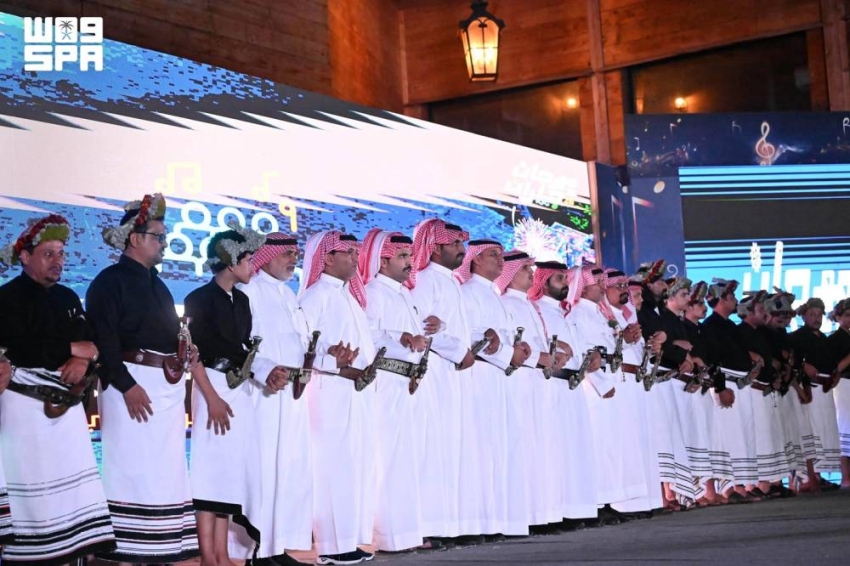
The efforts of the Women's Union, women's associations, and government entities are integrated in cooperation with UNESCO to nominate women as representatives of Emirati cultural heritage at the Arab and international levels. In this context, the participation of Emirati women in the Janadriyah Festival in Saudi Arabia, the Konya Traditional Industries Festival in Turkey, the Tan-Tan Cultural Season in Morocco, Expo 2025 Osaka-Kansai in Japan, the International Folklore Festival in Italy, and the World Heritage Festival in France stands out.
In this regard, Mona bin Shiban Al Muhairi, Director of the Al Qattara Heritage Souk, affirmed that Emirati women have historically formed a fundamental axis in preserving cultural identity through their multiple roles in society.
She explained that supporting women in the field of heritage is no longer an option but a national necessity that requires providing spaces and platforms that enable them to express this rich inventory in contemporary ways.
Al Muhairi added that through training, qualification, and participation in events, we open new horizons for women to continue their role in preserving heritage and presenting it to generations in a language that minds understand and hearts love.
For her part, women's activist Fatima Ahmed Obaid Al Mughni said that Emirati women have not only been satisfied with preserving heritage but have become active in shaping its future, driven by the directives of the wise leadership that provided them with tools for true empowerment.
She added that the guardians of heritage in the UAE are not merely preservers of past traditions, but play a pivotal role in preserving national identity, inspiring the present, and creating a future rooted in authenticity. Thanks to their effort and dedication, heritage remains alive in the conscience and spaces of society, and is passed down to generations in the language of belonging and national pride.
For her part, Dr. Amal Humaid Belhoul, psychologist and anthropologist, said that the UAE pays exceptional attention to folk heritage as one of the essential components of national identity and a mirror reflecting the cultural and social formation of Emirati society.
She explained that the UAE realised early that empowering women in the field of heritage preservation is not only within the contexts of gender equity but represents a strategic pillar to ensure the sustainability of cultural identity. This has been translated into specialised government initiatives that have made women authentic carriers of folk knowledge and true ambassadors of society's values and traditions.
Shi/Na/Jad/An
Original source: WAM

Comments (0)
Be the first to comment.