9.4 Million Square Meters of Mangrove Forests Support Honey Production in the Kingdom
2026/07/12 12:24
The Kingdom is moving to invest 9.4 million square meters of mangrove forests to support organic honey production, a step that enhances dual sustainability efforts, according to discussions at a workshop organized by the Ministry of Environment and the FAO in Qatif Governorate.
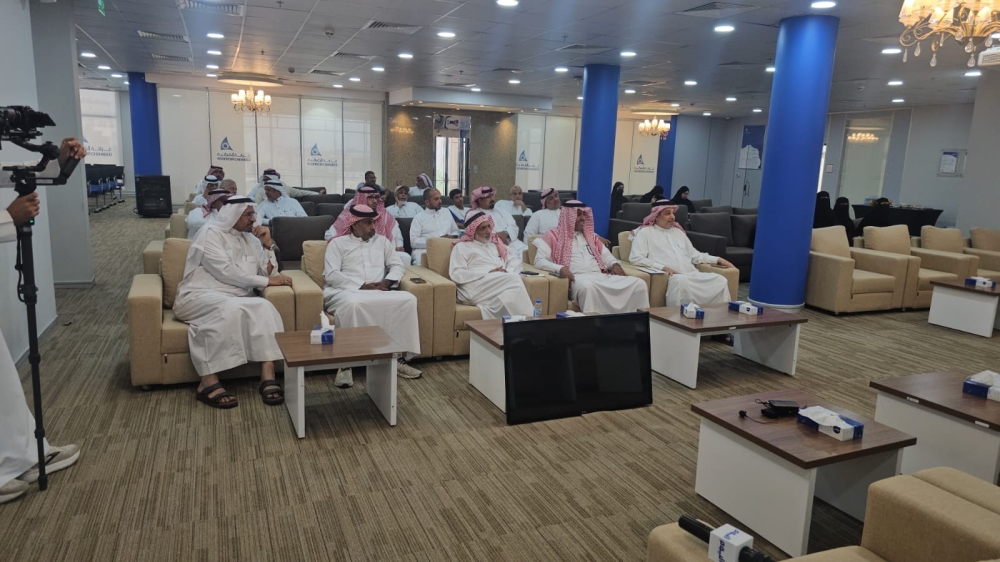
The specialized workshop, which highlights the strategic importance of mangrove forests, kicked off today at the Chamber of Commerce branch in Qatif Governorate.
Related news
This event aims to review the ecosystems surrounding the coasts and their close connection to the organic beekeeping sector. The workshop is held within the framework of the ongoing joint technical cooperation program between the Ministry of Environment, Water and Agriculture and the Food and Agriculture Organization of the United Nations (FAO). This partnership aims to unify institutional and international efforts toward enhancing environmental sustainability and comprehensively developing the agricultural sector. The first day of the workshop saw attendance and interaction from those interested in the environmental and agricultural sectors. More than thirty-five specialists and beekeepers, representing both genders, participated in the sessions and open discussions to explore ways to develop existing agricultural practices. The vast areas of mangrove forests in the Kingdom were the main focus of the discussions, given their direct vital role in supporting development.
The international beekeeping expert at the FAO in the Kingdom, Dr. Ramzi Mohammed Al-Sarhan, emphasized the great importance of these extended natural resources. Dr. Al-Sarhan revealed that the area of mangrove forests in the Kingdom reaches 9.4 million square meters, geographically distributed along the coasts of the Red Sea and the Arabian Gulf. He explained that these precise figures are directly based on official statistics documented by the Ministry of Environment, Water and Agriculture. He pointed out that this huge million-square-meter area represents a fundamental pillar and a supporting factor for the organic honey production sector in the Kingdom. He stated that investing in these forests enhances beekeepers' opportunities to achieve rewarding economic returns within safe agricultural environments.
Al-Sarhan touched on the environmental and economic dimensions of mangrove forests, describing them as nature's protective shield at both local and global levels. He drew attention to the fact that these ecosystems have a proven superior ability to stabilize coastal areas and prevent erosion and abrasion. He added that mangroves play a crucial role in mitigating the devastating impacts of tropical storms and tsunamis, confirming that these dense forests provide complete natural protection for coasts against various harsh and fluctuating climatic and environmental factors. On a global scale, Al-Sarhan presented statistical facts highlighting the global importance of mangrove forests across different continents. He mentioned that these coastal trees are found in about 120 countries worldwide, covering a total area estimated at 147,000 square kilometers.
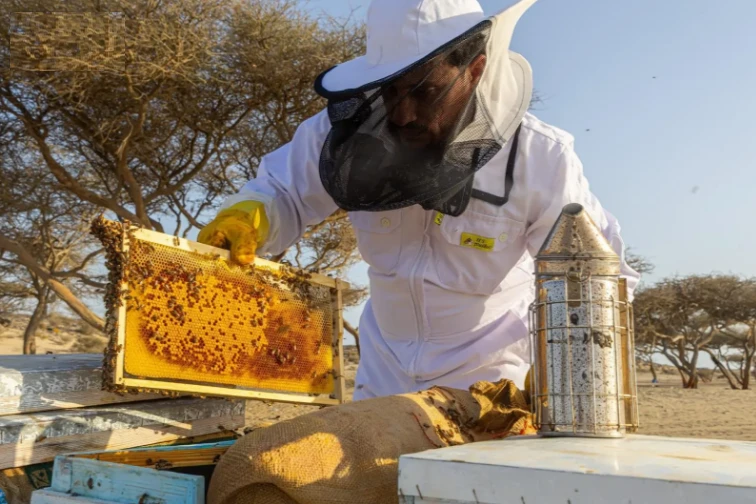
Regarding production returns, the workshop emphasized the concept of environmental integration that starts from protecting coasts and ends with supporting the organic beekeeping sector. The sessions extensively highlighted the direct positive correlation between the health of marine ecosystems and the development rates of honey production sector. Al-Sarhan explained that the benefits of mangrove forests are not limited to the protective aspect, but they also represent an ideal environment for clean agricultural production. He described these coastal systems as a natural, attractive, and safe incubator for environmental pollinators, foremost among them honeybee swarms.
The workshop agenda focused on informing participants about best professional practices to increase organic honey production in those areas. The discussions included mechanisms for a gradual and thoughtful transition toward applying organic beekeeping methods, in line with approved environmental standards. Specialists discussed scientific and practical methods that ensure raising production efficiency and doubling the quantities of extracted honey with high and competitive quality levels. The concluding recommendations stressed the need to balance increasing economic productivity with fully preserving the natural ecological balance of the region to ensure its sustainability.
Dr. Al-Sarhan affirmed at the conclusion of the first day's discussions that this trend represents a real investment in available natural resources. He pointed out that the success of this system requires continued joint cooperation to empower beekeepers and raise their awareness of the importance of preserving the integrity of mangrove forests.
Original source: Al-Yaum


Comments (0)
Be the first to comment.