Al-Ahsa's 'Cardamom Okra' Agricultural Crop Known for Its Green Color and Good Taste
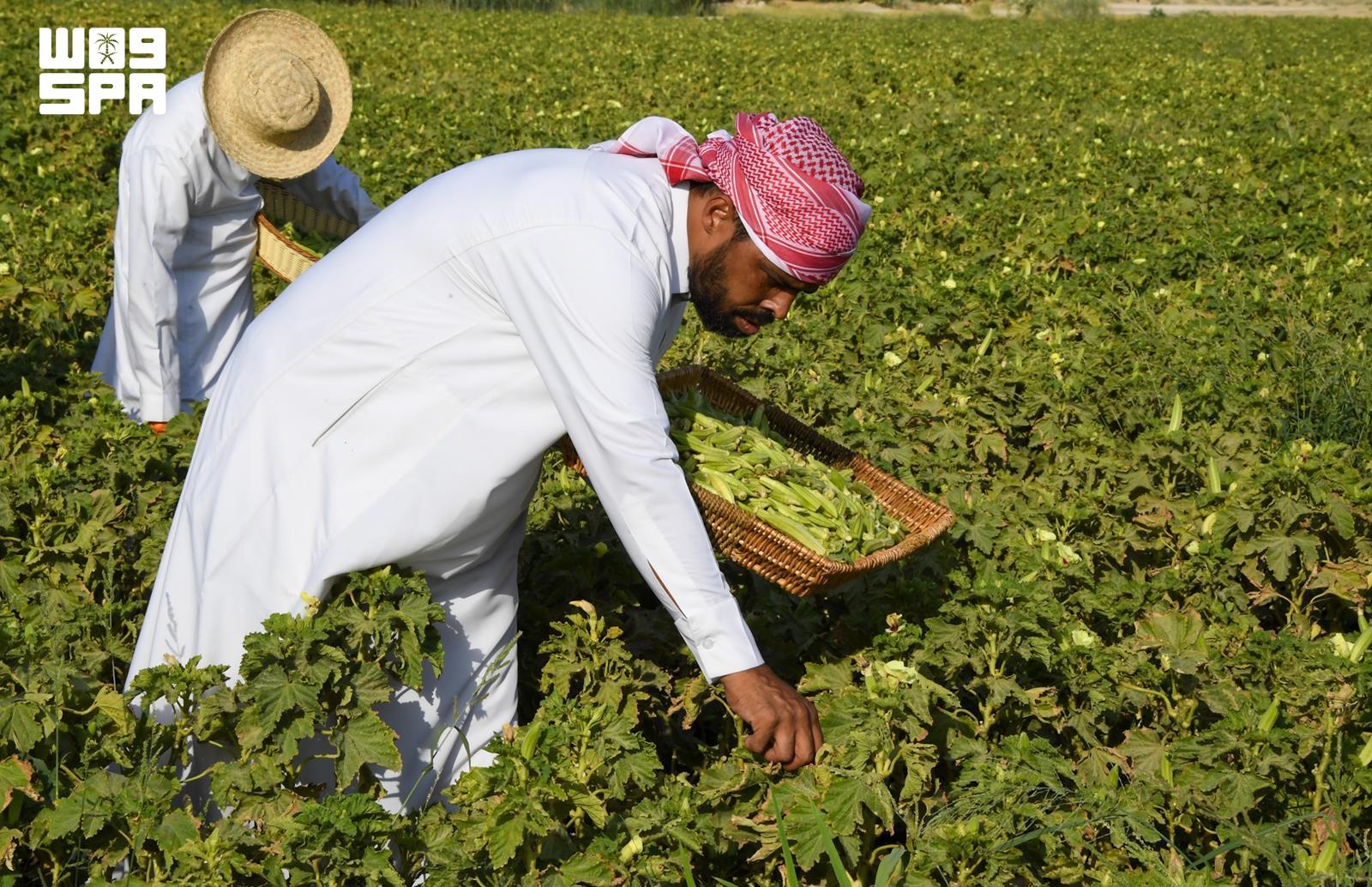
تشهد أسواق محافظة الأحساء إقبالاً واسعاً على شراء البامية الموسمية المعروفة بصغر حجمها وطراوتها، والتي تُطرح في صناديق تتراوح أوزانها بين 10 إلى 12 كيلوغراماً وسط اهتمام زراعي وغذائي كبير.
Al-Ahsa, Safar 10, 1448 AH corresponding to July 24, 2026 (SPA) - Al-Ahsa Governorate is rich in its variety of summer fruits and vegetables. These days, markets are active selling seasonal products and crops, with increasing demand from residents of the Eastern Province and neighboring countries, most notably "Al-Hasawi Okra". In Al-Ahsa, it is customary to call Al-Hasawi okra, in its known type, "Al-Khuneisari okra" as a comparison to the size of the little finger, or "cardamom okra" as a comparison to cardamom seeds, by farmers in fields and orchards, or when used in cooking, due to its small size, extreme tenderness, and shape resembling a large cardamom seed when freshly picked. Farmers harvest okra during this period about three months after planting. It is characterized by its light green color, sweet taste, high productivity, and high nutritional value. Its fruit requires special care, by harvesting at an appropriate growth stage, picking early in the morning when temperatures are low, and during shipping and marketing. The fruit is picked one day and left the next to maintain the small size and required tenderness, while careful sorting excludes large fruits that reduce the crop's market value, as consumers prefer small to medium-sized, high-quality okra fruits. Okra is currently found in various markets and vegetable and fruit shops, after being directly packed from farms in boxes or baskets weighing between (10) and (12) kilograms, then offered for sale in markets. Prices vary depending on availability, scarcity, and quality. Dr. Mohammed Al-Mouji, professor of the Arid Land Agriculture Department at the College of Agricultural Sciences and Food at King Faisal University, explained that okra in general contains fiber, vitamins, minerals, antioxidants, and mucilaginous substances that have multiple health benefits. He pointed out the importance of continuing to harvest the fruits day after day because they grow in cycles. If there are large fruits on the plant, it prevents the growth of new fruits. Leaving them to grow large on the plant leads to a decrease in fruit quality, fiber formation, a decrease in sugar content, and the start of seed formation and hardening. He stressed the importance of placing the fruits in the shade after harvest away from heat and moisture, and disposing of any infected or deformed fruits. Meanwhile, seasonal agriculture specialist Abdullah Al-Salem explained that Al-Hasawi okra is a crop in demand for its good taste, distinctive color, and size. It is grown in two seasons, winter and summer, noting that the current summer season is the most productive and in demand, with fruit harvesting continuing until the beginning of next August. He added that okra cultivation requires abundant irrigation and protection from dust and other factors. Al-Ahsa Oasis is famous for growing fruits and vegetables such as watermelon, tomatoes, cucumbers, peppers, cowpeas, blackberries, figs, green lemons, and others. // End // 13:00 T M 0038
Al-Ahsa, Safar 10, 1448 AH corresponding to July 24, 2026 (SPA) - Al-Ahsa Governorate is rich in its variety of summer fruits and vegetables. These days, markets are active selling seasonal products and crops, with increasing demand from residents of the Eastern Province and neighboring countries, most notably "Al-Hasawi Okra". In Al-Ahsa, it is customary to call Al-Hasawi okra, in its known type, "Al-Khuneisari okra" as a comparison to the size of the little finger, or "cardamom okra" as a comparison to cardamom seeds, by farmers in fields and orchards, or when used in cooking, due to its small size, extreme tenderness, and shape resembling a large cardamom seed when freshly picked. Farmers harvest okra during this period about three months after planting. It is characterized by its light green color, sweet taste, high productivity, and high nutritional value. Its fruit requires special care, by harvesting at an appropriate growth stage, picking early in the morning when temperatures are low, and during shipping and marketing. The fruit is picked one day and left the next to maintain the small size and required tenderness, while careful sorting excludes large fruits that reduce the crop's market value, as consumers prefer small to medium-sized, high-quality okra fruits. Okra is currently found in various markets and vegetable and fruit shops, after being directly packed from farms in boxes or baskets weighing between (10) and (12) kilograms, then offered for sale in markets. Prices vary depending on availability, scarcity, and quality. Dr. Mohammed Al-Mouji, professor of the Arid Land Agriculture Department at the College of Agricultural Sciences and Food at King Faisal University, explained that okra in general contains fiber, vitamins, minerals, antioxidants, and mucilaginous substances that have multiple health benefits. He pointed out the importance of continuing to harvest the fruits day after day because they grow in cycles. If there are large fruits on the plant, it prevents the growth of new fruits. Leaving them to grow large on the plant leads to a decrease in fruit quality, fiber formation, a decrease in sugar content, and the start of seed formation and hardening. He stressed the importance of placing the fruits in the shade after harvest away from heat and moisture, and disposing of any infected or deformed fruits. Meanwhile, seasonal agriculture specialist Abdullah Al-Salem explained that Al-Hasawi okra is a crop in demand for its good taste, distinctive color, and size. It is grown in two seasons, winter and summer, noting that the current summer season is the most productive and in demand, with fruit harvesting continuing until the beginning of next August. He added that okra cultivation requires abundant irrigation and protection from dust and other factors. Al-Ahsa Oasis is famous for growing fruits and vegetables such as watermelon, tomatoes, cucumbers, peppers, cowpeas, blackberries, figs, green lemons, and others. // End // 13:00 T M 0038
Original source: SPA





Comments (0)
Be the first to comment.