Al-Khoja... and a Conscious Reading of the Future of Saudi Media?

Book
Minister Al-Khoja... and a Conscious Reading of the Future of Saudi Media?
Dr. Saud Al-Gharbi
Publication date: July 19, 2026 00:25 KSA
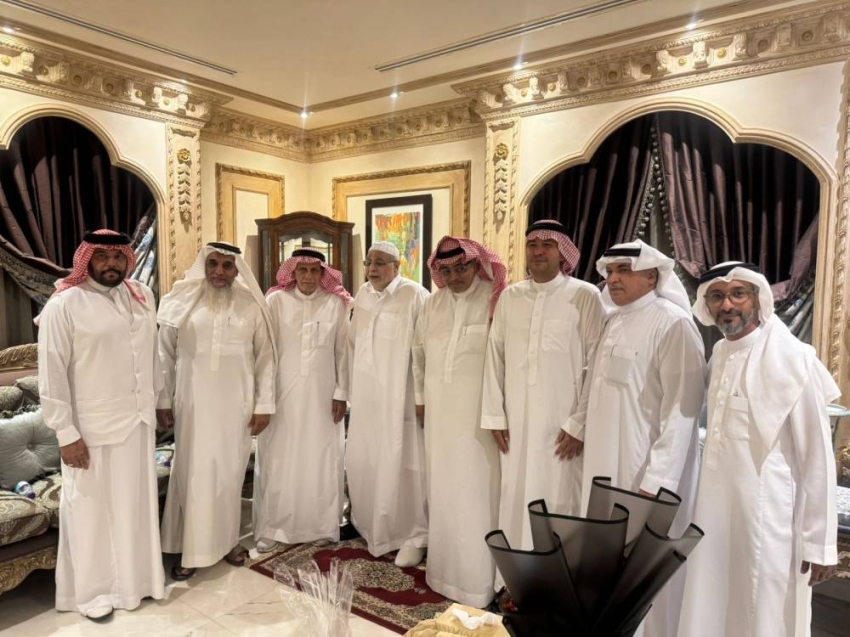
Not all passing phrases are said and then forgotten; some encapsulate major transformations and summarize complete future paths. Among this kind is what was said by His Excellency the former Minister of Culture and Information, Dr. Abdulaziz Mohieddin Al-Khoja, during a visit by a delegation from the 'I'lamiyoun' Association to his home in Jeddah, honoring him, and conducting a deep journalistic interview about his media career. During this conversation, His Excellency indicated that media is changing at an accelerating pace, and that an individual today is able to create his own 'Ministry of Media,' benefiting from social media platforms and artificial intelligence technologies. That phrase was not merely a description of a technical reality, but a forward-looking reading of a profound transformation in the concept of media itself. The equation that has been stable for decades, based on institutions monopolizing the means of publication and influence, is no longer valid in the same form. Power has shifted from owning the platform to owning content, and from institutional control to the individual's ability to create influence and reach millions of followers in a matter of moments. These transformations place Saudi media before a historic responsibility to reshape its tools, not to defend models that time has passed, but to lead a new phase consistent with the goals of the Kingdom's Vision 2030, which has made digital transformation, knowledge economy, and innovation fundamental pillars of development. Perhaps the sector most affected by these changes is the press sector. Print journalism is not in confrontation with technology, but in confrontation with time, if it remains captive to its traditional tools. However, if it redefines its mission, moving from transmitting news to interpreting it, and from following events to anticipating their outcomes, it will maintain its position as the most profound and reliable reference. News has become available to all, but sober analysis, investigative reporting, and critical reading are the real value that fast platforms cannot replace. On the other hand, it is no longer fair to view content creators as competitors to media institutions. They have imposed their presence, and many have proven a remarkable ability to reach, influence, and shape public discourse. The challenge today is not in resisting them, but in building a complementary relationship with them, based on training, entrenching professional ethics, and enhancing professional responsibility, so that digital popularity turns into a knowledge force serving society. As for the competition between media institutions and digital platforms, it is in fact not a competition over speed of publication; technology settled that battle years ago. Rather, it is a competition over trust. Trust cannot be bought with algorithms, nor measured by view counts, but is built on credibility, accuracy, independence, and the ability to provide content that adds understanding, not just information. Hence the urgent need for a renewed media project, based on investing in national talents, developing digital newsrooms, and employing artificial intelligence as a supportive tool, not a replacement for journalistic mind, along with updating media legislation and strengthening programs for preparing journalists and media professionals in line with the nature of the new digital environment. His Excellency Dr. Abdulaziz Al-Khoja summarized the future of media in one sentence, but one that carries enough depth to pause at. When every individual possesses his own media outlet, the question will not be: who owns the platform? Rather, who possesses professionalism, awareness, credibility, and the ability to create a positive and sustainable impact? That is the real competition, and that is the greatest challenge awaiting Saudi media in the coming years.
I'lamiyoun Association
Original source: Al-Madina



Comments (0)
Be the first to comment.