United Nations: Al-Hogail Reviews National Transformation Indicators in the Kingdom

Minister of Municipalities and Housing Majid bin Abdullah Al-Hogail affirmed that the Kingdom of Saudi Arabia has established an advanced model in sustainable urban development, moving from the stage of planning and policy formulation to the stage of implementation and achieving impact, based on the targets of Saudi Vision 2030, which made quality of life, housing, municipal development, and sustainability key pillars of national transformation.
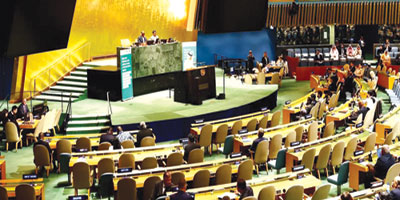
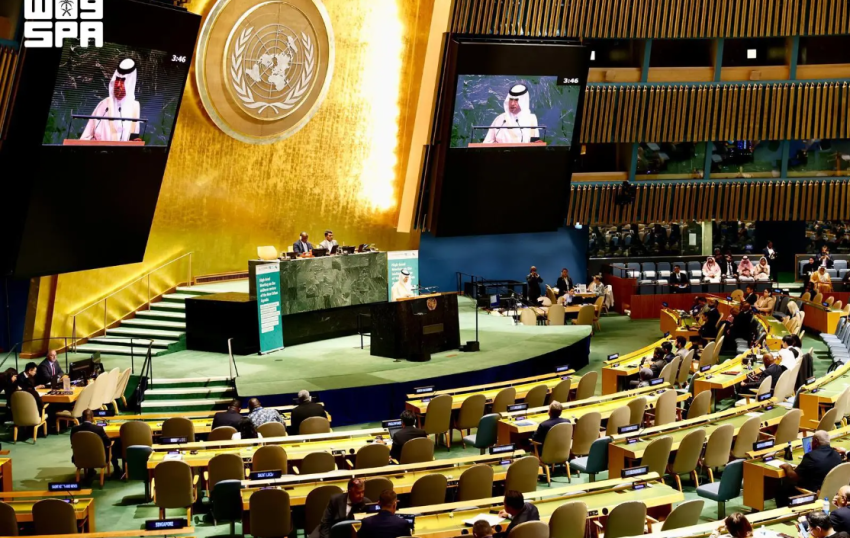
This came during the Kingdom's speech delivered at the High-Level Meeting of the General Assembly on the Urban Agenda in New York City.
Related news
Al-Hogail explained that the Kingdom submitted its updated national report for 2026 to the UN-Habitat Programme, which documents the urban transformation that the Kingdom has witnessed in recent years and highlights the transition from building frameworks and policies to expanding the scope of implementation and achieving tangible results on the ground.
Homeownership rate of Saudi families
The Minister of Municipalities and Housing reviewed the most prominent indicators achieved by the Kingdom, stating that the homeownership rate of Saudi families increased from 47% in 2016 to 66.24% by the end of 2025, approaching the 2030 target of 70%, while more than 25% of Saudi families benefited from housing support services under housing programs between 2018 and 2025. He pointed out that urban development witnessed rapid growth, as the per capita share of public spaces increased from 5.2 square meters to 6.9 square meters, while the Bahja program added more than 12 million square meters of community spaces. Meanwhile, the Riyadh Metro recorded more than 100 million passengers during its first nine months of operation, and the number of intra-city bus users exceeded 96.8 million passengers during 2025, reflecting the development of the urban mobility system and the improvement of quality of life. He affirmed that the urban transformation in the Kingdom extended to social aspects, as the female labor force participation rate increased from 22.8% to 36%, the employment rate of people with disabilities doubled, and the number of non-profit sector organizations exceeded 7,213, achieving growth of more than 341%, indicating the expansion of community participation in the development process.
Developing the urban governance system
Al-Hogail explained that the Kingdom continues to develop the urban governance system by enhancing the financial independence of municipalities, integrating urban data, and incorporating climate risk assessment into urban planning, in addition to continuing the implementation of the Saudi Green Initiative and the National Renewable Energy Program, which enhances the sustainability of cities and their ability to face future challenges.
He pointed out that partnerships and investments formed a key pillar of this transformation, as the Kingdom signed more than 56 partnership agreements with the private sector to support infrastructure and municipal services projects, along with signing a strategic cooperation agreement with the UN-Habitat Programme and the United Nations Development Programme for the period 2024–2027.
The Kingdom also issued green bonds and sustainable sukuk worth $9.1 billion during 2024, in addition to the Green Financing Framework for the Public Investment Fund, whose commitments exceed $10 billion by 2026.
In conclusion of his speech, the Minister of Municipalities and Housing affirmed the Kingdom's commitment to continuing to support the goals of the New Urban Agenda, enhancing international cooperation, and expanding access to sustainable financing, contributing to building more inclusive and sustainable cities and improving the quality of life for future generations.
Original source: Al-Yaum


Comments (0)
Be the first to comment.