Charitable Organizations Under an Ambitious Vision That Steadied the Steps of the Third Sector and Made It a Key Partner in Development
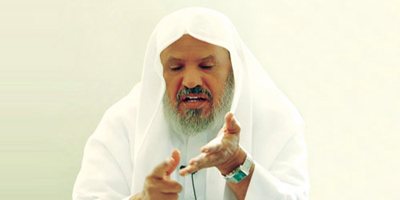
Prof. Dr. Abdullah Al-Tayyar
Friday/Saturday July 17, 2026
Zulfi - Special to Al-Jazeera:
His Eminence Sheikh Dr. Abdullah bin Muhammad Al-Tayyar, Professor of Jurisprudence and former Ifta Commissioner of Al-Qassim Region, said that among the priorities and fundamentals of Sharia is achieving public benefit and building a cohesive society bound by solidarity and cooperation, characterized by affection and mercy. Allah Almighty said: {And cooperate in righteousness and piety, but do not cooperate in sin and aggression. And fear Allah; indeed, Allah is severe in penalty} (Surah Al-Ma'idah, 2). In the Sunan, from the hadith of Abdullah bin Umar (may Allah be pleased with them both) that the Prophet (peace be upon him) said: (The most beloved of people to Allah are those who are most beneficial to others, and the most beloved of deeds to Allah Almighty is to bring joy to a Muslim, or to relieve them of a distress, or to pay off a debt for them, or to ward off hunger from them...) Narrated by Al-Tabarani in Al-Mu'jam Al-Awsat (6026) and authenticated by Al-Albani in Al-Silsilah Al-Sahihah (906). He pointed out that Islam elevated the status of voluntary work and made it a great spiritual value by which the vitality of society and the positivity of its members are measured. From this Sharia perspective, the Custodian of the Two Holy Mosques and His Royal Highness the Crown Prince (may Allah preserve them) supported this sector and cared for it, placing it within the strategic plan and future vision (Saudi Vision 2030) out of the wise leadership's belief in the importance of this sector and its effective role in serving society. Among the notable statements of His Royal Highness Crown Prince Mohammed bin Salman (may Allah preserve him), which indicate full awareness of the status of social and volunteer work, is: (We view the non-profit sector as an important sector in supporting the path of education, culture, health, and research, and we will rely heavily on the non-profit sector.)
Dr. Abdullah Al-Tayyar emphasized in his interview with Al-Jazeera that the support of the wise leadership went beyond mere financial aid to formulating an integrated legislative and developmental system aimed at empowering charitable organizations and providing space for them to be effective partners in sustainable development. This generous support has resulted in a fundamental transformation in the performance of charitable organizations, moving them from the stage of full care and dependency to a system of development and empowerment. This blessed effort derives its legitimacy from the Quran and Sunnah. Allah Almighty said: {And they give food, despite their love for it, to the needy, the orphan, and the captive, [saying], 'We feed you only for the countenance of Allah. We wish not from you reward or gratitude'} (Surah Al-Insan, 8-9).
He continued his speech, saying: Our Lord linked the essence of faith and the perfection of righteousness to hastening to spend. Allah Almighty said: {Never will you attain righteousness until you spend from that which you love. And whatever you spend, indeed Allah is Knowing of it} (Surah Al-Imran, 92).
The Noble Prophet (peace be upon him) formulated the constitution of solidarity with the most eloquent expressions and deepest meanings, stating that the faithful community is held together by the compassion of its members. He said: (You see the believers in their mercy, love, and empathy as one body; if one part complains, the rest of the body joins it in sleeplessness and fever) Narrated by Al-Bukhari (6011).
And because acts of kindness protect against evil ends, the Prophet (peace be upon him) encouraged relieving the distress of the debt-stricken and made the reward similar to the deed in this world and the Hereafter. He said: (Whoever relieves a believer of a distress from the distresses of this world, Allah will relieve him of a distress from the distresses of the Day of Resurrection. Whoever makes ease for one in difficulty, Allah will make ease for him in this world and the Hereafter. Whoever conceals a Muslim, Allah will conceal him in this world and the Hereafter. And Allah is in the aid of His servant as long as the servant is in the aid of his brother) Narrated by Muslim (2699).
The predecessors of this Ummah considered fulfilling people's needs as a windfall that Allah had sent them. One of them said: 'Know that people's needs of you are among Allah's blessings upon you, so do not become weary of blessings.' Non-profit charitable organizations are no longer just entities that fill temporary needs, but have become sustainable developmental structures and arteries that flow with goodness to encompass all segments of society and serve all its spectrums without exception.
Dr. Abdullah Al-Tayyar explained that the diversity of charitable organizations covers many segments of society, including: organizations that care for orphans and widows through sponsorship that ensures a decent life and preserves human dignity; organizations concerned with the Book of Allah Almighty in memorization and study, raising the youth on the Book of Allah, and protecting their minds from extremist ideas; organizations concerned with health care, extending a helping hand to patients who cannot afford treatment, providing medication, medical supplies, free diagnostic visits, and therapeutic, preventive, and awareness initiatives needed by both adults and children; organizations concerned with rehabilitating youth in educational, administrative, and technological fields, and rehabilitation initiatives for new graduates and those about to marry, among other segments of society, so that a person may rise from the rank of 'taking' to the honor of 'giving' through training and rehabilitation; organizations concerned with preparing the deceased, shrouding them, serving their families, arranging funerals, preparing cemeteries, maintaining them, preserving them from creedal and Sharia violations, and guiding and educating people in this regard; organizations concerned with preserving blessings, redistributing them, utilizing them, and not wasting them; organizations concerned with providing water, supplying it, and distributing it in mosques and elsewhere; women's organizations that focus on rehabilitating mothers, training girls, and providing initiatives for women; family organizations that work on reconciling differences and spreading awareness among spouses; organizations that provide housing for the needy through renovation or ownership; scientific, service, and research organizations that support scientific content, publish academic research, and provide a scientific environment for researchers and academics; organizations that feed the poor and needy and provide food for them; organizations that serve pilgrims and Umrah performers through trained and volunteer staff; and charitable private entities run by wealthy individuals and major merchants who understand the virtue of charity and desire what is with Allah Almighty in reward and goodness, using their wealth as a means of closeness to Allah by providing support for those about to marry, helping them, and facilitating marriage, among other non-profit charitable activities carried out by these organizations, each of which is at a great frontier in serving society.
Dr. Abdullah Al-Tayyar stressed that this comprehensiveness of charitable organizations reflects a deep Sharia and contemporary awareness, realizing that society is an integrated structure: if one part complains, the rest of the body joins it in sleeplessness and fever. Charitable organizations in Saudi Arabia, under an ambitious vision that steadied the steps of the third sector—the non-profit sector—and made it a key partner in development, shall remain the land of monotheism as an oasis of security, a wellspring of giving, and a beacon of solidarity to be emulated by others. Non-profit charitable organizations in particular, and volunteer work in general, are the practical translation of these Sharia texts on the ground, and they are the impregnable fortress that protects the community from the trials of need and ignorance.
Original source: Al-Jazirah





Comments (0)
Be the first to comment.