Discrepancies in Animal Statistics and the Ministry of Environment Remains Silent
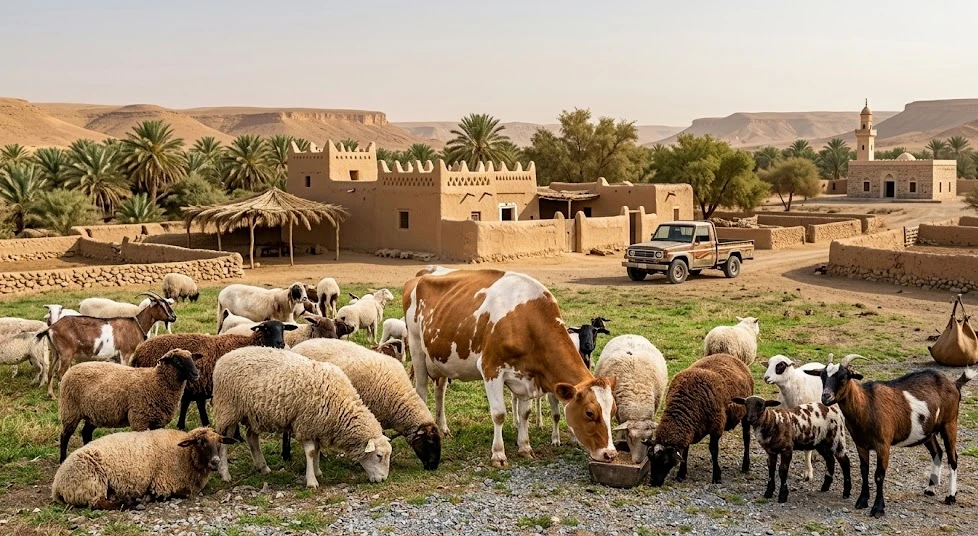
An official statistic published by the Ministry of Environment, Water and Agriculture revealed sharp discrepancies and paradoxes in animal and bird numbers across Saudi cities and governorates between 2016 and 2026, prompting questions about monitoring accuracy, while the ministry has not responded to inquiries.
The number of donkeys in the Kingdom reached 26 in 2025, while some cities and governorates lacked birds and cats entirely, according to an official statistic published by the Ministry of Environment, Water and Agriculture on the Open Data platform.
The statistic, published under the title "Number of Animals in the Kingdom by Region and Type," revealed striking paradoxes and discrepancies in the recorded animal numbers across the Kingdom's regions and governorates during the period from 2016 to 2026. It showed very low figures or sharp spikes in animal populations, raising questions about the accuracy of the monitoring mechanism and statistical methodology.
The statistic recorded that the number of donkeys in the Kingdom in 2025 reached 26, distributed across 7 cities. Thirteen of them were in Qatif Governorate, while Unaizah, Al-Kharj, and Al-Qurayyat each recorded a single donkey. Meanwhile, the number of donkeys in the Kingdom dropped in 2024 from 59—distributed across 12 cities, 11 of which had missing data for 2025—with the exception of Qatif, where 3 donkeys were recorded.
It showed that the number of camels in the Kingdom according to the statistic reached 145,945 heads. Al-Asyah Governorate in Qassim topped the list with 8,672 heads, followed by Hafr Al-Batin with 6,336, and Qariat Al-Ulya with 4,690. This contradicts what the ministry announced in a previous report stating that the number of camel heads in the Kingdom reached 2,235,297, based on 2024 statistical data at the regional level of the Kingdom.
Cities and governorates record a single dog
Regarding the number of dogs in the Kingdom, the statistic updated two weeks ago revealed that it reached 478 dogs distributed across 42 Saudi cities. 144 of them were in Dammam, 78 in Riyadh, while 10 Saudi cities recorded only a single dog, including Dhahran Al-Janub, Baljurashi, Shaqra, and Muhayil Asir.
According to the statistic, the number of dogs in 2025 decreased by 11.6% compared to 2024, when there were 541 dogs, with Dammam holding the largest share at 217.
364 rodents in the Kingdom... 200 of them in the "Bride of the Red Sea"
The statistic showed that the number of rodents reached 364, with Jeddah topping the list at 200 rodents, followed by Al-Aqiq with 70, and Taif with 60. The statistic indicated that the number of rodents in 2024 reached 338, with the highest in Yanbu at 140 rodents, and the lowest in Al-Rass at a lone rodent.
Strikingly, the city of Jeddah did not record any rodents in the 2024 census, only to appear suddenly in 2025 topping the Kingdom's list with 200 rodents, which is more than half of the total rodents recorded in the country. In contrast, Yanbu—which topped the list in 2024 with 140 rodents—completely disappeared from the 2025 records. Similarly, the cities of Buraidah (80 rodents), Al-Khurmah (56 rodents), and Al-Muzahimiyyah (20 rodents) vanished from the latest year's statistics despite registering notable numbers the previous year.
Al-Shuqaiq: 3 million chickens... and Khulais: 5 chickens
Al-Shuqaiq Governorate in the Jazan region recorded one of the most prominent paradoxes in the statistic, as the number of chickens there reached 3,600,170 in 2025, compared to only 4 dogs. In comparison with 2024, the governorate had recorded 67 chickens and 6 dogs, raising questions about the reasons behind this massive surge in chicken numbers within a single year.
According to the statistic, the number of poultry in the Kingdom in 2025 exceeded 12,896,000 chickens, with Al-Shuqaiq topping the list, while Khulais Governorate was at the bottom with only 5 chickens.
121 thousand birds in the Kingdom... and Sabya is devoid of them
The statistic showed that the number of birds reached 121,421 in 2025, with the largest share in Al-Quwayiyah Governorate at 21,000 birds, followed by Al-Mithnab with 20,000. Meanwhile, Sabya Governorate was completely devoid of any birds, which is surprising for a governorate known for its agricultural activity and climate suitable for bird-rearing.
Birds are distributed across only 80 cities in the Kingdom, while Qatif ranks third with 11,776 birds, followed by Buraidah with 7,445 birds.
Continuing the strange statistics, the number of cows in the Kingdom's cities monitored by the statistic reached 34.92 thousand cows. The largest share was in Bish Governorate at 4,109, followed by Badr Al-Janub with more than 3,000 cows, while the statistic recorded only one cow in Hafr Al-Batin, and 3 cows in Riyad Al-Khabra in Qassim.
A comparison of cow data between 2024 and 2025 reveals unexplained shifts. The total number of cows in the Kingdom decreased by 11.6%, from 39.49 thousand to 34.92 thousand. However, the strangest event occurred in Hofuf, which dropped from 5,009 cows in 2024 to just 25 cows in 2025—a loss of 99.5% of its herd! In contrast, Al-Kharj jumped from 40 cows to 2,032 cows, and the cows in Rijal Almaa quintupled from 453 to 2,323.
556 thousand sheep in Rijal Almaa and a single cat
In another paradox, Rijal Almaa Governorate in the Asir region recorded 556,410 sheep, compared to just one cat. Meanwhile, the number of sheep in the Kingdom during 2025, according to the published statistic, reached 7.42 million heads, including 592,836 in the Al-Qaraa center affiliated with the Qassim region. At the bottom of the list was the city of Turbah, where the number of sheep reached 21 heads.
Regarding the number of cats in the Kingdom, the list showed the existence of 5,975 cats, led by Dammam with 2,617 cats, followed by Madinah with 890, and Riyadh with 553. Meanwhile, the governorates of Al-Muzahimiyyah, Al-Quwayiyah, Al-Qunfudhah, Al-Badai, Al-Mikhwah, Baljurashi, and Shaqra each recorded a single cat.
The statistic showed that the number of cats in 2024 reached 6,271, topped by Dammam with 3,313, followed by Riyadh with 1,112 cats. The statistic also revealed fluctuation over the decade, peaking in 2023 at 8,448 cats before dropping to 6,271 cats in 2024, while remaining higher than the levels recorded in other years.
According to the statistic, donkeys were the least numerous animals in the Kingdom during 2025, followed by dairy camels at 129, and deer at 306, while poultry topped the list with more than 12 million chickens.
Akhbar 24, for its part, contacted the ministry to verify the accuracy of this data, understand the census methods, and learn the mechanism of collecting, numbers, and classifying figures to tally these animals. The ministry has not responded to our inquiries as of the date this report was published.
Original source: Akhbaar24




Comments (0)
Be the first to comment.