Earliest Antiquities of Eastern Region: The Story of Discovering the Dhahran Burial Mounds and the Secrets of the Dilmunites
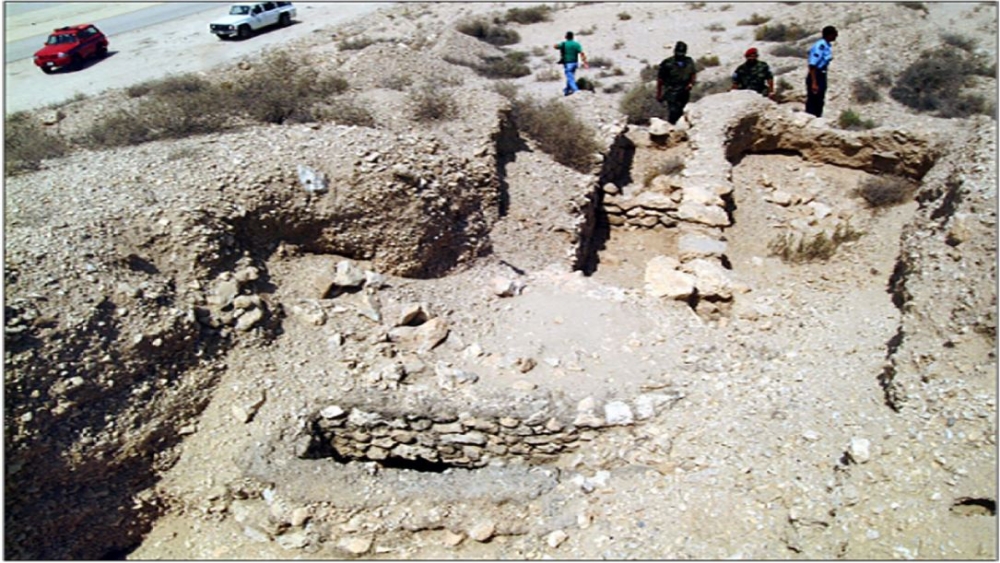
Discovered in 1940, the Dhahran burial mounds in Saudi Arabia's Eastern Province date back to 3000 BCE and comprise about 900 tumuli. Archaeological excavations uncovered Dilmun pottery, gold jewelry, and seals, shedding light on the ancient Dilmun civilization.
The Dhahran burial mounds are among the oldest areas of urban settlement in the Eastern Province of Saudi Arabia, dating back to around 3000 BC and continuing until the first millennium BC.
These mounds are located west of the city of Al-Thuqbah, south of Dhahran Airport and north of Ain Al-Saih, covering an area of approximately 900 by 1400 meters, with an estimated 900 tumuli distributed at varying heights above ground.
When were the Dhahran burial mounds discovered and what has been written about them?
Related News
Researcher Peter B. Cornwall discovered the Dhahran burial mounds in 1940, described them in 1946, and then discussed them in an article published in 1948 in the 'American Geographical Journal.' In his article, Cornwall noted that the most important site in the Al-Ahsa region in general is Dhahran and its surroundings, where a great circular stone structure stands, its outer slopes covered with thousands of burial mounds dating from the Bronze Age. He described some of these mounds as resembling a circular earthwork fortification, each with a pavement and surrounding walls 60 feet long, oriented northward, and crowded in some places so that they resemble a city of the dead. He also indicated that the owners of these mounds were known as the 'Dilmunites.' In 1403 AH (1983 AD), the General Administration of Antiquities and Museums carried out a rescue project to uncover these mounds after the site became threatened by urban sprawl.
What are the patterns and architectural design of the mounds at the site?
Excavations revealed multiple patterns of burials, including collective burials that sometimes contain seventeen graves, as well as individual burials, in addition to tumuli containing more than one main grave. The archaeological tumuli vary in size, with large ones reaching five meters in height, medium ones between 3 and 4 meters, small ones between 1 and 2 meters, and some less than a meter. The design of a burial chamber consists of a rectangular room ranging from 2 to 4 meters in length and up to 2 meters in height, where the deceased is placed; then the door is covered with stones, and the entire chamber is covered with sand in the shape of a mound. There are other similar burials that include side chambers containing remains of burned offerings such as camels, as it was customary to burn the riding animal upon its owner's death and bury it near the site.
As for the burial style, it was mostly in a squatting position or lying on the back, with varying inclinations generally aligned east-west, reflecting the ancient people's reliance on the sun as a guide, which makes it possible to determine the season when the burial chamber was built.
What are the most prominent archaeological finds inside the Dhahran burial mounds?
Inside the Dhahran burial mounds, pottery vessels were found, named 'Dilmun pottery,' similar to those found in Bahraini tombs due to the contemporaneity of the two sites, along with pottery of local characteristics, soapstone vessels, and palm leaf baskets coated with bitumen. The finds also included gold jewelry such as earrings and rings, most notably a ring engraved with a dragon’s head, in addition to gold nose rings, pearls, and beads of various shapes, sizes, and colors. The discoveries also included various seals bearing engravings of marine plants, fish, mythical animals, birds, insects, and scarabs, as well as ostrich eggshells used as water containers, along with stone inscriptions, incense burners, copper items, and many other finds.---
Original source: Al-Yaum




Comments (0)
Be the first to comment.