Medina Rose: Ancient Agriculture Fragrant with Heritage and Development
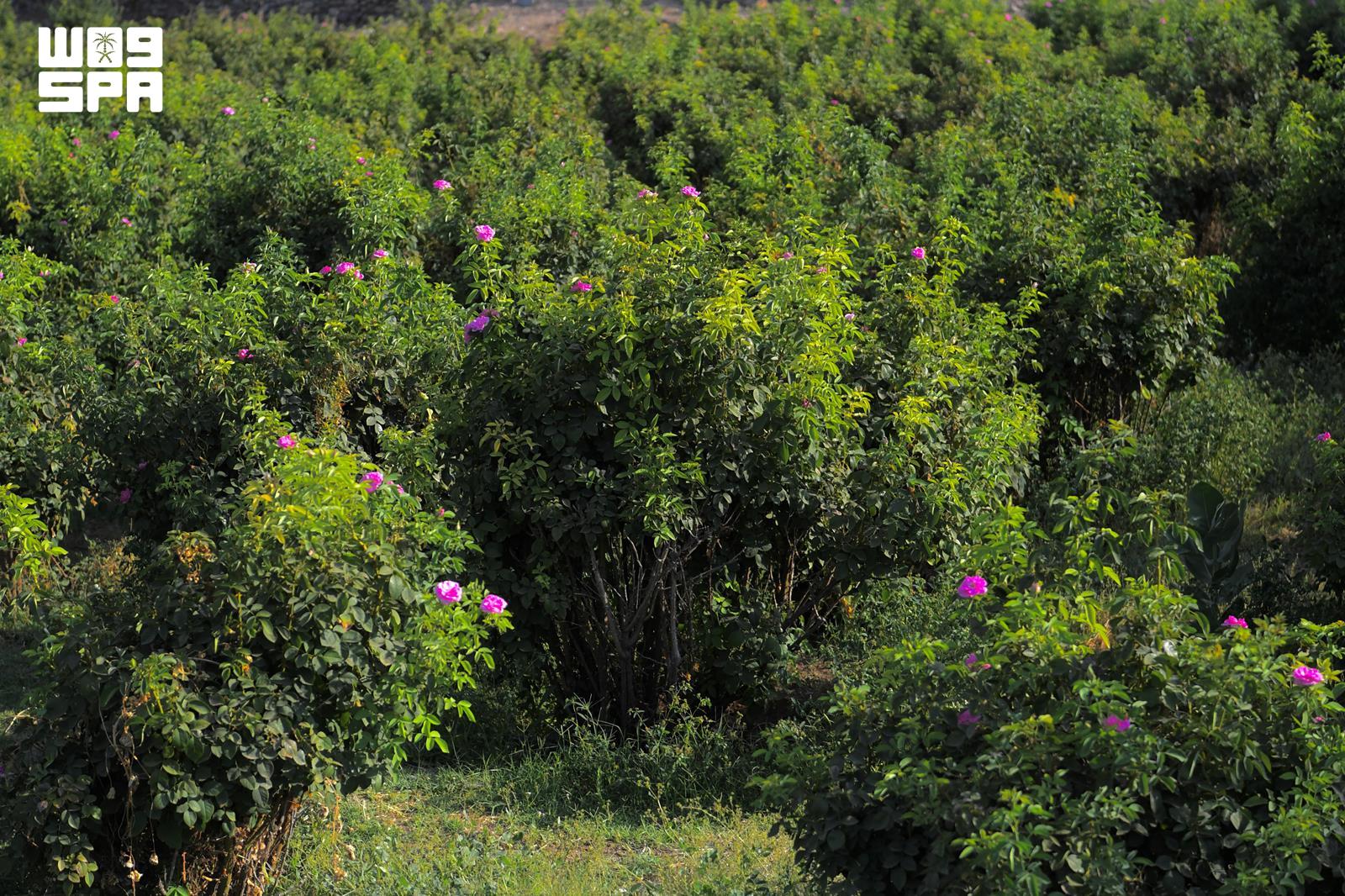
The Medina rose, a strain of the Damascus rose, blooms annually in Medina's farms, symbolizing natural beauty and cultural heritage. Known for its strong fragrance, it is used in rose water, essential oils, and traditional hospitality. Farmers employ inherited practices, with harvest in early mornings to preserve oils. Recent agricultural programs have increased support, boosting its economic value. Farmer Ayyad Al-Ahmadi highlights its year-round production. The rose also features in local festivals, preserving agricultural heritage and connecting generations to traditional farming.
Between the farms of Medina, the Medina rose blooms every year, announcing an exceptional season that combines natural beauty and cultural heritage. It is not seen merely as an aromatic plant, but as part of the region's agricultural identity and a symbol linked to its history and social life for decades. The Medina rose is distinguished by its pleasant fragrance and high aromatic concentration, making it one of the most prominent aromatic crops sought after by consumers. It is used in the production of rose water, essential oils, and natural products, in addition to its use in hospitality, social customs, and various occasions. The cultivation of the rose is widespread in a number of farms in Medina, where farmers care for it according to inherited agricultural practices, starting with soil preparation and irrigation, through plant care, up to the harvest season, which usually takes place in the early morning hours to preserve the highest concentration of essential oils within the flowers. The harvest season is an important phase for farmers, as the flowers are carefully collected and then transported directly to distillation facilities to extract rose water and essential oils, in a process that combines inherited expertise and modern technologies, contributing to preserving the quality and distinctive characteristics of the product. In recent years, the Medina rose has received increasing attention within agricultural sector development programs, through supporting farmers, encouraging processing industries, and developing derived products, thereby enhancing the added value of the crop and opening new horizons for investment in the aromatic industries. Farmer Ayyad Al-Ahmadi affirms that the Medina rose, a strain of the Damascus rose, is distinguished in Medina by its ability to produce most of the year, unlike other regions where the flowering season is limited to a short period. He pointed out that this feature gives it great agricultural and economic value, in addition to expanding opportunities for its use in processing industries, such as rose water, essential oils, body care products, and some food products. He called for more attention to its cultivation and development of its products to enhance its presence in markets. The Medina rose has also become a presence in local events and festivals, attracting visitors and those interested in agricultural and heritage products, allowing them to learn about its cultivation and distillation stages, as well as purchasing its products that reflect the quality of local production. The importance of the Medina rose is not limited to its economic value; its impact extends to preserving the agricultural heritage of Medina, strengthening the connection of generations to traditional agricultural professions, and highlighting the plant diversity that characterizes the region. Thus, the Medina rose remains a testament to the relationship between man and his land, and a symbol of the fragrance of Medina that wafts with every flowering season. // End // 23:03 T M 0218
Between the farms of Medina, the Medina rose blooms every year, announcing an exceptional season that combines natural beauty and cultural heritage. It is not seen merely as an aromatic plant, but as part of the region's agricultural identity and a symbol linked to its history and social life for decades. The Medina rose is distinguished by its pleasant fragrance and high aromatic concentration, making it one of the most prominent aromatic crops sought after by consumers. It is used in the production of rose water, essential oils, and natural products, in addition to its use in hospitality, social customs, and various occasions. The cultivation of the rose is widespread in a number of farms in Medina, where farmers care for it according to inherited agricultural practices, starting with soil preparation and irrigation, through plant care, up to the harvest season, which usually takes place in the early morning hours to preserve the highest concentration of essential oils within the flowers. The harvest season is an important phase for farmers, as the flowers are carefully collected and then transported directly to distillation facilities to extract rose water and essential oils, in a process that combines inherited expertise and modern technologies, contributing to preserving the quality and distinctive characteristics of the product. In recent years, the Medina rose has received increasing attention within agricultural sector development programs, through supporting farmers, encouraging processing industries, and developing derived products, thereby enhancing the added value of the crop and opening new horizons for investment in the aromatic industries. Farmer Ayyad Al-Ahmadi affirms that the Medina rose, a strain of the Damascus rose, is distinguished in Medina by its ability to produce most of the year, unlike other regions where the flowering season is limited to a short period. He pointed out that this feature gives it great agricultural and economic value, in addition to expanding opportunities for its use in processing industries, such as rose water, essential oils, body care products, and some food products. He called for more attention to its cultivation and development of its products to enhance its presence in markets. The Medina rose has also become a presence in local events and festivals, attracting visitors and those interested in agricultural and heritage products, allowing them to learn about its cultivation and distillation stages, as well as purchasing its products that reflect the quality of local production. The importance of the Medina rose is not limited to its economic value; its impact extends to preserving the agricultural heritage of Medina, strengthening the connection of generations to traditional agricultural professions, and highlighting the plant diversity that characterizes the region. Thus, the Medina rose remains a testament to the relationship between man and his land, and a symbol of the fragrance of Medina that wafts with every flowering season. // End // 23:03 T M 0218
Original source: SPA




Comments (0)
Be the first to comment.