Execution Flaws Outweigh Structural Issues
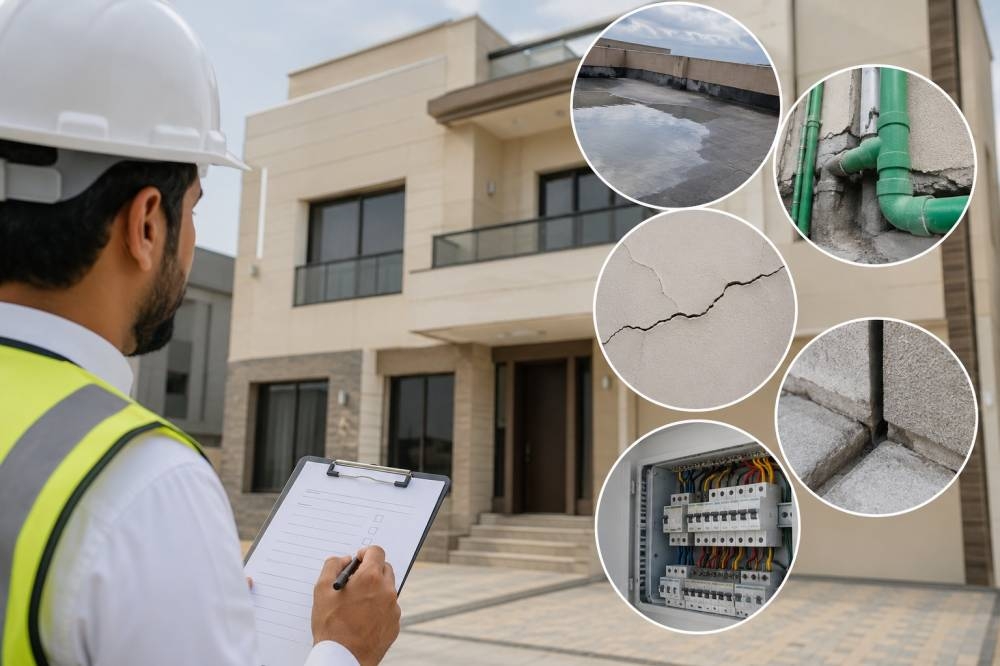
While many buyers focus on the integrity of the concrete structure when purchasing or taking delivery of a new villa, architects and structural engineers have emphasized to 'Al-Watan' that on-site building inspections reveal that most problems relate to the quality of execution rather than structural design. They explained that the most frequent observations in villas and residential units involve poor waterproofing, faulty plumbing execution, improper treatment of construction joints, and cracks caused by shrinkage or settlement, which may lead to future leaks and problems, in addition to electrical and mechanical issues that can become costly if left unaddressed.
Architect Abdullah Al-Atiq explained that inspecting new buildings aims to verify that execution complies with plans, technical specifications, and the Saudi Building Code, ensuring construction quality before final handover. Conversely, inspecting older buildings focuses on assessing their structural condition, estimating the remaining life of various elements, identifying causes of deterioration, and developing maintenance or rehabilitation plans when necessary.
He added that there are indicators that should not be ignored, such as diagonal and deep cracks, difficulty closing doors or windows that previously functioned normally, floor settlement, and cracks widening over time. He stressed that judging the severity of these signs can only be done through a specialized engineering assessment, as some may be minor, while others could indicate problems requiring urgent intervention.
Al-Atiq pointed out that distinguishing between dangerous and cosmetic cracks does not depend on the shape of the crack alone, but on a set of factors including its location, direction, width, depth, its stability or progression over time, and whether it affects a structural element or is limited to the finishing layer. He noted that accurate diagnosis requires on-site inspection supported by modern equipment, most notably thermal imaging cameras to detect moisture and leaks, moisture meters, and tools for measuring column tilt and surface levelness, in addition to documenting findings with photos and technical reports.
He added that insulation assessment is carried out through visual inspection, leak testing when necessary, and the use of moisture meters and thermal imaging. He warned that neglecting insulation can lead to water seepage, reinforcement bar corrosion, damage to finishes, increased energy consumption, reduced building lifespan, and subsequent increases in maintenance costs.
Al-Atiq confirmed that when a serious violation is discovered during an inspection, it is documented with technical evidence, its severity is assessed, and the requester or relevant authority is notified immediately. Recommendations are then made to take urgent measures, such as stopping the use of the affected part until evaluation and rectification are completed according to engineering standards. He noted that adopting technical inspections before buying and selling would raise the quality of the real estate market, protect the rights of all parties, increase transparency, reduce post-transfer disputes, and promote preventive maintenance to preserve real estate wealth in line with the goals of Saudi Vision 2030.
He advised those looking to buy used residential units not to rely solely on the aesthetic appearance of the building, as many defects may be hidden behind finishes. He called for requesting a comprehensive engineering inspection report before paying a deposit or signing a contract, and for reviewing maintenance records and documents related to insulation, roofs, electrical, plumbing, and air conditioning systems to accurately estimate future costs.
He also warned against common mistakes that lead to building deterioration, such as rushing structural works, neglecting waterproofing, making structural modifications without consulting a specialized engineer, and poor execution of drainage networks, emphasizing that these practices multiply repair costs over time.
Experts recommended conducting an annual visual inspection of the building and a comprehensive engineering inspection approximately every five years for residential buildings, with shorter intervals for commercial or high-use buildings depending on their nature and age. He emphasized that an engineering inspection is not just a way to discover defects, but an investment that protects lives, preserves the value of real estate assets, and promotes a culture of quality and preventive maintenance. Every riyal spent on early inspection can save multiples in future repair costs.
Frequent non-structural observations: 01- Problems with poor waterproofing 02- Faulty plumbing execution 03- Improper treatment of joints 04- Cracks caused by shrinkage or settlement that open the door to leaks and subsequent problems 05- Observations in electrical and mechanical works.
Original source: Al-Watan


Comments (0)
Be the first to comment.