Fossils Dating Back 600,000 Years Document the Natural History of Northwestern Saudi Arabia

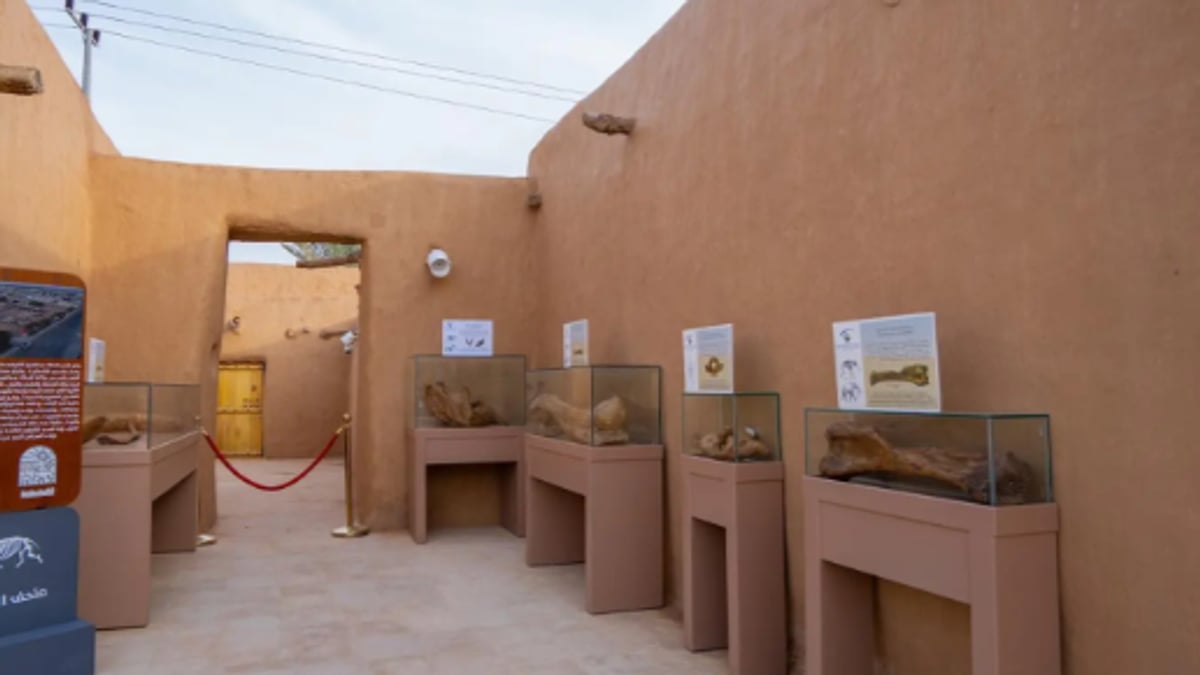
In the heart of the Great Nafud Desert, pages of Earth's history lie hidden, covered by sand and preserved by layers of rock and ancient lake sediments. Fossilized remains open a window into a life that once flourished, telling the story of an environment that changed over time. From this unique natural heritage, a collection of animal fossils discovered in the petrified seasonal lakes of "Ta'as al-Ghada" was recently displayed at the historic King Abdulaziz Palace in Linah village, in an initiative that documents the environmental transformations witnessed by the Arabian Peninsula and highlights the scientific and geological value held by the land of the Kingdom.
Saudi Press Agency (SPA) documented the exhibits at the historic King Abdulaziz Palace in Linah village, which includes a number of fossils and petrified bones of animals that lived in the region during past eras, including bones of ancient elephants discovered within the deposits of petrified seasonal lakes, whose sediments geological studies indicate date back to about 600,000 years.
The information accompanying the exhibits explains that during that era, the Arabian Peninsula region was influenced by a sub-tropical climate coming from the Arabian Sea, along with moderate climatic influences originating from the Mediterranean Sea, which contributed to the formation of environments rich in water and vegetation, and created suitable habitats for a great diversity of wild animals that inhabited the region at that time.
These discoveries contribute to enhancing the understanding of the natural history and climatic changes that the Arabian Peninsula has undergone, and they represent an important scientific record for researchers in the fields of geology and paleontology, highlighting the geological and archaeological evidence of global scientific value that abounds in the Great Nafud Desert.
The display of these fossils is part of efforts to introduce the Kingdom's natural heritage and highlight the results of scientific research and discoveries that reveal the geological depth and environmental diversity its lands have witnessed through the ages, thereby enhancing awareness of the importance of preserving fossil sites as a record documenting the history of life and the environment in the Arabian Peninsula.
Original source: Al-Riyadh




Comments (0)
Be the first to comment.