Red Fox: The Largest and Most Widespread Wild Fox Species in the Kingdom
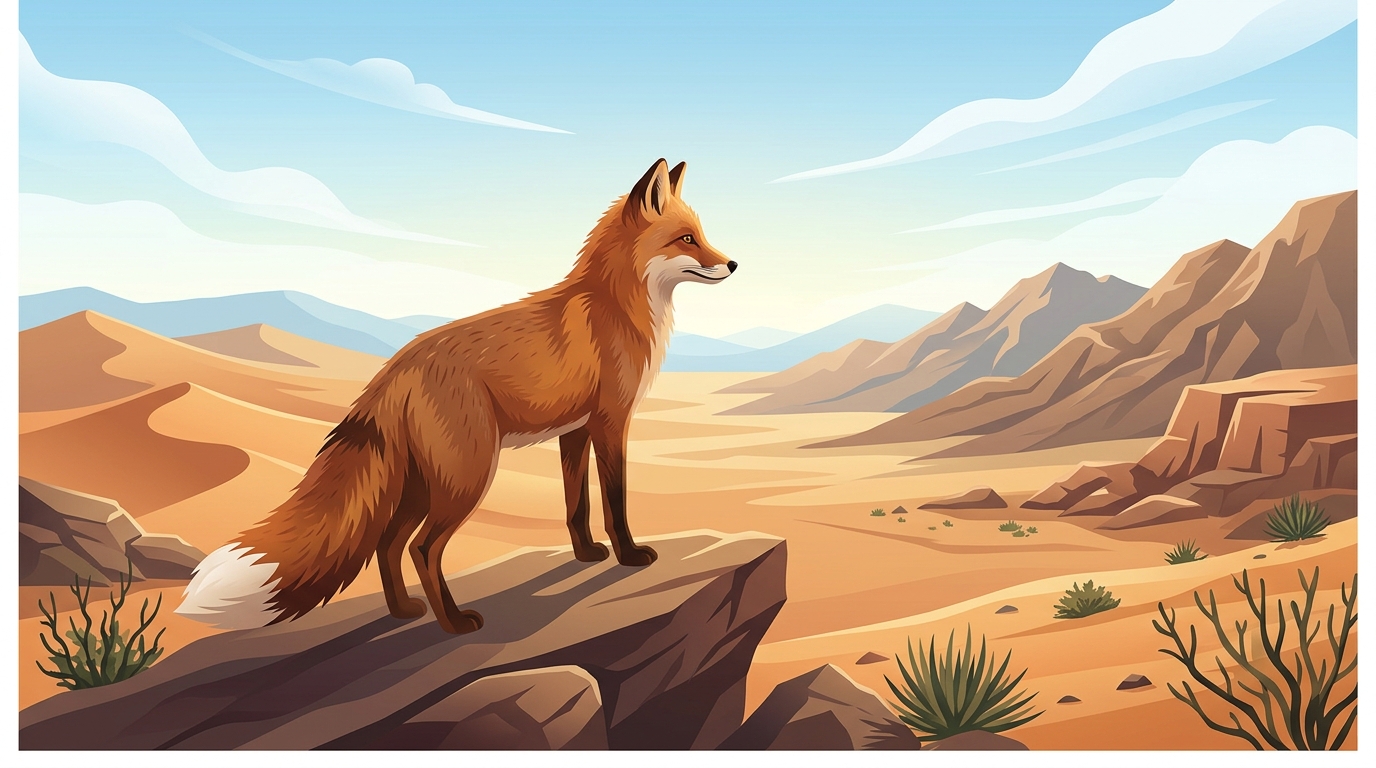
As a symbol of intelligence and quick wit, the red fox holds a place in Arab folk heritage, and also plays an important ecological role by helping regulate rodent populations and other creatures, thereby supporting ecological balance and enhancing biodiversity.
Locally known as 'Abu Husain,' it is the largest species of wild fox in Saudi Arabia and belongs to the Canidae family. It is distinguished by its ability to adapt to diverse environments, including deserts, plains, and valleys, making it one of the most prominent and widespread carnivorous mammals in King Salman bin Abdulaziz Royal Reserve.
The red fox feeds on rodents, reptiles, and insects, in addition to some wild fruits, giving it a high ability to adapt to different food sources in natural environments. It is also characterized by its slim body, reddish-brown fur, thick tail ending in a white tip, and black markings behind the ears.
The red fox possesses highly developed senses that aid in hunting, relying on sharp eyesight and hearing to track small prey movements, along with spatial memory that allows it to locate food caches within its territory. It also uses various vocalizations and scent markings to communicate and define its range.
During the breeding season, which begins in winter, the female typically gives birth to two to six pups in early spring after a gestation period of about 52 days. The male helps provide food and protect the pups during the first weeks of their lives.
Original source: Al-Riyadh






Comments (0)
Be the first to comment.