Sources and documents reveal to CNN the latest details of a nuclear agreement between Saudi Arabia and the US
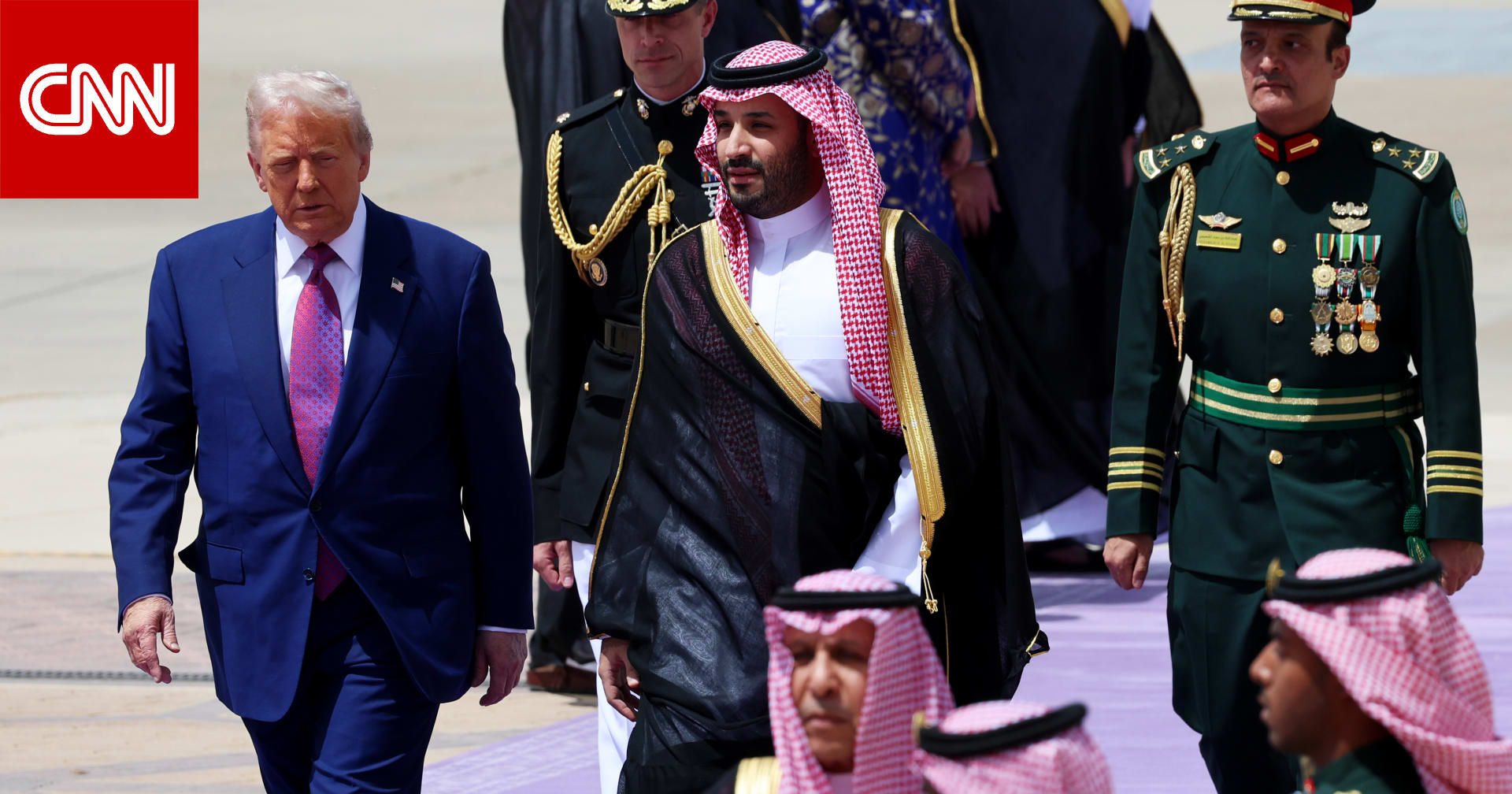
Credit: Win McNamee/Getty Images
(CNN)-- Sources and documents obtained by CNN indicate that the US administration has given preliminary approval to allow Saudi Arabia to enrich uranium without activating international safeguards aimed at preventing the development of nuclear weapons.
The draft nuclear agreement, which outlines US support for Riyadh's civilian nuclear program, is still awaiting the signature of US President Donald Trump, despite the conclusion of US-Saudi negotiations in October 2025.
Two sources familiar with the matter indicated that the ongoing war with Iran - which, according to Trump, was waged in part to prevent Tehran from using enriched uranium to make nuclear weapons - contributed to the delay in Trump's signing.
Some congressional officials also believe that the Trump administration is delaying the signing for fear of facing a bipartisan rejection resolution that would prevent the agreement from taking effect, according to one source.
Experts told CNN that the agreement could give Saudi Arabia a potential path to possessing nuclear weapons unless it includes strict safeguards. Saudi Crown Prince Mohammed bin Salman had previously threatened to build nuclear weapons if Iran, his main regional rival, obtains the nuclear bomb.
Additionally, four sources said the agreement includes a civilian nuclear cooperation agreement under Section 123 of US law, a legal framework for cooperation in peaceful nuclear energy between the US and other countries. The agreement also includes mandatory nuclear safeguards, and has not yet been sent to Congress for review, as federal law requires the White House to do so immediately upon signing.
The White House did not respond to questions regarding the agreements and referred CNN to a statement issued in October 2025 by Energy Secretary Chris Wright, announcing the conclusion of negotiations.
Wright said then: 'We have reached a civilian nuclear cooperation agreement. Together, through bilateral safeguards agreements, we seek to grow our partnership, transfer US nuclear technology to Saudi Arabia, and fully commit to non-proliferation.'
The Saudi embassy in Washington did not respond to a request for comment.
The Trump administration briefed some congressional officials on the outlines of the Saudi nuclear agreements earlier this year, and even then, a special arrangement allowing a degree of domestic uranium enrichment and/or plutonium reprocessing was hinted at, according to a source familiar with the matter. The source said that would be 'unprecedented' for such an agreement.
Two sources told CNN that the uranium enrichment clause includes conditions imposed by the US, but details of possible restrictions remain unclear.
Moreover, the '123 agreement' will not have the final say on Saudi Arabia's access to sensitive technology and materials.
The agreement represents a basic legal framework for US companies (or the government) to transfer nuclear materials and technology to the civilian nuclear program of the recipient state. Such transfers are subject to additional review.
Uranium enrichment and plutonium reprocessing are the two main pathways to producing the essential material needed for nuclear weapons. Most countries with civilian nuclear reactors do not produce enriched uranium domestically, but purchase it from suppliers like the US or Russia, receiving it in sealed shipments under strict international supervision.
However, the draft agreement also does not require Saudi Arabia to adopt a standard enhanced nuclear safeguards agreement with the International Atomic Energy Agency (IAEA), known as the Additional Protocol, according to a waiver request submitted by the US administration to Congress last year and a letter from the US State Department to lawmakers in May, both obtained by CNN. Instead, the safeguards agreement will be limited to the US and the kingdom.
The IAEA is the UN's nuclear watchdog, tasked with preventing the development of nuclear weapons by unauthorized entities by verifying countries' compliance with the Nuclear Non-Proliferation Treaty. It does so through means such as monitoring technologies, on-site inspections, and analysis of publicly available data.
The US administration, in its 2025 report to Congress on the waivers, said the draft bilateral safeguards agreement between the US and Saudi Arabia 'includes additional safeguards and verification measures in the most sensitive areas regarding nuclear proliferation... enrichment, conversion, fuel fabrication, and reprocessing.'
The report, without going into specific details, indicated that the IAEA would play a role in safeguarding the Saudi nuclear program, confirming that 'the Agency will have the necessary tools' to perform its tasks, but it will not be subject to unified oversight by it through the Additional Protocol.
According to a knowledgeable source, the possibility of enrichment and reprocessing, as well as the absence of an enhanced commitment from the IAEA, raised immediate concerns among many members of Congress.
The Saudi agreement contrasts with the 2009 agreement between the US and the United Arab Emirates, under which the UAE agreed to enhanced IAEA oversight and pledged to forgo enrichment and reprocessing. Nuclear experts describe the UAE agreement as the 'gold standard' for nuclear cooperation.
Kelsey Davenport from the Arms Control Association said: 'The Additional Protocol was specifically designed to give the IAEA broader authorities after it became clear that comprehensive (basic) safeguards agreements were insufficient' to prevent countries from advancing toward nuclear weapons.
Andrea Stricker, deputy director of the Non-Proliferation Division at the Foundation for Defense of Democracies, told CNN that now is not the right time to set new standards.
She added: 'Without the Additional Protocol, the IAEA's authority to inspect undeclared (suspected) sites will be limited. I think backing away from the Iranian uranium enrichment issue presents a golden opportunity to strengthen the gold standards.'
Dan Joyner, a nuclear regulatory affairs consultant and law professor at the University of Alabama, said he does not see 'the absence of the Additional Protocol, in itself, as a cause for concern.' He added that the bilateral agreement between the US and Saudi Arabia is 'a reasonable way to enhance the current IAEA safeguards in Saudi Arabia, though its adequacy... ultimately depends on its provisions, which have not yet been published.'
Stricker added that there is no safe way to allow enrichment or reprocessing on Saudi soil, even if such a facility is established under US control. She said: 'There is no certainty that the Saudis will not try to nationalize the facility. At that point, the US president at the time would face the option of bombing the facility to prevent any nuclear leakage or the like.'
Stricker noted that Saudi technicians and scientists working on enrichment centrifuges could also apply their expertise in other clandestine facilities.
Original source: CNN Arabic



Comments (0)
Be the first to comment.