Tabuk Confirms Readiness in Largest Oil Spill Simulation Threatening Environment
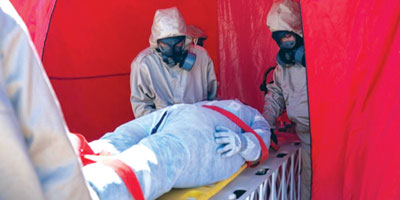
Scene from the event
Thursday, July 16, 2026
Abdulrahman Al-Atwi - Tabuk:
In one of the largest field experiments to measure environmental readiness, forty-two government and private entities achieved advanced results during the implementation of a simulation scenario for the spill of twenty thousand barrels of harmful oily substances in territorial waters within the Prince Mohammad bin Salman Royal Reserve, the impact of which hypothetically extended to the shores of Duba Governorate in the Tabuk region in an exercise that reflected the level of coordination and integration among various authorities concerned with environmental protection and emergency response.
The event leader in the exercise, Nafel Al-Rashidi, explained that more than five hundred young men and women participated in implementing a scenario simulating a complex marine pollution incident under highly sensitive operational conditions, aiming to test readiness, raise the efficiency of human cadres, and develop their capabilities, pointing to the activation of the operations room in the Tabuk region and the participation of more than three hundred and thirty land and sea vehicles and means to deal with a pollution patch that exceeded an area of two square nautical miles.
Al-Rashidi confirmed that the exercise included testing the readiness of equipment and field teams, where more than four thousand meters of rubber barriers and absorbent materials were used, in addition to two hundred and forty barrels of oil dispersants, which proved the readiness of the participating entities to deal with such incidents with high efficiency.
The first phase of the exercise witnessed the participation of Saudi Aramco, the Border Guard, and Seal Marine Services Company in implementing control and containment operations of the polluted patch using spraying aircraft, response vessels, divers, and specialized boats, while field teams on the shores of Duba undertook the deployment of containment equipment, preparation of collection tanks, air pumps, and power generators.
In the second phase, the scenario assumed the arrival of pollutant materials to the shores of Duba, where the unified operations room managed the transition of tasks among the participating entities. The roles of the Ministry of Health, the Saudi Red Crescent Authority, and the General Directorate of Civil Defense emerged, as the Civil Defense initiated the establishment of decontamination and medical evacuation zones, while the Ministry of Health tested the readiness of Duba and NEOM hospitals, and the Red Crescent Authority verified the efficiency of ambulance teams and health crisis management mechanisms.
The final phase focused on cleaning the affected sites and rehabilitating natural resources within the Prince Mohammad bin Salman Royal Reserve, with the participation of the National Center for Vegetation Cover Development and Combating Desertification, the National Center for Wildlife Development, and the Foundation for the Protection of Coral Reefs and Turtles, in a step that underscores the interest in restoring environmental balance and preserving natural resources.
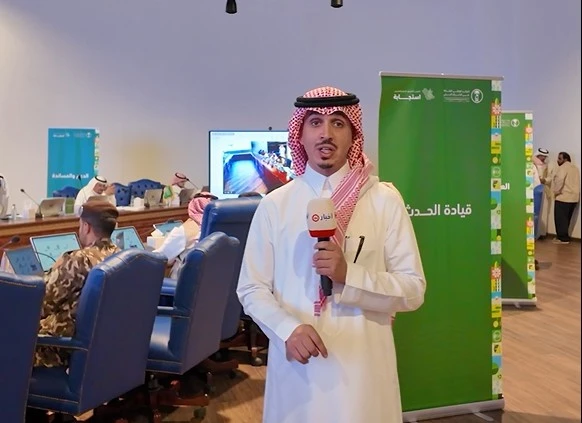
Al-Rashidi pointed out that the exercise contributed to measuring the actual readiness of the participating entities and enhancing the efficiency of their cadres in using the latest technologies, from satellite monitoring and smart buoys to cleaning and rehabilitating sites. Media also participated within the operations room to test the media management of environmental crises, promote the concept of environmental media, and raise community awareness about the importance of protecting the marine environment.
Original source: Al-Jazirah

Comments (0)
Be the first to comment.