US and Saudi Arabia announce nuclear cooperation deal

Trump administration says 'historic' agreement will 'reinforce global nonproliferation standards' and create jobs in US.

Published On 22 Jul 202622 Jul 2026
Civilian nuclear agreements between the United States and foreign partners require strict regulatory oversight and congressional review under federal law.
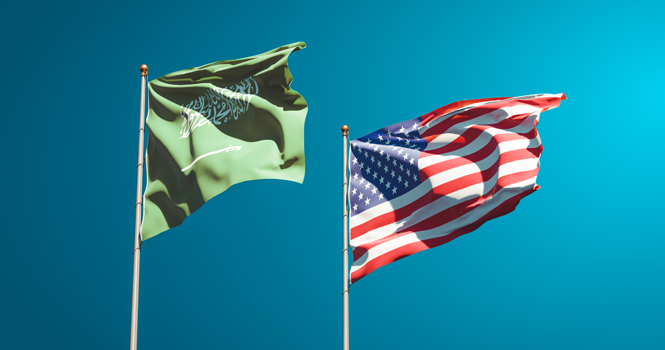
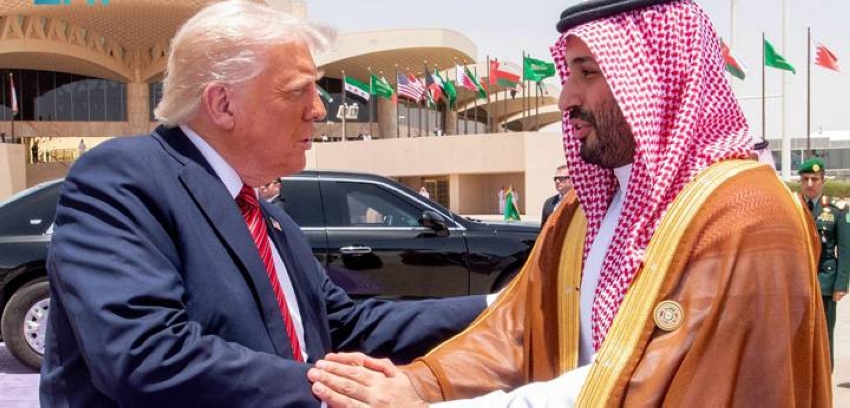
President Donald Trump's administration revealed that Washington and Riyadh have finalized a civilian nuclear cooperation pact amid ongoing efforts by both capitals to strengthen their partnership.
The US Department of Energy hailed the agreement as “historic” on Wednesday, saying that American companies will provide nuclear technology to the kingdom.
Recommended Stories
list of 3 items
- list 1 of 3Proposed US-Saudi nuclear energy deal: What we know so far
- list 2 of 3Trump push for Syrian intervention against Hezbollah ‘short-sighted’
- list 3 of 3Key takeaways from Khalil al-Hayya’s first speech as Hamas leader
end of list
The arrangement comprises a pact under Section 123 of the Atomic Energy Act of 1954, commonly designated as a 123 agreement, paired with a matching bilateral safeguards accord, according to the department.
“These agreements reflect our two nations’ shared commitment to strengthening US-Saudi commercial relations, delivering prosperity at home and security to our allies abroad,” Energy Secretary Chris Wright said in a statement.
“Rest assured, these agreements uphold the highest standards of nuclear safety and nonproliferation, while relying on the world’s best nuclear technology and scientists, designed right here in the United States.”
Some US media reports have suggested that the deal will allow Saudi Arabia to enrich uranium domestically rather than import nuclear fuel from the US.
The Department of Energy’s statement did not provide details on enrichment. If the reports are confirmed, the deal is likely to face opposition in Washington.
‘Reinforce global standards’
The statement called the agreement a “decades-long, multi-billion-dollar partnership” and said it will now be submitted to Congress for review.
Trump has gone to war with Iran to prevent the country from enriching uranium. The Nuclear Non-Proliferation Treaty (NPT) does not prohibit uranium enrichment – a process of isolating and garnering the most radioactive variant, or isotope, of the uranium atom.
Highly enriched uranium can be used to produce nuclear weapons.
Israel is the only country in the region that is widely believed to possess a nuclear arsenal.
The Trump administration said the cooperation deal with Saudi Arabia will create jobs in the US, “reinforce global nonproliferation standards”, and strengthen the strategic partnership with Riyadh.
The announcement comes as the war between the US and Iran continues to rage, with Trump insisting that the goal of the conflict is to prevent Iran from acquiring a nuclear weapon, which Tehran denies seeking.
The US and Israel bombed Iran’s nuclear facilities last year. During the ongoing hostilities, Iran has launched missiles and drones against bases hosting US troops in the region, as well as some energy facilities in the Gulf.
The newly announced arrangement represents a significant development in bilateral relations between Washington and Riyadh. Described by officials as a multi-billion-dollar partnership spanning decades, the accord must now undergo formal review by the US Congress. Questions remain regarding specific provisions such as domestic uranium enrichment, which could shape the political debate on Capitol Hill. Observers will closely monitor how lawmakers evaluate the nonproliferation safeguards and commercial implications of the deal.
Original source: Al Jazeera


Comments (0)
Be the first to comment.