119 People Suspected of Belonging to ISIS Detained in Turkey

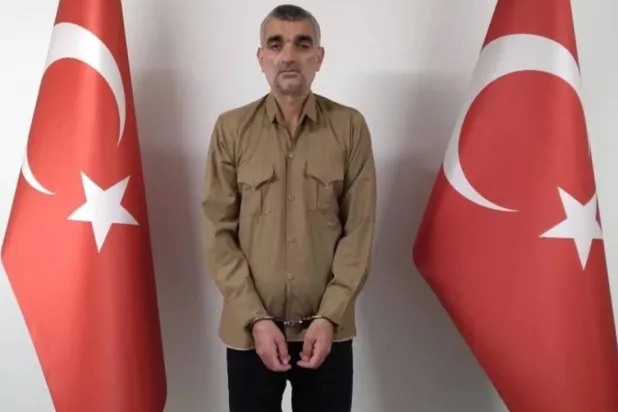
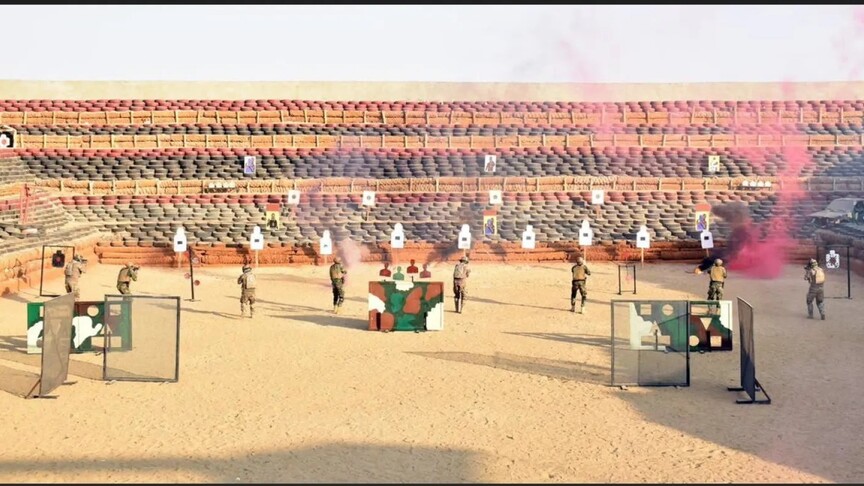
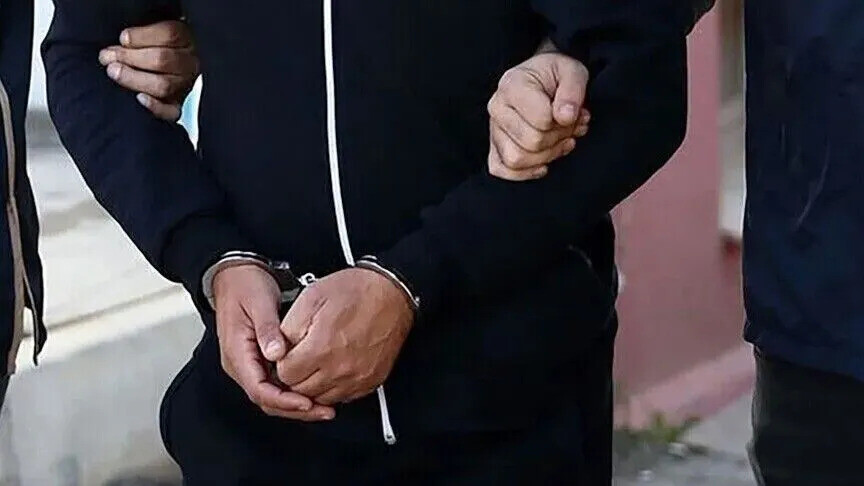
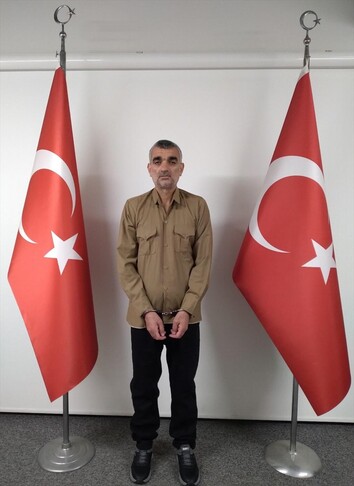
119 people suspected of belonging to the ISIS organization were detained in Turkey in an operation carried out in various parts of the country.
Struggle over Khamenei's legacy in absence of Mojtaba... Hardliners accuse Iranian leaders of 'coup'
Disputes are escalating within the Iranian system after the ceasefire agreement with the United States, as anger over the US-Iran war shifts to an internal conflict between a hardline Iranian faction that rejects any settlement with Washington and leaders seeking to manage the new phase, according to a CNN report.
According to the report, as Iranian President Masoud Pezeshkian walked alongside the coffin of former Supreme Leader Ali Khamenei during his funeral ceremony in Tehran last week, some mourners dressed in black around him chanted directly to him: 'Death to the compromiser.'
The report also indicated that Iranian Foreign Minister Abbas Araghchi was forced to flee the funeral ceremony after a group of attendees threw stones at him, amid chants accusing him of being a 'traitor and seller of principles.'
According to the report, the hostility experienced by senior officials during the funeral reflects a theory that has been gaining momentum within the most hardline currents in Iran in recent months, that the Iranian leaders during the war, who negotiated with Washington and signed the agreement, are carrying out a 'soft coup' against the system, while the new Supreme Leader Mojtaba Khamenei has remained out of sight, either out of fear for his life or, as some suggested, due to his inability to perform his duties.
0 seconds of 0 secondsVolume 90%
Press shift question mark to access a list of keyboard shortcuts
00:00
00:00
00:00
Hardliners accuse new leadership of abandoning Khamenei's legacy
The report stated that the hardline faction, which participated in large numbers in the funeral, believes that Iranian officials, instead of avenging Khamenei's death, surrendered by signing an agreement that violates Mojtaba Khamenei's orders.
But Khamenei the son has remained away from public appearance, delivering no direct address to the people and not appearing clearly to assert his authority, even though officials are conducting negotiations or running the country's affairs in his name.
The hardliners accused the visible Iranian leadership, i.e., the officials who run the country and represent it in Khamenei's absence, of planning to strengthen their influence by suspending parliament's work, ignoring his directives during negotiations, and trying to dismantle the nightly street protests that have become a strong power base for hardline factions.
Days before Khamenei's funeral, Iranian lawmaker Mahmoud Nabavian, known for his hardline positions, wrote on platform X: 'Warning to the Iranian people: Is there a coup on the way?'
Days later, he wrote: 'In these moments when we bid farewell to (Khamenei), we raise the banner of revenge for his blood, and we stand firmly against the coup.'
0 seconds of 0 secondsVolume 90%
Press shift question mark to access a list of keyboard shortcuts
00:00
00:00
00:00
Mojtaba's absence opens the door to conflict within the system
In the absence of Mojtaba Khamenei, chief negotiator Mohammad Bagher Ghalibaf, Pezeshkian, and Araghchi have become the most prominent faces managing Iran in the post-war phase.
Arash Azizi, an Iranian expert based in the United States and author of 'What Do Iranians Want?', told CNN that hardliners, who are dissatisfied with the performance of these officials, have accused them of planning a coup because of their inability to reach the new leader.
Azizi added: 'The continued absence of Mojtaba means they cannot communicate with him, and it also means that Ghalibaf and his allies are practically running the country... Therefore, the hardliners accused Ghalibaf and Pezeshkian of planning a coup against Mojtaba.'
0 seconds of 0 secondsVolume 90%
Press shift question mark to access a list of keyboard shortcuts
00:00
00:00
00:00
Marginalizing hardliners from centers of influence
On Tuesday, Mahmoud Nabavian, the hardline lawmaker who strongly opposes the agreement with the United States and was one of the most prominent voices warning of a 'coup', was removed from his position on the National Security and Foreign Policy Committee of parliament, along with another lawmaker who had criticized the agreement.
Nabavian had been a member of the Iranian negotiating delegation before turning against the talks, and he also tried to obstruct the agreement by leaking its text to the media before its signing last month.
Nabavian claimed that the Iranian negotiating team ignored the 'red lines' set by the Supreme Leader during the negotiations with the United States. CNN was unable to obtain a comment from him.
Nabavian and other hardline figures belong to the 'Jabhat al-Sumoud' (Steadfastness Front) current, whose members are often described by observers as 'ultra-revolutionaries'. They see themselves as guardians of the values of the 1979 revolution that overthrew the pro-Western monarchy and established an Islamic system in Iran.
Experts according to CNN say that the current Iranian leadership is actively seeking to marginalize this current.
Hamid Reza Azizi, a visiting researcher at the German Institute for International and Security Affairs, told the network: 'We see Ghalibaf exercising influence to remove these hardline elements, as they have become very costly for the system, and they air their differences in public, especially as instability increases in Iran.'
Although their numbers are limited, they occupy influential positions across the country, including within parliament and the official Islamic Republic of Iran Broadcasting (IRIB), which has launched campaigns against President Pezeshkian. It remains unclear the extent of support this current enjoys.
Read also
Original source: Asharq Al-Awsat


Comments (0)
Be the first to comment.